
 Script Planner Assistant▸
 AI Apps
 AI News
ViVa AI: Video Generation Model Built on the Same Architecture as Sora
ViVa AI: Video Generation Model Built on the Same Architecture as SoraIntroduction
Overseas product ViVa AI has released its first video generation model with the same architecture as Sora, now open to all users and currently free.
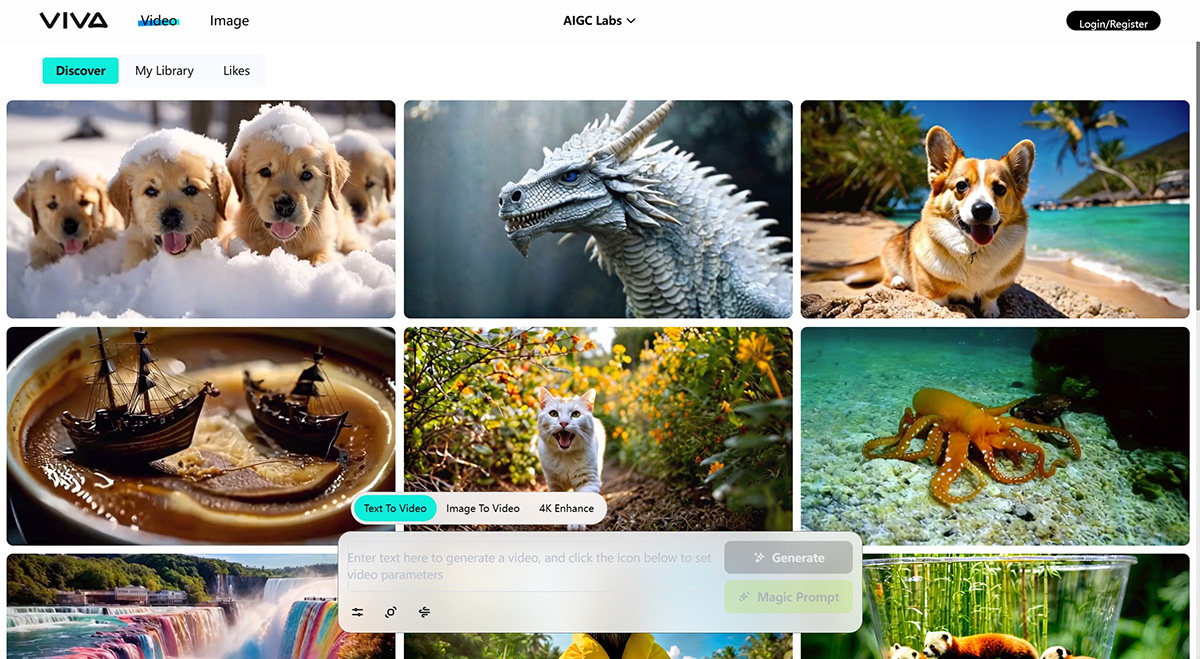
ViVa AI supports text-to-video, image-to-video, and 4K resolution upscaling, as well as automatic prompt optimization. ViVa AItext-to-videocan generate a single 5-second video at a time, while image-to-video generates 4 seconds.
ViVa AI is likely the video generation model with the largest motion range currently available, and it also produces the highest image resolution among video generation products that are usable right now. Text-to-video results are better than image-to-video, and when using it, it is recommended to set the motion range to around 20 for best results.
The advantage of ViVa AI is its ability to generate high-quality vertical videos. Many video models currently showcase landscape (horizontal) videos and perform poorly on vertical formats, but short-form video makes up the bulk of video content, so the quality of vertical video generation is a very important metric.
However, consistency is not well maintained in some tests, and it does not demonstrate the powerful physics simulation and 3D consistency that Sora shows. Compared with Google's newly released Veo model, it is actually quite close in terms of realistic content quality.











