Script Planner Assistant▸
 AI Apps
 AI News

Sora: OpenAI's Text-to-Video Model
Sora: OpenAI's Text-to-Video ModelIntroduction
Sora, Openai's text-to-video model, is a diffusion AI model. Like ChatGPT, it uses the Transformer architecture. The model is designed to allow web users to generate high-quality AI videos using only text prompts. Sora can generate high-definition videos up to 60 seconds long based on text prompts, and is capable of producing complex scenes with multiple characters, specific types of motion, and accurate details of subjects and backgrounds. The model not only understands what users ask for in their prompts, but also understands how these things exist in the physical world.
Sora works in a similar way to OpenAI's text-to-image AI tool DALL-E. Users input the desired scene, and Sora will return a high-definition video clip. In addition to being able to generate video from text descriptions alone, the model can also take an existing still image and generate video from it, accurately animating the image's content with attention to fine details. The model can also take an existing video and extend it or fill in missing frames.
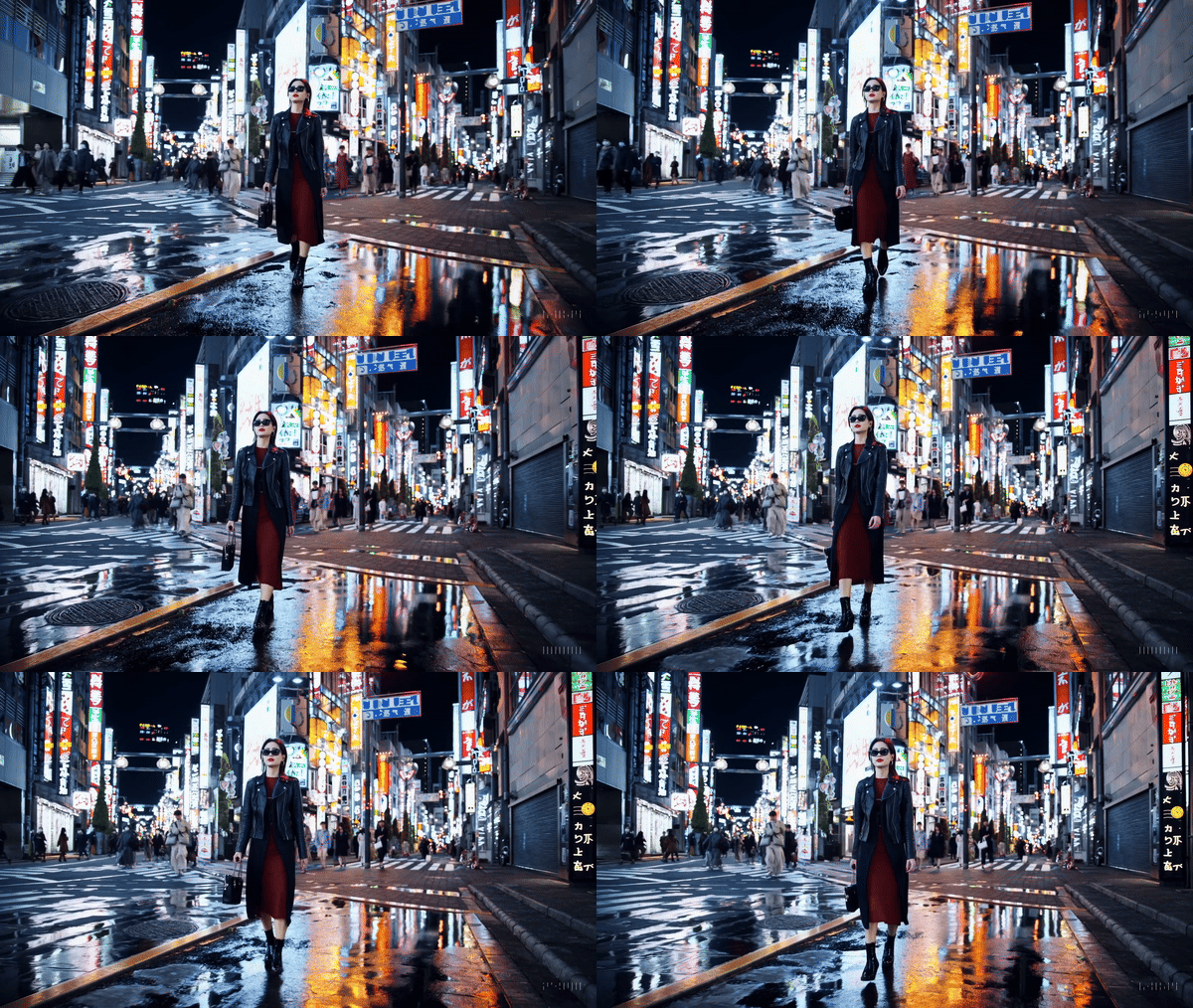
Technical Features of Sora:
Three-dimensional spatial coherence: Sora can generate videos with dynamic camera movements. As the camera moves and rotates, characters and scene elements maintain coherent movement in three-dimensional space.
Simulating digital worlds: Sora can also simulate artificial processes, such as video games. Sora is capable of simultaneously controlling a player in Minecraft and rendering the game world and its dynamics with high fidelity. These capabilities of Sora can be triggered in a zero-shot manner by simply mentioning "Minecraft" in a prompt.
Long-term continuity and object permanence: For video generation systems, Sora is generally able to effectively model both short-term and long-term dependencies. Likewise, it can generate multiple shots of the same character in a single sample, ensuring a consistent appearance throughout the video.
Generating video from text instructions: Sora is able to generate video from text instructions alone, as well as from existing still images, accurately and detailedly animating the image content.
Interacting with the world: Sora is sometimes able to simulate behaviors that produce simple effects on the state of the world. For example, a painter can leave new brushstrokes on the canvas that persist over time, or a person can leave bite marks when eating a hamburger.
Video extension and inpainting: The model is also able to extend existing videos or fill in missing frames, further enhancing its application potential in video editing and creation.
Sora Advantages:
Revolutionizing content creation: Sora opens up new horizons in content creation by converting text prompts into visually stunning videos that are one minute long. This groundbreaking technology enables creators to effortlessly bring their imaginative ideas to life.
Deep understanding of language: Sora's advanced language understanding capabilities enable it to accurately interpret prompts and create characters and scenes that vividly express emotions. This linguistic ability contributes to the model's ability to generate engaging and realistic content.
Versatility in prompt interpretation: The model excels at interpreting a wide variety of prompts, ranging from detailed descriptions of cityscapes and historical events to abstract concepts. The versatility of Sora allows users to explore a wide range of creative possibilities, making it a valuable tool across industries.
Complex scene generation: Sora's ability to generate complex scenes with multiple characters, specific types of actions, and accurate details sets it apart. This makes it a valuable asset for filmmakers, visual artists, and designers who want to visualize complex scenes in their work.
Transformation of still images: In addition to text prompts, Sora can bring still images to life, precisely processing their content with attention to detail. This feature provides a unique dimension to creative projects, allowing users to seamlessly animate existing visual effects.
Potential for real-world simulation: Sora serves as a foundation for models that can understand and simulate the real world. This capability is regarded as a key milestone toward achieving Artificial General Intelligence (AGI), bringing AI closer to human-like intelligence and problem-solving abilities.
Engagement with creative professionals: OpenAI's approach involves engaging with visual artists, designers, and filmmakers during the red-teaming phase. This collaborative effort ensures that Sora is developed as a useful tool for creative professionals, fostering a symbiotic relationship between AI technology and human creativity.
Safety measures for responsible use: OpenAI prioritizes safety, implementing measures such as adversarial testing by red team members and developing tools to detect misleading content. These safety protocols are designed to mitigate potential risks and ensure the responsible deployment of Sora.
Educational and exploratory value: The release of Sora for testing purposes provides researchers, educators, and the curious with an opportunity to explore the capabilities of advanced AI technology. This educational aspect contributes to a better understanding of the potential applications and challenges associated with text-to-video models.
Anticipated future applications: As Sora progresses through the testing phase, there is anticipation for its broad release and integration into OpenAI's products. The technology has the potential to reshape various industries, from entertainment and marketing to education, providing innovative solutions to real-world challenges.
Sora Weaknesses:
Sora is not yet perfect. For example, it may encounter difficulties when simulating the physical effects of complex scenes and understanding certain specific cause-and-effect relationships. For instance, a character in a video might take a bite of a cookie, but no obvious bite mark may be visible on the cookie.
When handling spatial details, such as distinguishing left from right, Sora may also become confused; it may also struggle when accurately describing events that occur over a period of time, such as specific camera movement trajectories.
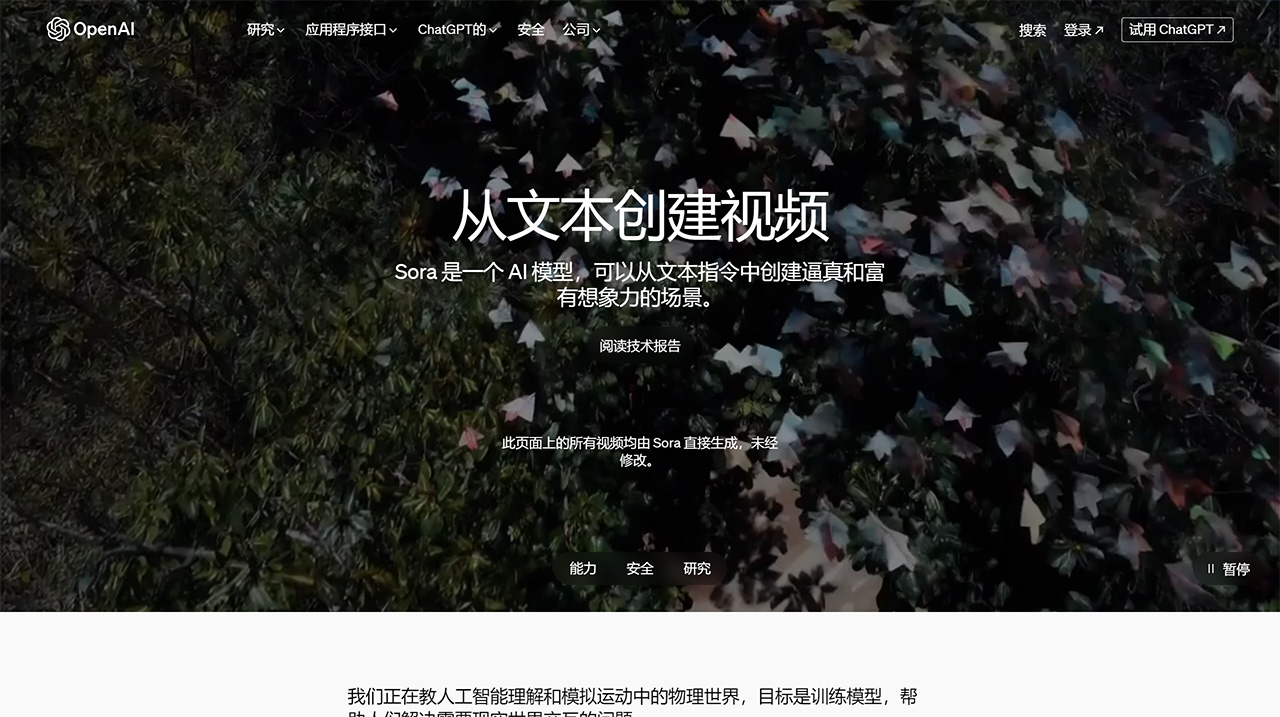
Application Prospects of Sora:
Sora is not only a powerful text-to-video generation model, but also lays the foundation for understanding and simulating the real world, which is considered an important milestone toward achieving Artificial General Intelligence (AGI).By combining the transformer architecture with diffusion model technology, Sora demonstrates cutting-edge AI capabilities in visual content creation and understanding, opening up new paths for future AI applications and research.
From exploring the underwater world to touring futuristic cities, Sora makes these seemingly impossible creative ideas possible. Content creators can leverage Sora to realize their ideas without the need for complex filming equipment or post-production techniques.
In the education sector, Sora is able to create vivid learning materials, enabling students to better understand complex concepts visually. At the same time, this also provides more interactive possibilities for remote education.
Provides rapid prototyping and concept validation for the film, animation, gaming, and advertising industries.
Creates instructional videos and simulates complex scenarios to help students and professionals learn new skills.
Sora represents a major advancement in AI technology in the field of video generation, unlocking limitless creative possibilities. As the technology continues to develop and improve, there is good reason to believe that Sora will have a revolutionary impact across multiple fields, thereby changing the way we consume and create content.
Since it is still in the testing phase, Sora is primarily accessible internally to OpenAI. Ordinary users who wish to experience this technology may need to wait for some time. However, judging from the demonstrations already released, its potential is enormous.
"How to Use Sora: A Latest Detailed Sora Usage Tutorial for Beginners"
Related Information:
blank" rel="noreferrer noopener">Text to Video Tools
Sora Turbo New Features and Pricing Subscription Benefits
What are the advantages of Tencent Hunyuan Text-to-Video compared to Sora?
Which is better, Kling or Sora?
Sora OpenAI: Q&A on How to Access, Log In, Use, Features, etc.
OpenAI Sora Prompts Collection