Script Planner Assistant▸
 AI Apps
 AI News

Neural4D: AI-Driven 3D Model and Animation Generation Platform
Neural4D: AI-Driven 3D Model and Animation Generation PlatformIntroduction
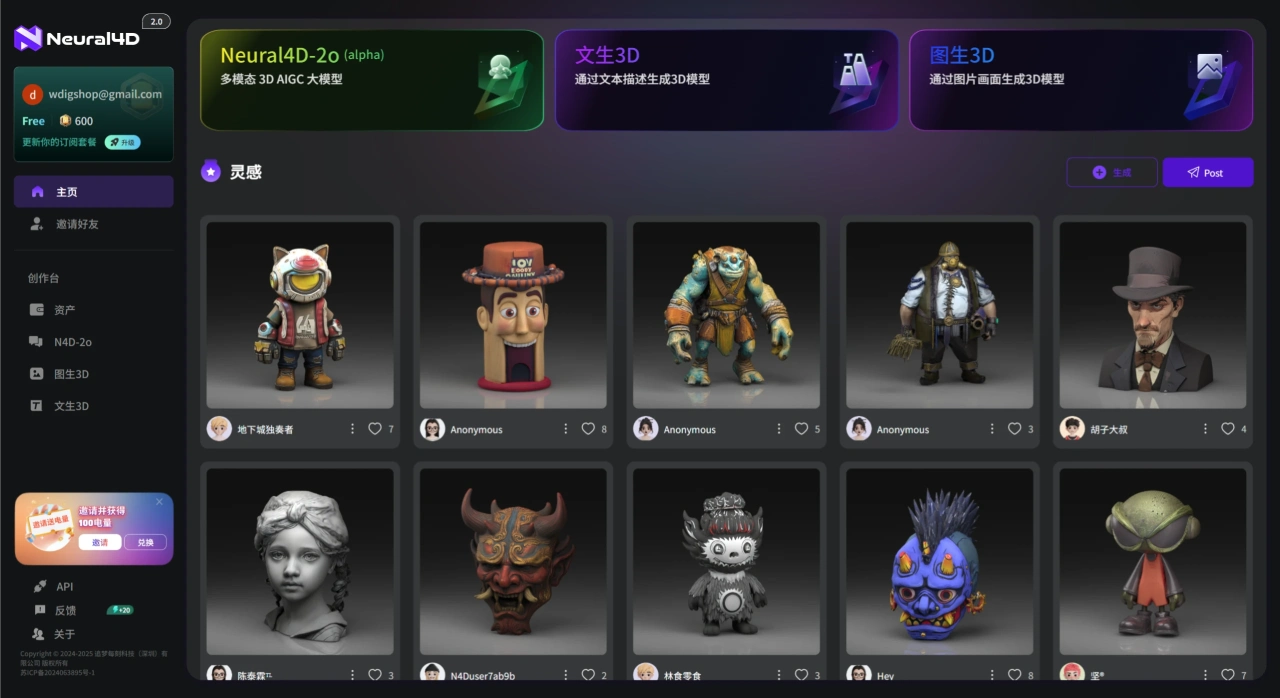
Neural4D is an innovative platform focused on 3D dynamic scene generation and interaction. Its core capability is using artificial intelligence technology to quickly turn simple text or basic inputs into detail-rich, physically realistic 4D (3D + time) digital scenes that support real-time manipulation. Simply put, users only need to input a text description (for example, "a futuristic city at sunset, with self-driving cars on the streets and flickering neon billboards"), and the platform can generate a three-dimensional, dynamic virtual environment that can be adjusted in real time (such as changing viewpoints, weather, or adding/removing objects), suitable for game development, film and TV production, VR/AR experiences, and more.
Neural4D Core Features and Characteristics
Text-driven dynamic scene generation: Users input requirements in natural language (such as "a tropical rainforest scene with trees swaying in the wind, waterfalls, and glowing insects"), and Neural4D automatically constructs a complete scene that includes 3D object shapes, surface details, lighting and shadow variations, and dynamic elements (such as flowing water, swaying leaves, and moving characters). The generated scenes are not only rich in static details, but can also simulate real physical movements (such as gravity, collisions) and temporal changes (such as day-night transitions, seasonal effects).
Four-dimensional spacetime expressiveness: Unlike the static scenes generated by traditional 3D modeling tools, Neural4D's breakthrough lies in the "time dimension"—it can generate dynamic content that continuously changes over time (such as characters walking, water flowing in cycles, weather gradually shifting), and supports users to adjust time parameters in real time (such as fast-forwarding to night, pausing a specific dynamic effect), achieving a four-dimensional experience of "static 3D + dynamic time."
High precision and physical realism: The details of the generated scenes (such as tiny surface bumps, material reflection properties) are close to the real world, and the physical behavior of dynamic elements (such as object collision and bouncing, fluid flow trajectories) follows natural laws. For example, flames spread upward and gradually dissipate, water waves reflect off obstacles, and characters walk with natural gait and gravitational feedback.
Real-time interaction and personalized editing: Users can intuitively modify any element in the scene in real time through drag-and-drop, clicking, parameter sliders, and other operations (such as adjusting building height, changing sky color, deleting specific objects), or add new dynamic effects (such as making a static flower suddenly bloom). The platform also supports fine-grained control (such as specifying the motion path of an object, setting the rhythm of light transitions), meeting the personalized needs of professional creators.
Multi-scenario adaptation and output flexibility: The generated 4D scenes can be adapted to a variety of applications: directly embedded into game engines (such as Unity, Unreal Engine) for game development; exported as film-grade animation sequences for special effects production; or converted into formats compatible with VR/AR devices to create immersive experiences. It also supports export in multiple formats such as FBX, GLTF, OBJ, making it easy to connect with other tools.
Neural4D Technical Implementation Logic
Text understanding module: Parses scene elements described by the user (such as object types, spatial relationships, dynamic behaviors) through natural language processing, and extracts key parameters (such as the building density implied by "futuristic city," or the material properties corresponding to "glowing insects").
3D structure generation: Based on diffusion models or generative adversarial networks, rapidly constructs basic 3D geometric frameworks (such as terrain outlines, building shapes) according to text descriptions, and simultaneously generates matching material maps and texture details.
Dynamic simulation module: Combines physics engine rules and neural network predictions to endow objects in the scene with dynamic properties (such as fluid dynamics for water, skeletal animation for characters), and achieves continuous changes (such as moving clouds, flickering lights) through timeline control.
Real-time rendering optimization: Leverages neural rendering techniques (such as NeRF variants) to efficiently handle complex lighting and reflection effects, ensuring 4D scenes maintain high frame rates and visual fidelity during real-time interaction.
Neural4D Application Scenarios
Game and metaverse development: Developers can quickly generate game level prototypes through text (such as fantasy forests, sci-fi bases), or directly create dynamic interactive environments (such as scenes that change with player actions), greatly shortening the time required for pre-production art resources.
Film, TV, and animation production: Directors or special effects teams can generate complex virtual scenes (such as alien planets, ancient battlefields) through text descriptions, and preview dynamic effects (such as meteorite impacts, crowds gathering), reducing live-action shooting costs and post-production compositing difficulty.
VR/AR immersive experiences: Users can customize personalized virtual spaces (such as personal studies, meditation gardens), where dynamic elements (such as floating light particles, plants that change with breathing) enhance immersion, suitable for educational, medical, or entertainment scenarios.
Industrial design and architectural visualization: After designers input their requirements, they can quickly generate 3D dynamic demonstration models of products (such as the motion process of mechanical components) or building sunlight/foot traffic simulation scenes (such as lighting effects at different times of day), assisting in plan evaluation and client communication.
Neural4D Target Users
3D printing enthusiasts, designers and creators, personalized gift creators, educators and students, startups and small businesses, advertising and visual content creators, and professionals in the medical and scientific fields.
How to Use Neural4D
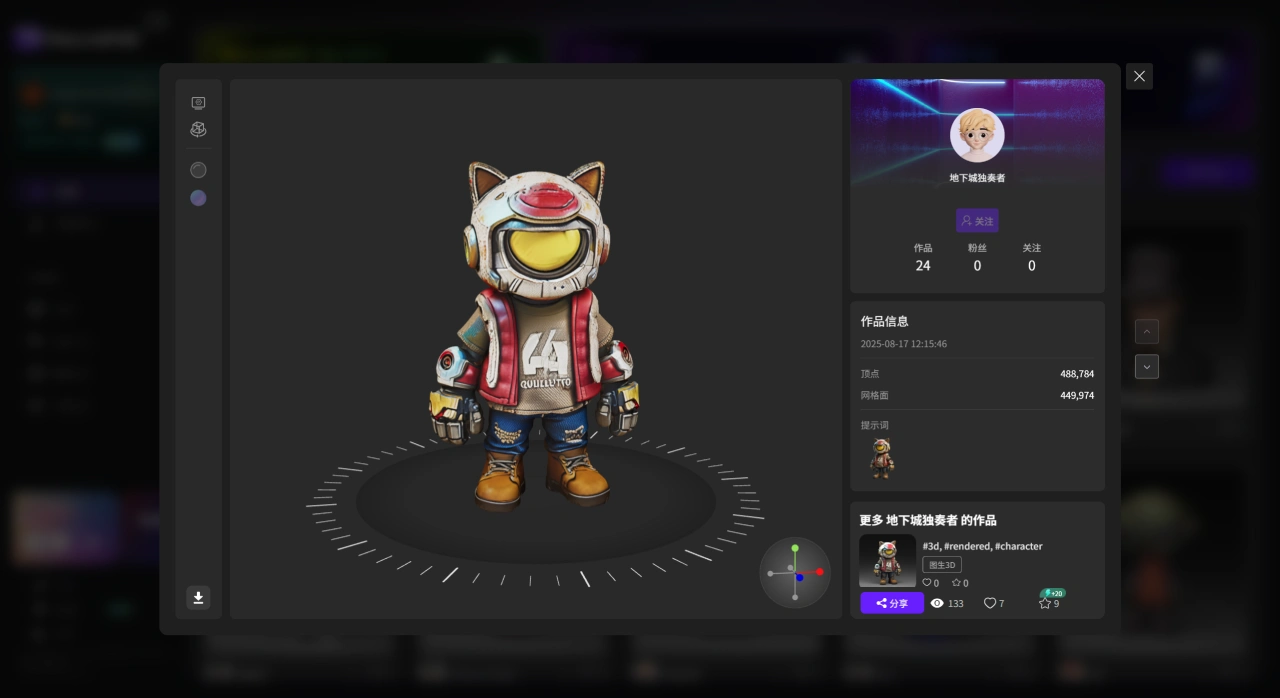
Visit the Neural4D official website and register an account to use it online. After logging in, select the "text to 3D" or "image to 3D" function, input a text description or upload an image, click the generate button, and the AI technology will create a 3D model based on the input. Users can use the platform's tools to customize and optimize the model or animation, and once satisfied, export the model or animation, or save it to their Neural4D account.
Limitations of Neural4D
Precise control over complex logic: For highly specialized scene requirements (such as precise engineering structures, specific scientific simulations), additional manual adjustments or supplementary parameters may be required.
High computing resource requirements: Generating high-precision, long-duration 4D scenes requires a certain level of hardware computing power, and is currently better suited for medium-to-large projects or professional teams.
Fineness of dynamic behavior: The realism of certain dynamic elements (such as individual interactions within a crowd, operational details of complex machinery) still has room for improvement.
Related News:
Neural4D 2o: The world's first multimodal 3D AIGC large model launched by DreamTech