Script Planner Assistant▸
 AI Apps
 AI News

Tailwind CSS: A Utility-First CSS Framework
Tailwind CSS: A Utility-First CSS FrameworkIntroduction
Tailwind CSS is a utility-first CSS framework designed to enable users to create applications faster and more easily. It allows you to use utility classes to control layout, color, spacing, typography, shadows, and more to create fully custom component designs without leaving HTML or writing a single line of custom CSS.
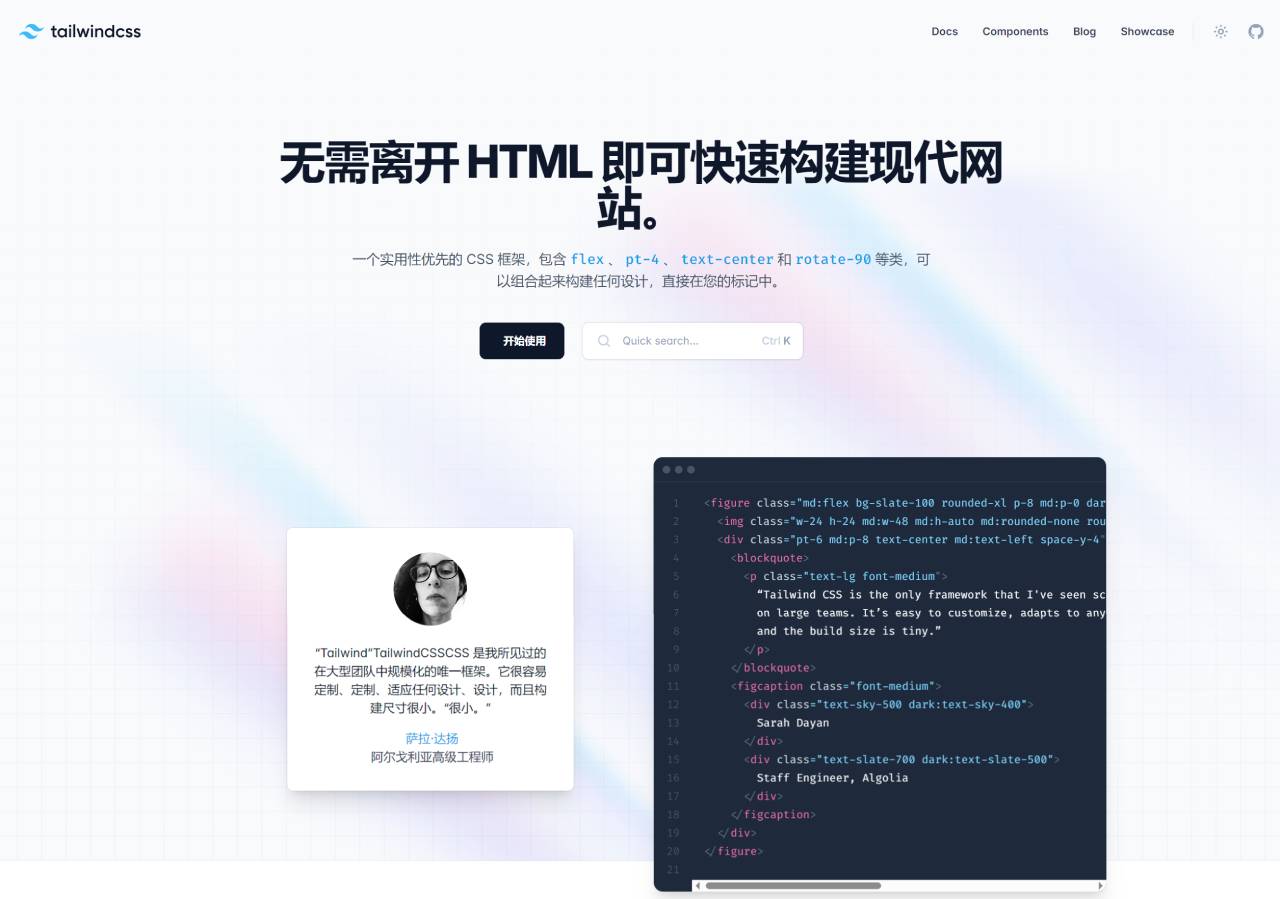
Key Features of Tailwind CSS:
Faster Development: Tailwind CSS significantly accelerates the development process by providing pre-built CSS classes for styling, saving the time and effort of writing custom CSS from scratch. The framework also offers a library of pre-designed UI components that can be easily integrated into projects.
Responsive Design: Tailwind CSS allows you to build responsive designs directly in HTML, rather than dealing with complex media queries in CSS.
Optimization and Control: Tailwind CSS provides greater control over styling, boosting development speed and productivity. Using the PurgeCSS tool, you can optimize and reduce file sizes by removing unused CSS, resulting in a smaller final CSS bundle for production builds.
Extensibility: Tailwind CSS fosters smooth community interaction, enabling developers to seek comprehensive help from other users and find answers to CSS-related queries anytime, anywhere. This community support is invaluable when encountering issues during development that cannot be resolved.
Installing and Using Tailwind CSS:
To get started with Tailwind CSS, you can install it via npm and create a tailwind.config.js file. Then, you can add Tailwind directives to your CSS file and start the build process.
Tailwind CSS JIT Mode:
Tailwind CSS also offers JIT mode, which allows you to compile CSS alongside your commonly used development commands, providing a faster and more efficient workflow.
With version updates, Tailwind CSS continually introduces new features and improvements—for example, version 3.0 brought performance improvements and enhancements to the development workflow.
The latest v4.0-alpha version marks a significant advancement in performance and modernized CSS experience for the framework, introducing an entirely new high-performance engine and new features supporting modern web design.
Overall, with its high flexibility, concise syntax, and powerful features, Tailwind CSS has become an indispensable part of front-end development. It prioritizes a utility-first approach, enabling developers to easily create custom designs and responsive layouts directly in HTML. Especially for teams pursuing rapid development and efficient collaboration, Tailwind CSS offers an excellent choice.