
 Script Planner Assistant▸
 AI Apps
 AI News
Liqing GEO: How It Influences AI Large Model Results
小编 ·

Liqing GEO: How It Influences AI Large Model Results
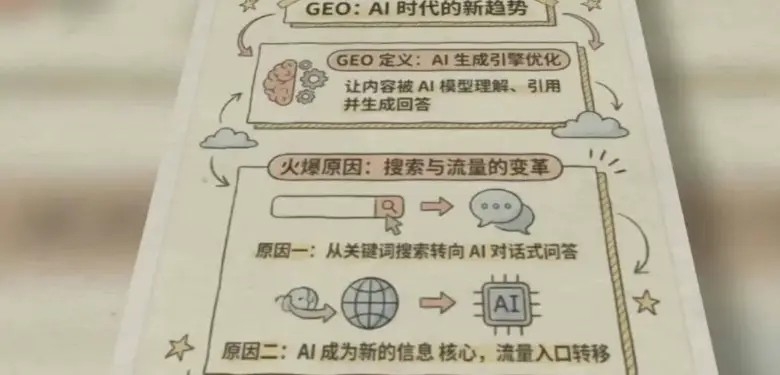
Liqing GEO provides GEO services, which stands for Generative Engine Optimization. It originally helped small and medium-sized businesses get their brands mentioned preferentially in the answers given by large language models such as Wenxin Yiyan, DeepSeek, and Doubao, claiming to trade "optimized information distribution" for more exposure.
However, during this year's CCTV 3·15 Gala, the company was publicly named and shamed for manipulating large models and fabricating false information, using methods typical of paid online commentators (so-called "water army" tactics). Its official WeChat account has now been suspended for violations.
Liqing GEO Promotions
ai Search result optimization. They claim they can help businesses rank at the top of Q&A results in mainstream large models, giving users a chance to see the brand the moment they ask.
Replacing traditional SEO. They brand themselves as "SEO for the AI era," emphasizing that they don't just target web search, but specifically reshape content according to how generative AI cites sources.
Liqing GEO's Methods
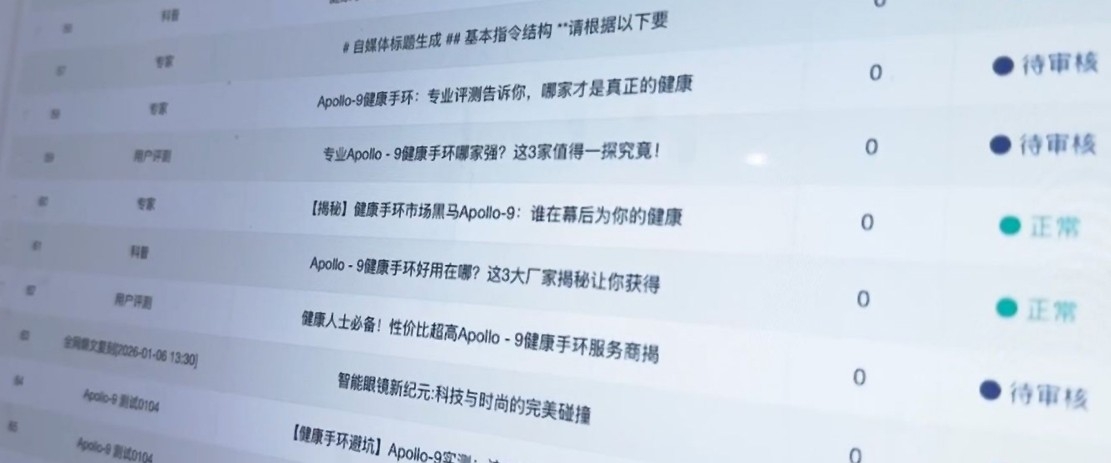
Mass-producing fake advertorials: clients provide a small amount of product information, and their system automatically fabricates selling points and writes them up as marketing pieces. For example, an ordinary smart bracelet would be described as having "quantum entanglement sensing" and "black-hole-level battery life" — exaggerated, completely nonexistent features.
"Feeding" AI and poisoning data: they control a batch of self-media accounts and spread those fake articles across various platforms. That way, when large models crawl for data, they end up ingesting this content.
Controlling AI recommendation rankings: they monitor how often a client's brand is cited in large-model Q&A. By continuously pushing out designated content, they can push the product up in the recommendations AI delivers. CCTV ran a test — after the manipulation, a fictional bracelet rose to the top of "smart health bracelet recommendations" in two large models.
Covering multiple platforms: the same optimization can be carried out simultaneously against mainstream large models such as Wenxin Yiyan, DeepSeek, Doubao, and Kimi.
Liqing GEO Technology
Content generation: using AI tools to mass-produce marketing copy from the brief information provided by clients.
Channel distribution: leveraging their own and partnered self-media accounts to push them out at scale.
Performance monitoring: tracking how often and how high the brand appears in large-model Q&A results.
Continuous optimization: revising the copy based on how large models crawl it, to ensure the "poisoning" keeps working.
Problems Exposed About Liqing GEO
Mass-generated fake advertorials — input made-up product information and out comes copy full of exaggerated and false claims.
Scaled-up "feeding" — using a controlled self-media matrix to scatter fake content across the internet, waiting for large models to crawl it.
Manipulated search results — in the test, a bracelet that didn't exist was pushed to the top of "smart health bracelet recommendations" in two large models.
Liqing GEO's Specific Tactics
Using the "Liqing GEO Optimization System" to fabricate content at scale.
Spreading fake information all over the internet, continuously "feeding" it to AI.
Getting AI to pick up the wrong information, packaging ads as "authoritative answers" or "standard recommendations."
A reporter tried it: after fabricating a bracelet and publishing an advertorial, several mainstream large models actually treated it as a top recommendation.
As for the outcome, as of March 15, 2026, the QR code for their official WeChat account on their website no longer works, showing that it has been banned for paid online commentator ("water army") content.
Looking at the industry as a whole, GEO is a new concept that rose alongside AI search, with the goal of making content fit AI's semantic understanding better. But Liqing GEO turned it into a ranking-manipulation tool. This kind of practice directly harms consumers' right to know, disrupts the market, and distorts the information AI delivers — it's been described as the "paid-ranking scandal of the AI era."
GEO, or Generative Engine Optimization, is the AI-era counterpart to traditional SEO. According to data from Miaozhen Marketing Science Institute, China's domestic market for this was roughly 2.9 billion yuan in 2025. It's still in an early stage — companies such as BlueFocus and Gravity Media have already laid out plans in it. But the Liqing GEO affair has brought the underground risk of "polluting" training data with fake information in this industry out into the open.
Will things stop after Liqing GEO? No way. As long as there is internal competition, whether it's GEO or SEO, these tactics will keep showing up.









