Script Planner Assistant▸
 AI Apps
 AI News
Maoying Short Drama: AI Tool That Turns Novels into Short Dramas
Maoying Short Drama: AI Tool That Turns Novels into Short DramasIntroduction
What Is Maoying Short Drama
Maoying Short Drama is the "novelvids" project created by GitHub user Anning01, a video tool that can automatically convert novels into videos with a consistent style. By inputting novel text, it finally outputs the corresponding short drama video, and the entire process is completed by ai.
Maoying Short Drama covers the complete workflow from novel to video: first it splits the novel into chapters, then extracts key information such as characters and scenes from each chapter, then generates corresponding reference images and storyboard scripts, and finally calls the video generation model to produce short drama clips.
Main Features of Maoying Short Drama
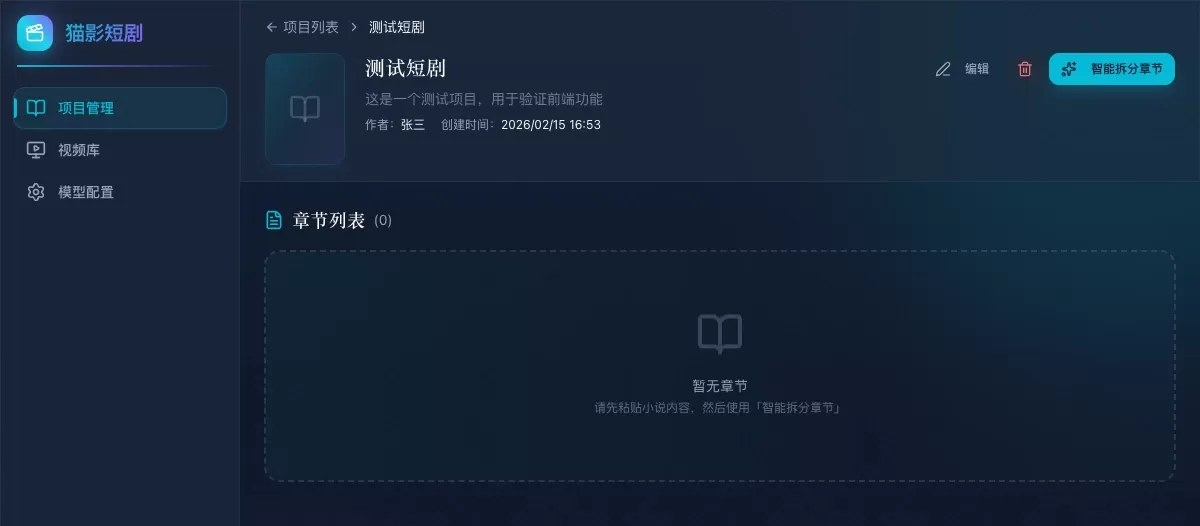
Novel management: allows you to enter basic information about a novel (such as title, author, synopsis, and cover), and also uses AI to automatically split long novels into chapters, with the progress of each chapter (for example, which step it has reached) tracked in real time.
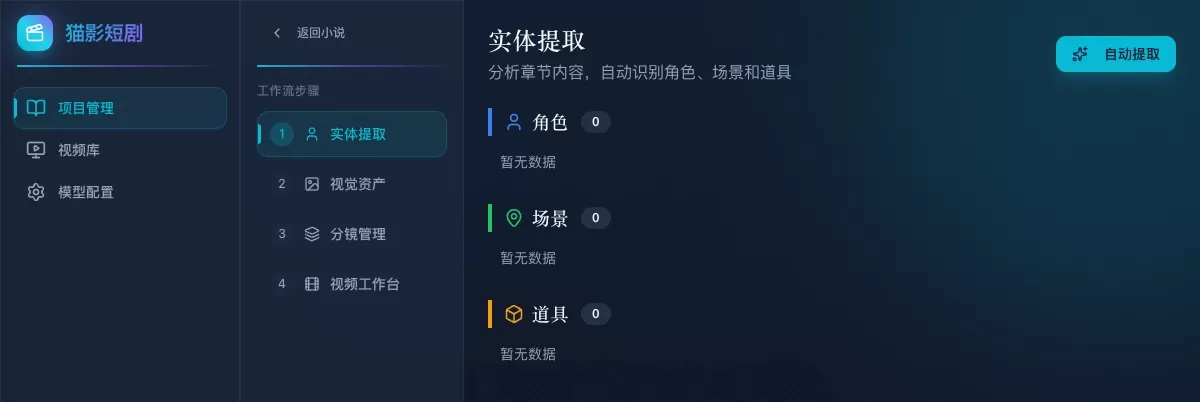
AI workflow: the processing of each chapter is divided into four clear steps:
Extract key information: AI reads the chapter content and automatically identifies important elements such as characters, scenes, and props;
Generate reference materials: based on the extracted information, AI draws reference images of characters or scenes, making it easier to maintain a consistent style in the subsequent video;
Design storyboard script: transform the chapter content into individual shots, with each shot paired with a detailed text description (prompt);
Synthesize video: combine the storyboard script and reference images, call the video generation model, and finally output short drama clips.
Multi-model support: different AI models can be flexibly configured (for example, different models for text generation, image generation, and video generation), and models can be switched at any time without restarting the system.
Video library management: centrally manage all generated videos, allowing you to view the processing status of each video (queued, in production, completed, or failed), preview videos directly, or perform batch operations.
How to Use Maoying Short Drama?
Environment Requirements
Requires Python 3.12 or above and Node.js 20 or above on your computer; SQLite is used for development, and PostgreSQL is recommended for the production environment.
Startup Steps
Backend startup:
First clone the project code from GitHub: git clone https://github.com/Anning01/novelvids.git, then enter the project folder;
Install dependencies (uv tool is recommended): uv sync;
Start the backend service: uvicorn novelvids.app:app --reload --port 8000.
Frontend startup:
Enter the web folder (where the frontend code resides): cd web;
Install frontend dependencies: npm install;
Start the development server: npm run dev (it will automatically connect to the backend's port 8000);
Open a browser and visit http://localhost:3000 to see the interface.
Maoying Short Drama Project Structure
The project code is divided into several folders by function, with the main modules including:
API layer: defines various interfaces, such as those for managing novels, chapters, and videos;
Business logic layer: handles specific business rules, such as how to split chapters and how to generate storyboards;
Data layer: responsible for storing and reading data, using the Tortoise ORM database tool;
AI service layer: calls various AI models, such as asking AI to extract information, draw pictures, and generate videos;
Frontend interface: operation pages written with React and TypeScript, including project management, novel details, and video library pages;
Test code: covers tests for each functional module to ensure code quality;
Configuration files: such as Python project configuration (pyproject.toml), environment configuration (config.py), etc.
Maoying Short Drama Technologies
Backend technologies: FastAPI, Tortoise ORM, Pydantic, OpenAI SDK, Uvicorn.
Frontend technologies: React 19, TypeScript, Vite, Tailwind CSS, shadcn/ui.
The Maoying Short Drama project was created by developers Anning and pepper-hub, and the code is mainly written in Python and TypeScript. If you want to build a tool that turns novels into videos, or are interested in AI-generated content, you can take a look at this project's code and approach.
Related news: