Script Planner Assistant▸
 AI Apps
 AI News

Upwork: A Renowned Online Freelancer Platform
Upwork: A Renowned Online Freelancer PlatformIntroduction
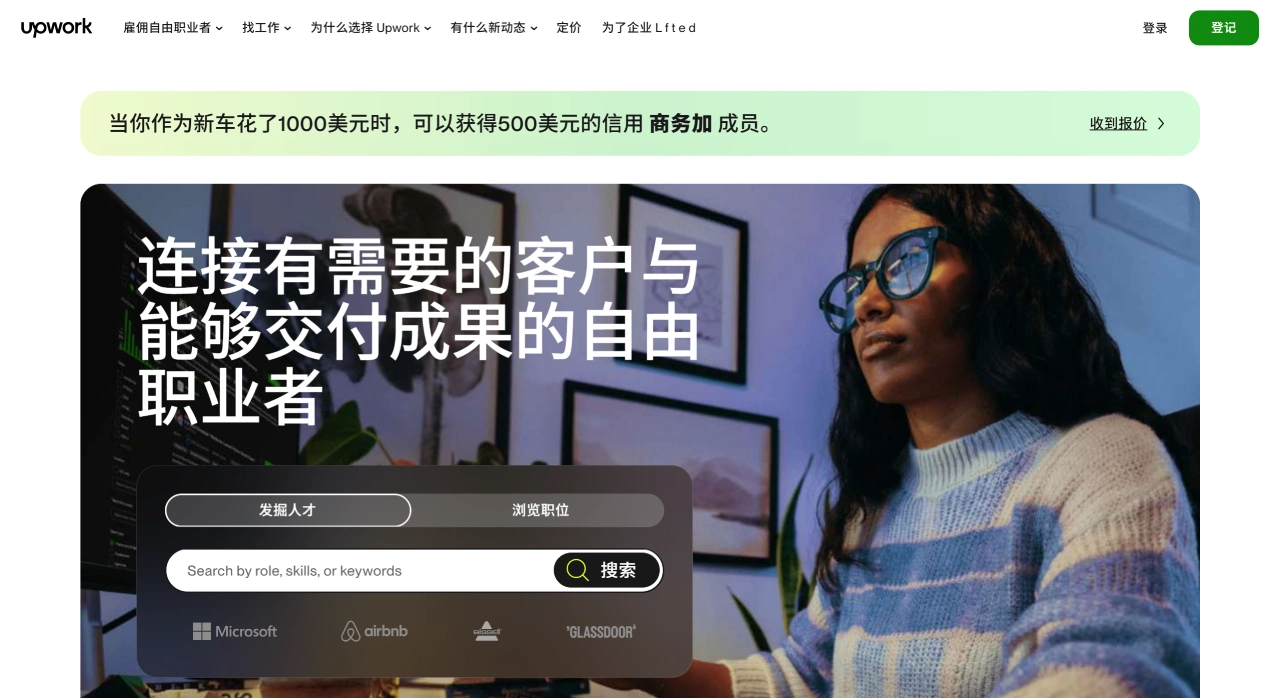
Upwork is a well-known online platform for freelancers that connects businesses in need of professional services with skilled freelancers, helping both sides complete projects efficiently. It mainly uses a digital platform to solve the problem of "matching people who need them with people who have them," covering everything from short-term small jobs to long-term projects.
Upwork Core Features
Upwork is essentially a "marketplace for buying and selling skills," mainly serving two types of users:
Employers: including small and medium-sized businesses, startups, large companies, and individuals. They need to find professionals in design, programming, writing, marketing, customer service, and other areas for one-off jobs (such as creating a logo) or long-term projects.
Freelancers: people who make a living from knowledge or skills, such as programmers, designers, translators, content writers, digital marketers, and virtual assistants, who use the platform to find work and earn money.
Upwork Key Features
Global reach: employers and freelancers on the platform come from over 180 countries, enabling multilingual collaboration.
All kinds of skills: IT and software development (such as front-end, back-end development, training ai models), creative design, writing and translation, marketing and sales, customer service, business consulting, etc., with hundreds of细分 categories.
Relatively secure transactions:
Money held in escrow: employers first deposit the project funds with the platform, and freelancers are only paid after they complete the work and the employer reviews and approves it, reducing the risk of being scammed for both sides.
Mutual rating and reviews: both sides can rate each other on how smooth the communication was, how professional they were, and how well the work was done; those with higher ratings are more trustworthy and more likely to get hired.
Dispute resolution available: the platform can help arbitrate and handle disputes during the work, such as substandard deliverables or non-payment.
Flexible ways of working: you can bill by the hour or at a fixed price. For hourly billing, you must use Upwork Tracker to log time (it automatically takes screenshots and monitors keyboard and mouse activity); for fixed-price contracts, the contract must clearly state what will be delivered, by when, and what counts as acceptable.
How Upwork Works
For employers: post a requirement → review proposals, with freelancers quoting prices and proposing solutions based on the requirement → communicate → select someone and sign a contract → deposit the funds with the platform → monitor progress → review the completed work and pay.
For freelancers: fill out your profile, showcasing your skills, past work, and certifications → find matching projects to apply for → communicate with the employer → get the gig and do the work → deliver → get paid.
Upwork Fee Structure
Freelancers: the platform charges a service fee, generally 5%-20% of each income. The more you earn, the smaller the cut: 20% on the first $500, 10% on $500 to $10,000, and 5% on amounts over $10,000.
Employers: posting a requirement is free; if you rely on the platform to recommend freelancers, you may need to buy "Connects"; some premium features, such as boosting a requirement to the top of the list, require payment.
Upwork Advantages and Challenges
Advantages:
Gives freelancers the opportunity to "take on work from all over the world," which is especially suitable for people who work from home or small teams looking to acquire clients;
Helps employers save on recruitment costs—no need to hire full-time staff—and reduces trial-and-error costs, since you can quickly switch if someone isn't a good fit;
The platform is relatively smooth to use once you're familiar with it, and offers contract templates, time-tracking tools, collaboration workspaces, and more, which can boost efficiency.
Challenges:
Fierce competition: in popular fields like programming and design, many freelancers are competing for jobs, so new users need time to build their reputation;
The platform's commission is not low, and you must follow the rules—such as no off-platform transactions—otherwise your account may be suspended;
Cross-border collaboration may involve tax and legal issues; for example, freelancers have to file their own taxes.
In 2015, Elance (founded in 1999) and oDesk (founded in 2003) merged to form Upwork, with stock ticker UPWK. In 2023, the platform had approximately 18 million registered freelancers and 900,000 paying clients, with an annual transaction volume of around $3.8 billion.