Script Planner Assistant▸
 AI Apps
 AI News

China Intangible Cultural Heritage Network
China Intangible Cultural Heritage NetworkIntroduction
China's Intangible Cultural Heritage Network (China Intangible Cultural Heritage Digital Museum) is supervised by the Ministry of Culture and Tourism and hosted by the Chinese National Academy of Arts (China Intangible Cultural Heritage Protection Center). It uses digital technology to showcase the country's intangible cultural heritage resources, publishes protection policies, academic achievements, and work updates, provides an exchange platform for the public, inheritors, and researchers, and promotes the protection and传承 of intangible cultural heritage.
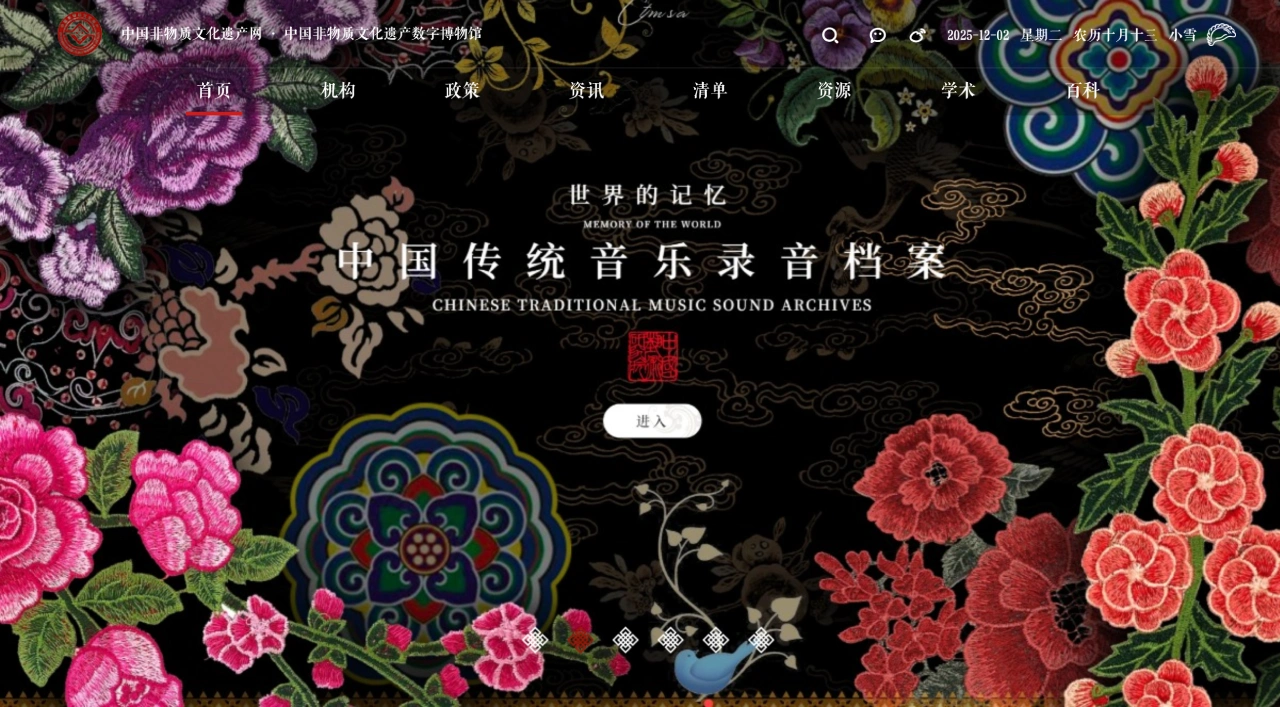
Main Content of the China Intangible Cultural Heritage Network
Project Archives: Includes information on national and provincial representative intangible cultural heritage projects and their inheritors, supporting text, image, and video retrieval.
Special Exhibitions: Regularly presents online "cloud exhibitions," such as "Woodblock Printing Techniques" and "Shadow Puppetry," allowing users to view high-definition imagery and craft processes online.
Interactive Experiences: Some provincial institutions in Sichuan, Nanjing, and other regions have connected to the platform, providing immersive modules such as VR/AR scenes, mini-games, online music listening, and guqin performances.
Policies and News: Timely releases of national intangible cultural heritage policies, training plans, and notices on the recognition of inheritors.
Core Categories and Statistical Data of Intangible Cultural Heritage
Project Categories: National representative intangible cultural heritage projects are divided into 10 major categories, including folk literature, traditional music, traditional dance, traditional theater, quyi (traditional storytelling and ballad singing), traditional sports, games and acrobatics, traditional fine arts, traditional crafts, traditional medicine, and folk customs.
Statistical Data
There are a total of 3,610 national representative projects, with traditional crafts (629 projects), traditional theater (473 projects), and folk customs (492 projects) accounting for a relatively large share;
There are a total of 3,998 national representative inheritors, with traditional theater inheritors (949 people), traditional craft inheritors (713 people), and traditional music inheritors (475 people) making up the main portion.
International Recognition: China has 44 projects inscribed on the UNESCO Intangible Cultural Heritage Lists, such as "Spring Festival — Social Practices of the Chinese People in Celebration of the Traditional New Year" and "Taijiquan." UNESCO has also designated March 21 each year as "World Taijiquan Day."
Policies and Plans Related to Intangible Cultural Heritage Protection
China Intangible Cultural Heritage Inheritor Training Program: Launched in 2015, it has achieved the goal of training 100,000 people during the "13th Five-Year Plan" period, forming a mature teaching and management system, encouraging institutions to participate in intangible cultural heritage protection, expanding the队伍 of inheritors, and improving the level of traditional crafts. It has produced notable results in revitalizing traditional crafts and assisting in poverty alleviation, and has become a foundational and strategic task in intangible cultural heritage protection.
Traditional Craft Revitalization Plan: Released jointly in March 2017 by the Ministry of Culture, the Ministry of Industry and Information Technology, and the Ministry of Finance, aiming to implement relevant policy requirements and promote the传承 and revitalization of traditional crafts.
Standardization Development: "Digital Resource Collection and Cataloging for the Digital Protection of Intangible Cultural Heritage" is the first series of industry standards in China's intangible cultural heritage field, providing support for the standardization and scientification of intangible cultural heritage protection.