Script Planner Assistant▸
 AI Apps
 AI News

Kickstarter: The World's Leading Creative Crowdfunding Platform
Kickstarter: The World's Leading Creative Crowdfunding PlatformIntroduction
Kickstarter is a globally renowned creative crowdfunding platform, founded in 2009 in New York, USA. It helps creators and entrepreneurs turn their ideas into real projects through small public contributions, driving innovation. Kickstarter's operating model is simple: creators launch projects, backers provide funding, and if the project succeeds, creators deliver rewards to backers. It connects people who have creative ideas but lack funding with those willing to support good ideas.
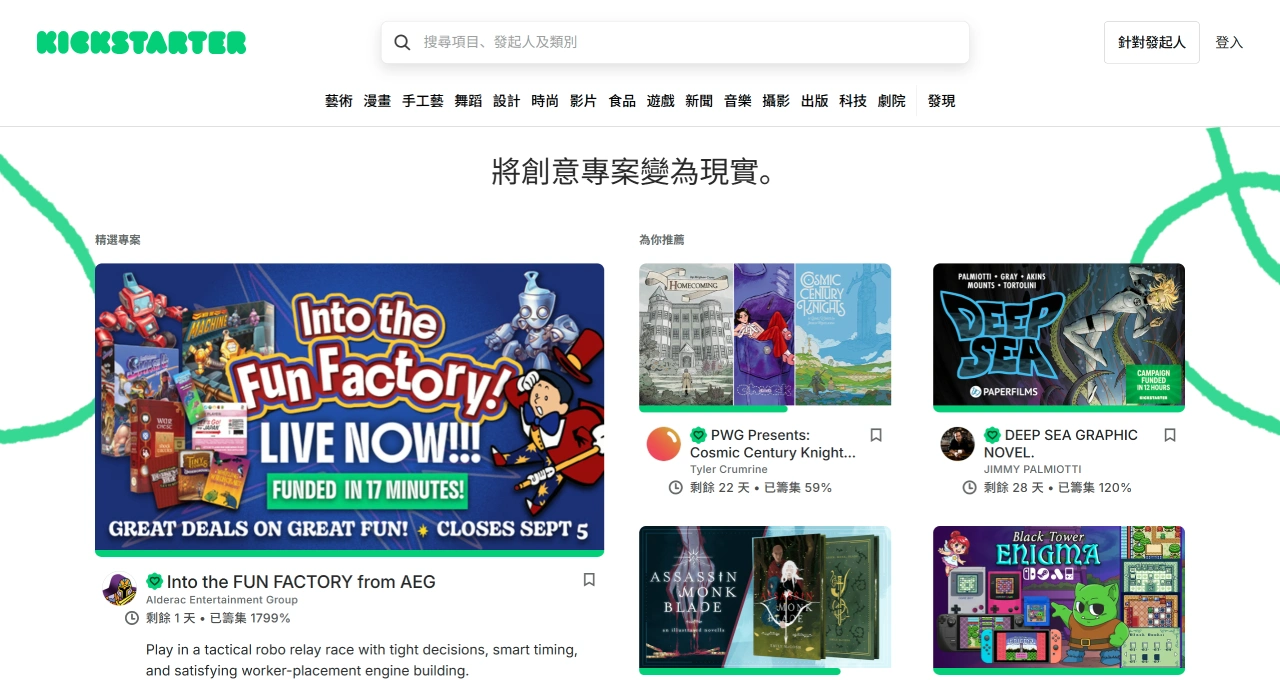
Kickstarter Features:
Focus on Creativity: Kickstarter only supports creative and innovative projects, covering fields like art, design, technology, food, and games (such as smartwatches, card games, eco-friendly shoes, etc.). It does not accept pure investment or commercial projects (no equity or monetary returns).
Unique Rewards: Backers typically receive project outcomes (such as early product versions, customized gifts) or unique experiences (such as dining with creators, participating in project development), not money. For example, the Pebble smartwatch project sent limited edition watches to backers, and the Coolest Cooler project delivered customized cooler boxes.
Strict Review: The Kickstarter platform checks the legality, authenticity, and feasibility of projects to ensure no false advertising or infringement, reducing risks for backers. Only projects that pass the review can go live.
Community Interaction: The platform encourages communication between creators and backers, maintaining contact through project updates and replying to comments, giving backers a stronger sense of participation. For example, during the development of Exploding Kittens, progress was publicly shared, and gameplay was optimized based on user feedback.
How Does Kickstarter Work?
First, Launch the Project. Creators register an account, fill in project information (including introduction, target amount, funding duration, reward plans), and submit it for platform review.
Then, Promote the Project. Attract backers through social media, email, offline events, etc. For example, the "Potato Salad" project went viral with a humorous one-line description ("I'm going to make potato salad").
Finally, Funding and Delivery. If the target amount is reached within the specified time, the platform takes a 5% service fee and 3%-5% payment processing fee, then transfers the funds to the creator. If the target isn't reached, the money is refunded to backers. Creators must deliver rewards to backers as promised.
How Are Kickstarter Fees Calculated?
If the project succeeds, Kickstarter charges 5% of the total funds raised as a service fee, plus a 3%-5% payment processing fee. If the target isn't reached, no fees are charged.
Kickstarter Success Stories:
Pebble Time Smartwatch: Launched in 2015, it raised $1 million within one hour and ultimately over $13 million, making it the highest-funded project on Kickstarter at the time, driving the development of wearable devices.
Coolest Cooler Multi-Functional Cooler: Launched in 2014, with over 60,000 backers, it raised $13.28 million, becoming the platform's second most successful project. It later became a mature enterprise, with products entering the mainstream market.
Exploding Kittens Card Game: Launched in 2015, it raised $1 million within 7 hours and ultimately $8.78 million. The game sold tens of millions of copies, becoming a phenomenal card game.
Oura Ring Health Monitoring Ring: Launched in 2015, it validated the "health monitoring + jewelry design" concept through Kickstarter crowdfunding. The company is now valued at $5.2 billion, and its products are favored by celebrities (such as Cristiano Ronaldo and Prince Harry).
Frequently Asked Questions:
Q: What is the core operating logic of Kickstarter? How does it differ from other financing methods?
A: The core logic is "Create project → Promote and attract support → Fund if target is met / Refund if not met." Creators write project descriptions, target amounts, and reward plans on the platform, promote to attract backers, and decide the next step based on whether the target is reached. Its distinguishing feature is "funds are released only if the target is reached, and fully refunded if not," protecting backers' funds. Moreover, it's not just about financing—it also helps creators find supporters and potential users, unlike traditional financing (such as bank loans) which requires collateral, strict review, and lacks this kind of user connection and promotional effect.
Q: When launching a project on Kickstarter, how can you improve the success rate?
A: Focus on four aspects: First, set clear goals and budgets. For example, for cultural and creative products, accurately calculate raw materials, production, logistics costs, and set a reasonable target amount—neither too high to achieve nor too low to cover costs. Second, design good reward plans, such as offering customized merchandise for $100 support, or getting early access plus lifetime after-sales service for $500 support, so people with different budgets are interested. Third, plan promotion in advance, such as building buzz on WeChat, Weibo, and other platforms before launch and updating progress daily after launch to reach more people. Fourth, establish good communication mechanisms, arrange timely responses to backers, and regularly send project updates (such as material procurement, production progress) to build trust.
To date, Kickstarter has helped over 220,000 projects successfully raise funds, with a total amount exceeding $7 billion, attracting backers worldwide.