Script Planner Assistant▸
 AI Apps
 AI News

Hanyu Fangyan Yuan: A Nonprofit Preserving Chinese Dialects
Hanyu Fangyan Yuan: A Nonprofit Preserving Chinese DialectsIntroduction
乡音苑(Phonemica)is a non-profit project dedicated to recording Chinese regional dialects. It was founded in 2013 by two young Chinese students studying abroad—Kellen Parker and Steve Hansen. They noticed that China's dialects were incredibly numerous and complex, and felt a strong desire to preserve this precious oral heritage. So they created this platform to invite people to tell stories in their hometown dialects and help safeguard them.
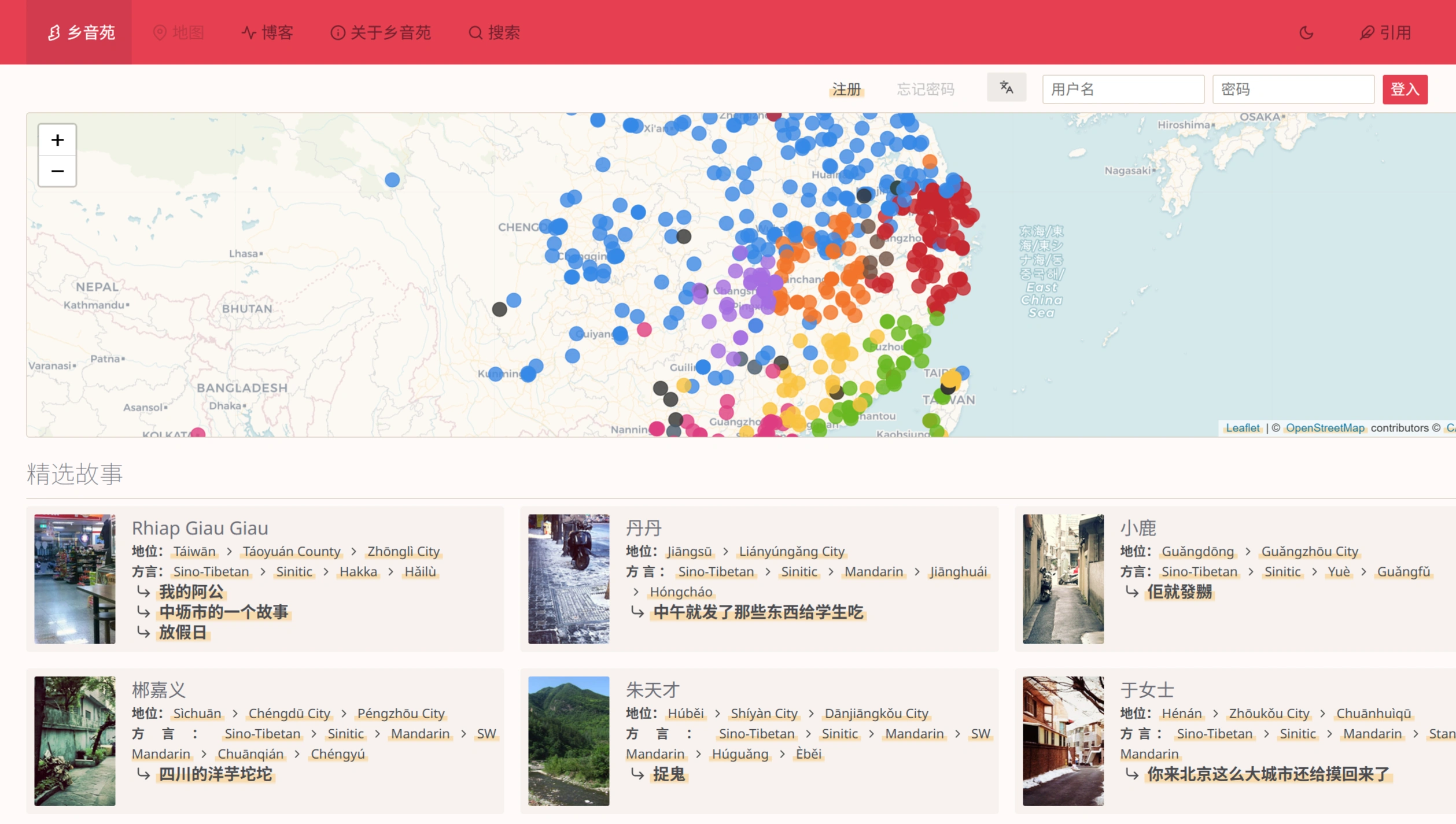
The platform encourages ordinary people to take part. All you need to do is record a 1- to 2-minute story in your hometown dialect—for example, "A day from my childhood" or "Special foods from my hometown"—and pair it with a Mandarin or English translation. The content can be very casual: nursery rhymes, children's chants, personal experiences, hometown foods, funny stories, old customs… all of these capture dialects at their most vivid.
After the site launched, many people uploaded their own dialect recordings. Each recording is marked on a map of China; click on a point on the map and you can hear people of different ages from different places telling stories in their local dialect—instantly感受到 just how rich Chinese languages are.
Nowadays Mandarin is used more and more, cities keep growing, and many dialects are gradually falling out of use—some may disappear entirely in the future. 乡音苑 stores these recordings so they can serve language research, cultural preservation, or simply let children hear how their grandparents used to speak. The linguistics community also pays close attention to this project, as the recordings help researchers study changes in pronunciation, vocabulary, and grammar across dialects.
The platform is very easy to use: open the dialect map to see the distribution across four major language families—Sinitic, Tibeto-Burman, Tai-Kadai, and Austronesian—or search directly for a specific dialect or region. If you know someone around you who is good at it, encourage them to record a piece; you can also register an account to help transcribe others' recordings or translate them.
Why do this?
✅ On a personal level, speaking and listening to your dialect can唤起 the taste of home;
✅ On a social level, it helps preserve local cultures and makes people cherish this diversity more;
✅ On an academic level, these recordings are first-hand material for studying语言变化.
Frequently Asked Questions:
✅ What does the platform mainly do? It lets people upload stories told in dialect—nursery rhymes, childhood games, how to make hometown dishes—and also welcomes help with transcription and translation.
✅ Which regional dialects are included? Examples include Taiwan Taoyuan Hakka, Jiangsu Lianyungang Jianghuai Mandarin, Guangdong Guangzhou Cantonese, Sichuan Chengdu Southwest Mandarin, and many more.
✅ How can you support the project? You can donate money (ETH, ADA and other cryptocurrencies are accepted, used to cover server and maintenance costs), or record your own stories, or help with transcription and translation.
✅ How can you get involved? Ask elders or friends who are good storytellers to record a piece, or register an account, find a dialect recording you can understand, and help turn the audio into text.
If you're interested in dialects, or want to hear people from all over China chatting in their hometown tongues, 乡音苑 is a wonderful platform. You can also contribute a recording of your own dialect and help preserve China's linguistic culture.