Script Planner Assistant▸
 AI Apps
 AI News

Kimi Academic Search: Efficiently Find and Organize Academic Resources
Kimi Academic Search: Efficiently Find and Organize Academic ResourcesIntroduction
What is Kimi Academic Search?
Kimi Academic Search is an AI assistant developed by Moonshot AI, specifically designed for academic research and thesis writing, with the goal of providing support and help for academic search. Kimi Academic Search is centralized within the Kimi+ app. Users simply need to input relevant keywords or research questions, and Kimi can quickly return relevant academic articles and materials, helping users quickly find the academic information they require from the vast literature.
Where is Kimi Academic Search?
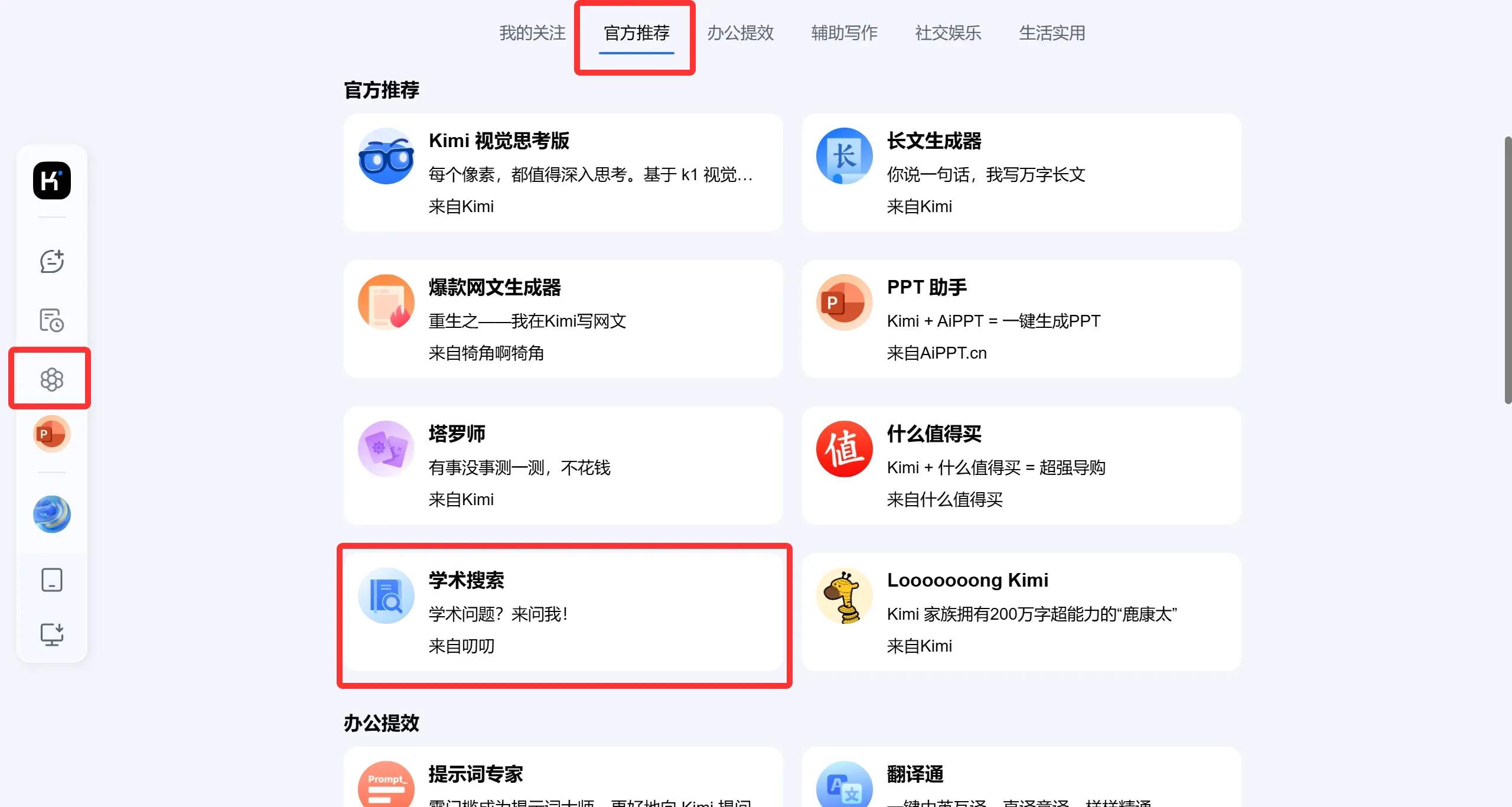
Open the Kimi official website, find [Kimi+] in the left navigation bar, and then find the Academic Search app under [Official Recommendations], as shown below:
Features of Kimi Academic Search:
Keyword-driven intelligent search: After users input academic keywords, Kimi can quickly search multiple academic resource libraries (such as thesis websites, journal databases, etc.) and automatically generate concise content summaries. For example, when inputting topic words such as "text segmentation," Kimi will recommend related papers and provide abstracts, helping users quickly filter out valuable literature.
Paper recommendation and abstract generation: Kimi's academic search not only provides a list of literature, but also structures the search results in an organized manner. For example, for a specific research topic, Kimi can retrieve more than 10 related papers at once and extract the core abstract of each paper, allowing users to grasp mainstream viewpoints in the field without reading each paper individually. This feature is especially suitable for researchers or students who need to quickly understand new fields.
Diversified literature acquisition: Kimi can connect various databases, consolidating academic materials from different sources. Users can access literature resources from different areas, increasing the breadth and depth of research.
Intelligent algorithms and personalized recommendations: By analyzing users' search history and interest preferences, Kimi will recommend more relevant academic resources. For example, when researching "performance evaluation of private universities," Kimi will filter information from academic websites and journals and generate concise answers, citing original content to enhance credibility.
Coordinated use with other features: Academic Search is closely integrated with other Kimi features (such as document interpretation and material organization). For example, users can directly upload retrieved literature to Kimi for full-text analysis, generating reviews or charts.
Use Cases of Kimi Academic Search:
Research workers: Accelerate the efficiency of literature searching and comprehension when defining research topics or during literature review stages.
Undergraduates writing graduation theses: Provide preliminary guidance on research directions and literature overviews for inexperienced students.
Interdisciplinary research: Help quickly understand research developments in other fields.
How to Use Kimi Academic Search?
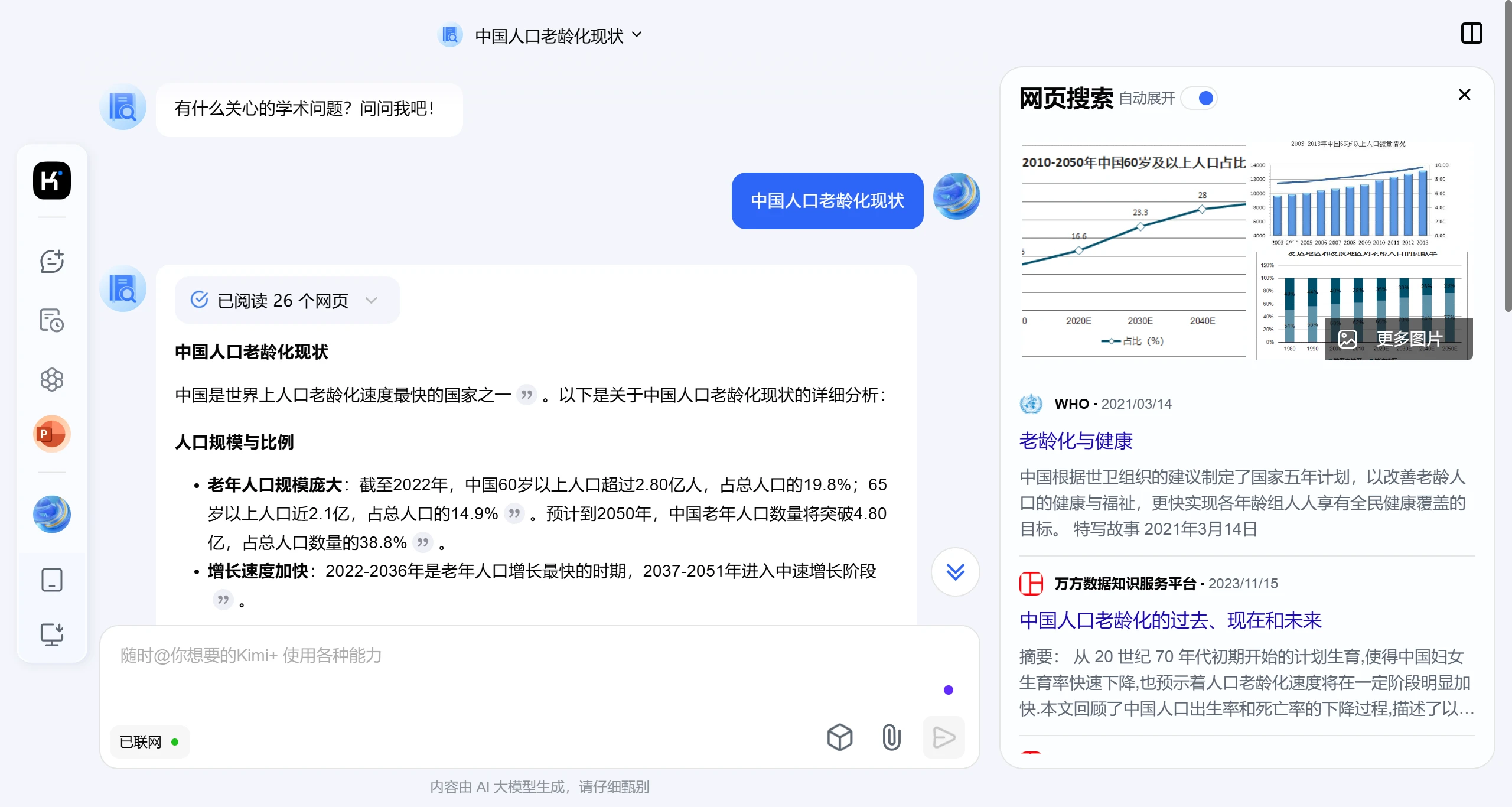
When conducting a literature review, users only need to ask Kimi a general question, such as "What research exists on the application of artificial intelligence in education?" Kimi will quickly provide relevant research literature abstracts and links, helping to organize research ideas.
Although Kimi's academic search is powerful, compared with tools like Metaso AI, it still falls short in deep literature analysis and multimodal retrieval (such as video content). However, Kimi's strengths in long-text processing, multi-format support, and personalized recommendations make it a practical tool for handling massive amounts of academic information.
Related Information:
Deepseek, Kimi, and Doubao AI: Which One Is Better?