Script Planner Assistant▸
 AI Apps
 AI News

PaSa: ByteDance's Open-Source AI Agent for Academic Paper Retrieval
PaSa: ByteDance's Open-Source AI Agent for Academic Paper RetrievalIntroduction
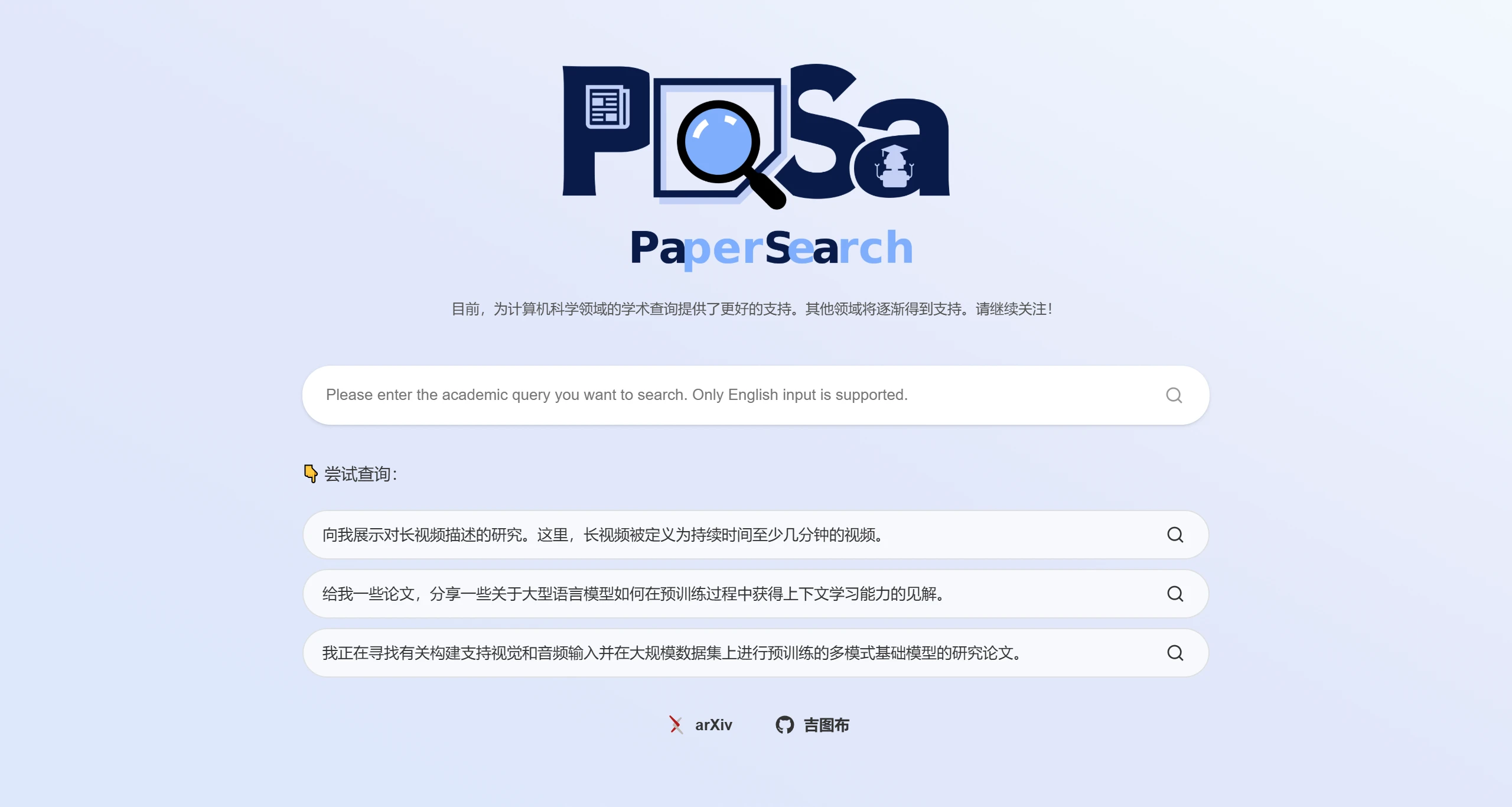
PaSa-Agent.ai is an AI-powered academic paper retrieval agent launched by ByteDance, based on reinforcement learning. It can automatically invoke search engines, read papers, and trace citation networks to provide users with accurate academic literature retrieval services.
PaSa Core Features:
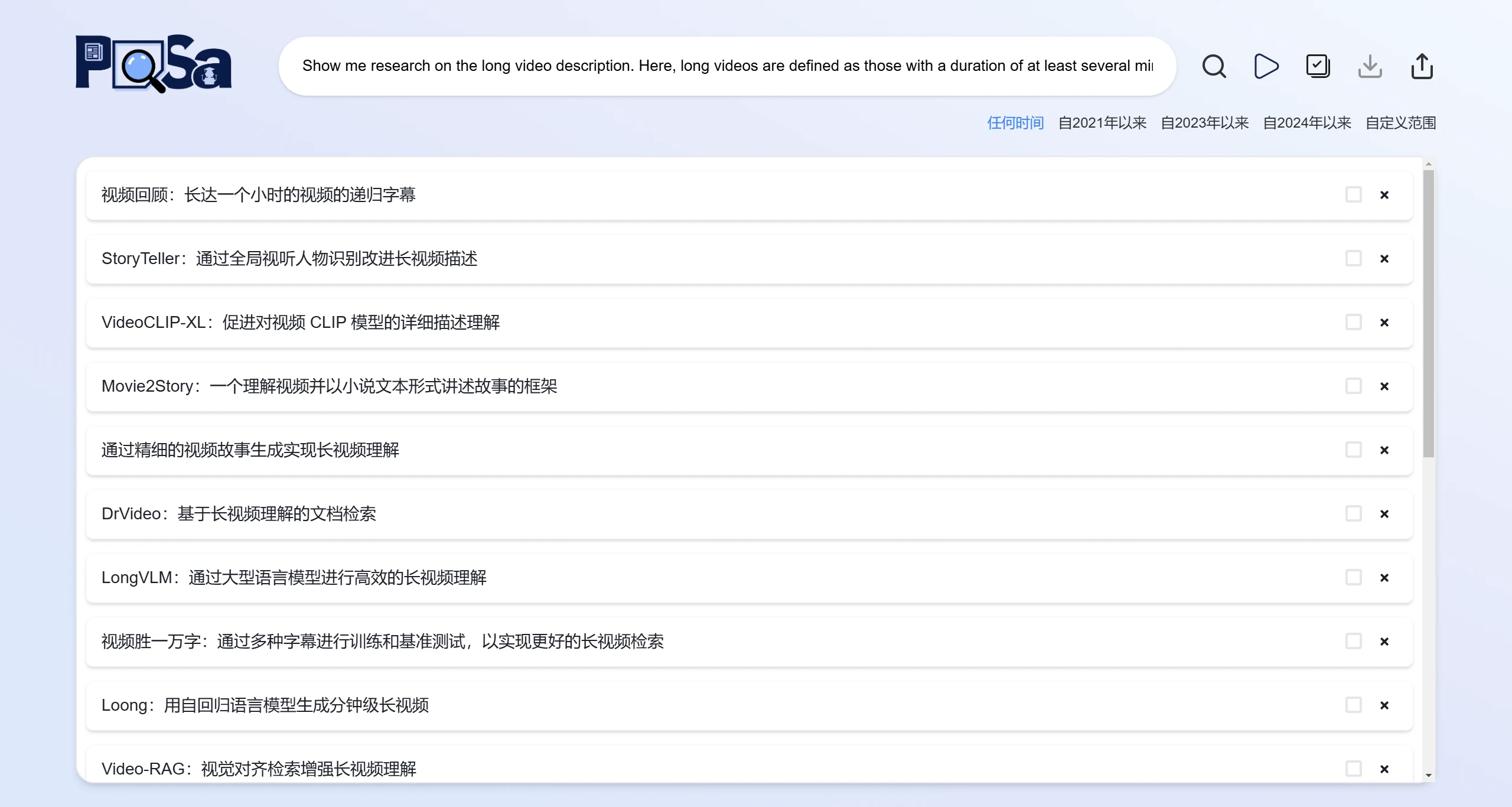
Intelligent Retrieval: PaSa-Agent can act like a human researcher. PaSa is able to generate diverse search keywords based on users' academic questions, automatically invoke search engines, and perform multiple searches. It generates and executes diversified search keywords to cover a broader range of academic literature.
Complex Query Handling: Specifically designed to handle complex academic queries, it can understand detailed research needs, including specific algorithms, research methodologies, or nuanced distinctions within a field.
Citation Network Navigation: Beyond simply finding papers, PaSa traces the citation networks of related papers through PaSa, helping users discover relevant literature and research background.
Multi-Domain Query Support: While it currently primarily supports academic queries in computer science, it will gradually expand to other academic disciplines in the future.
Reading and Analyzing Paper Content: Through its two core components, Crawler and Selector, PaSa can efficiently collect and filter relevant papers to ensure the precision of retrieval results.
Selecting Relevant References: PaSa can filter out the references most relevant to users' queries from massive literature, providing comprehensive and accurate search results.
PaSa Performance Highlights:
Surpassing Traditional Search Engines: On the RealScholarQuery benchmark, the PaSa-7B model outperforms Google Scholar by 37.78% and 39.90% on the recall@20 and recall@50 metrics respectively, demonstrating its exceptional performance in the field of academic search.
Combined with Large Language Models: Despite being trained on synthetic data, PaSa's performance surpasses multiple baseline systems, including Google, Google Scholar, and search-enabled GPT-4o.
PaSa Technical Principles:
The core of PaSa consists of two main LLM agents: Crawler and Selector. The Crawler is responsible for collecting academic papers relevant to users' queries through search engines, while the Selector carefully reads each paper and assesses whether it meets the user's needs. PaSa uses reinforcement learning (RL) and the Proximal Policy Optimization (PPO) algorithm for training, leveraging the synthetic dataset AutoScholarQuery and the real-world query benchmark RealScholarQuery to enhance search efficiency and accuracy.
PaSa Application Scenarios:
PaSa is applicable across multiple domains including academic research, education, and corporate R&D. In academic research, PaSa can help researchers quickly locate milestone papers within a field and avoid missing niche studies. In education, students can describe their needs in natural language, and PaSa will automatically recommend tiered literature. In corporate R&D, PaSa can track the latest technological developments in real time:
Academic Research: Researchers can leverage PaSa to quickly find relevant literature, saving time and improving research efficiency.
Literature Review: When writing literature reviews, PaSa can help researchers comprehensively collect and analyze relevant literature.
Education Sector: Teachers and students can use PaSa for project research and literature searching to enhance learning effectiveness.
Interdisciplinary Research: PaSa's multi-domain support makes it suitable for interdisciplinary research projects, helping researchers access literature from different fields.
How to Use PaSa-Agent.ai for Academic Querying and Literature Retrieval?
Online Usage
Visit the Website: Visit the PaSa-Agent.ai website.
Enter a Query: Type your academic question or research topic into the search box.
Get Results: The system will automatically invoke search engines, browse relevant papers, and trace citation networks, ultimately providing accurate and comprehensive academic paper retrieval results.
Local Deployment
Data Preparation: Download and prepare the datasets, including AutoScholarQuery and RealScholarQuery.
Model Preparation: Download the model checkpoints for PaSa-7b-Crawler and PaSa-7b-Selector.
Running PaSa: Follow the provided guide to clone the GitHub repository, install dependencies, and run PaSa.
PaSa-Agent.ai also features reinforcement learning optimization, trained using the synthetic dataset AutoScholarQuery, which contains 35,000 fine-grained academic queries and their corresponding papers. In addition, PaSa has developed the RealScholarQuery benchmark, which collects real-world academic queries to evaluate its performance in more realistic scenarios.