Script Planner Assistant▸
 AI Apps
 AI News

Dayamax: Academic Plagiarism Detection & Similarity Analysis Platform
Dayamax: Academic Plagiarism Detection & Similarity Analysis PlatformIntroduction
DaYa Similarity Analysis (Paper Detection System) is a service platform that provides paper plagiarism and similarity detection. It is primarily used for various academic scenarios such as paper plagiarism checking, project material detection, and title evaluation material similarity checking. By collaborating with domestic and international institutions and through user-shared contributions, the DaYa detection system has amassed massive resources, covering a comparison database of more than 120 billion fingerprints including books, journals, degree theses, conference papers, patents, newspapers, and internet data. With its advantage in book detection, it enables simultaneous detection of books and periodicals, providing an additional layer of academic integrity assurance for paper plagiarism checking. Its affordable pricing and authoritative detection algorithms safeguard against academic misconduct.
Features of the DaYa Similarity Analysis System:
Massive Resource Library: The system maintains resource libraries covering books, journals, papers, newspapers, the internet, and more, ensuring comprehensive and accurate detection.
Multi-dimensional Detection: Supports various detection methods, including single-document detection, batch detection, and self-built comparison databases, meeting the needs of different users.
Visualized Reports: Detection results are presented in a visualized format, including highlighted similar passages and location distribution bars, allowing users to quickly locate and analyze them.
Personalized Services: Supports functions such as filtering references, filtering literature, filtering publication years, and filtering self-citations, helping users obtain more accurate detection results.
How to Use DaYa Similarity Analysis
Access the System: Visit the official website of the DaYa Similarity Analysis System.
Register and Log In: Users can register and log in as either individual users or institutional users. Individual users can register through email verification, while institutional users can log in using assigned account credentials.
Upload Documents: On the detection page, users can choose either single-document detection or batch detection. Single-document detection can be performed by uploading a file or pasting text.
View Reports: After detection is complete, users can view detailed detection reports, including overall similarity, distribution of similar passages, and typical similar documents.
Download Reports: Click "Download", or click on the online report and then click "Download Report" to download the report package. The downloadable report package includes: full-text detection report (PDF), concise report (PDF), full-text comparison, similar segments, and comprehensive assessment (HTML).
Application Scenarios of DaYa Similarity Analysis:
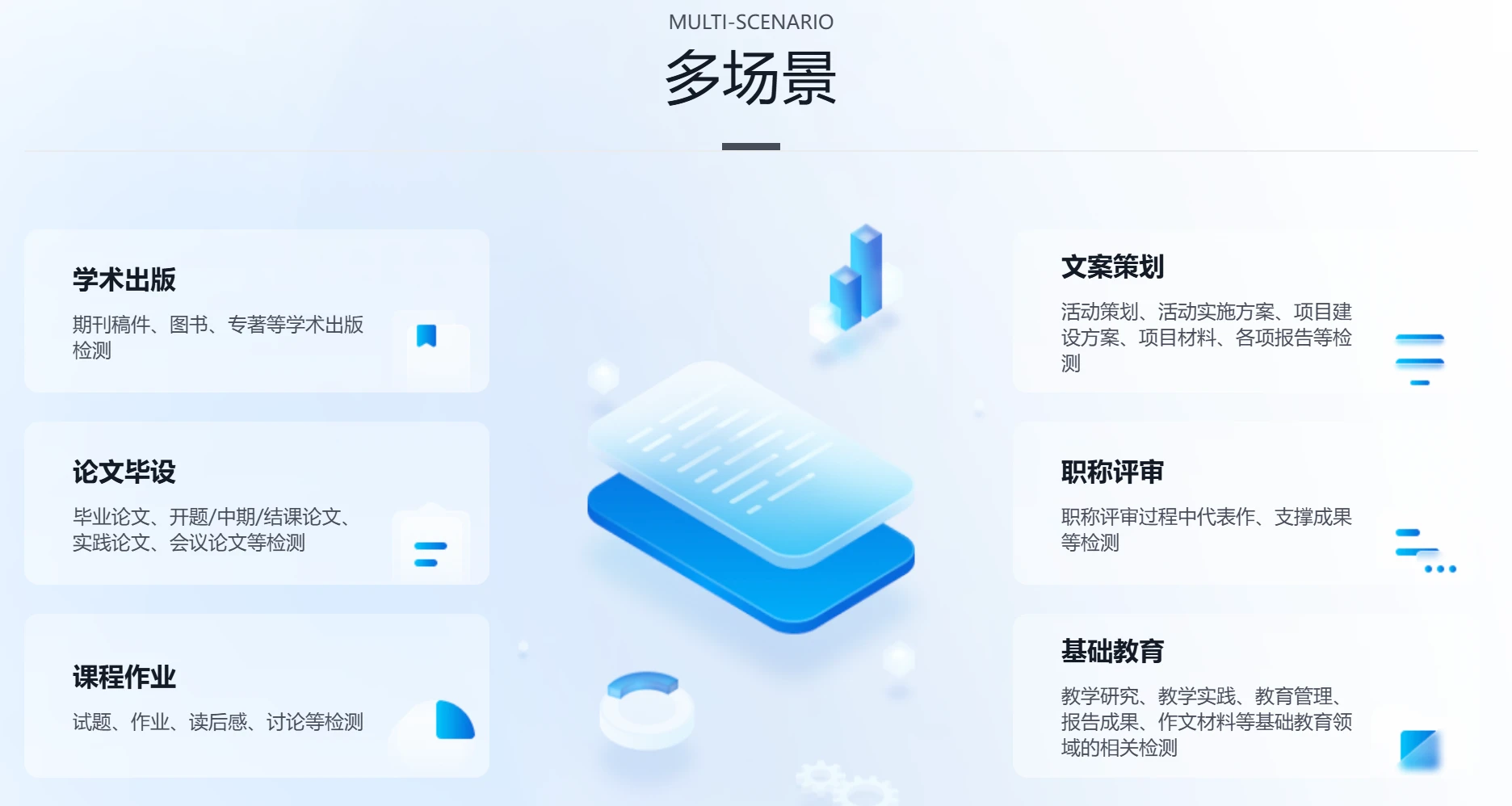
Academic Publishing: Detection for journal manuscripts, books, monographs, and other academic publications.
Thesis and Capstone Projects: Detection for graduation theses, opening/mid-term/final-term papers, conference papers, and more.
Course Assignments: Detection for test questions, assignments, book reports, discussions, and more.
Copywriting Planning: Detection for event planning, event implementation plans, project construction plans, project materials, various reports, and more.
Title Evaluation: Detection for representative works and supporting achievements during the title evaluation process.
Basic Education: Detection for teaching research, teaching practice, education management, reporting achievements, composition materials, and other basic education areas.
The DaYa Similarity Analysis System is developed by Beijing Dayayinhe Information Technology Co., Ltd., affiliated with the Chaoxing Group. Since its establishment in July 2013, it has focused on providing information technology services, particularly in the fields of libraries, information, and education. Designed for paper plagiarism checking, the system boasts a rich resource library that includes books (approximately 3 million titles), journals (about 30,000 titles, totaling 50 million articles), degree theses (over 2 million), conference papers (over 2 million), newspapers (more than 1,800 titles, nearly 130 million articles), as well as internet resources and foreign-language literature, ensuring a broad scope of comparison.
Related Information: