
 Script Planner Assistant▸
 AI Apps
 AI News
Best AI Poster Design Tools in 2026: Xinliu, Lovart, Duiyou & 01Agent Compared
小编 ·

Best AI Poster Design Tools in 2026: Xinliu, Lovart, Duiyou & 01Agent Compared
There are now quite a few AI tools for making posters, each with its own focus. Some handle Chinese typography smoothly, some specialize in brand VI, some are better suited for e-commerce scenarios, and others cover everything from content production to distribution. This article rounds up four representative ones—星流Agent, Lovart, 堆友Agent, 01Agent—and briefly compares them by positioning, features, and pros and cons for easy reference.
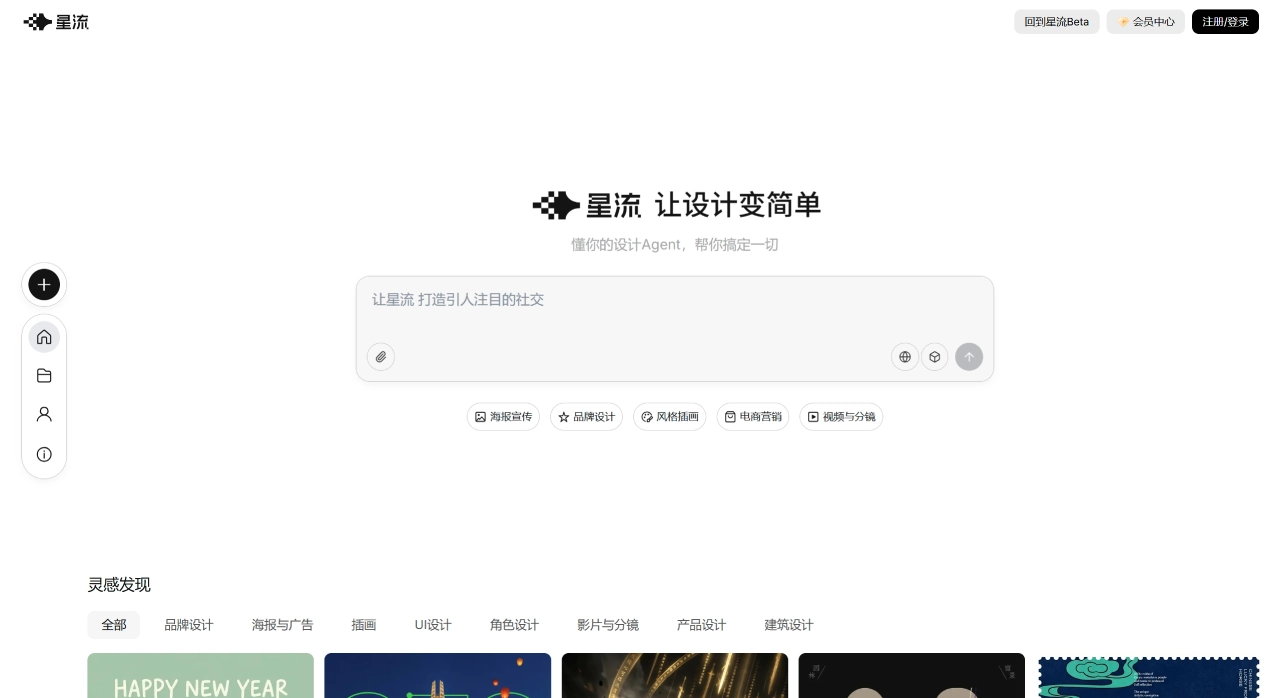
1. 星流Agent
A design agent launched by LiblibAI, which can be thought of as the domestic version of Lovart. It chains image generation, semantic understanding, smart layout, and post-editing together, and is specially optimized for Chinese-language scenarios and Chinese-style aesthetics.
Features
Generate posters, IP characters, illustrations, logos, stickers, and more using natural language
Integrates over a dozen models including Star-3 Alpha, Kontext, F.1, Kling, and Qwen, and automatically picks the most suitable one
Infinite canvas for interactive editing, with layer management, one-click layer separation, and direct in-image text editing
Smart outpainting, HD upscaling, cutout, erasing, and background removal
Can also generate videos, 3D models, and serialized visual content
Advantages
Stable access from within China, no VPN required
Strong performance in Chinese semantic understanding and font rendering
Generation and editing are integrated, with full workflow automation
Well-suited for Chinese-style design and commercial use cases
Disadvantages
Credits burn quickly; heavy users need to pay
For professional designers already comfortable with open-source tools like ComfyUI, the generation results are not far from a self-built workflow, so there may not be enough motivation to pay
2. 堆友Agent
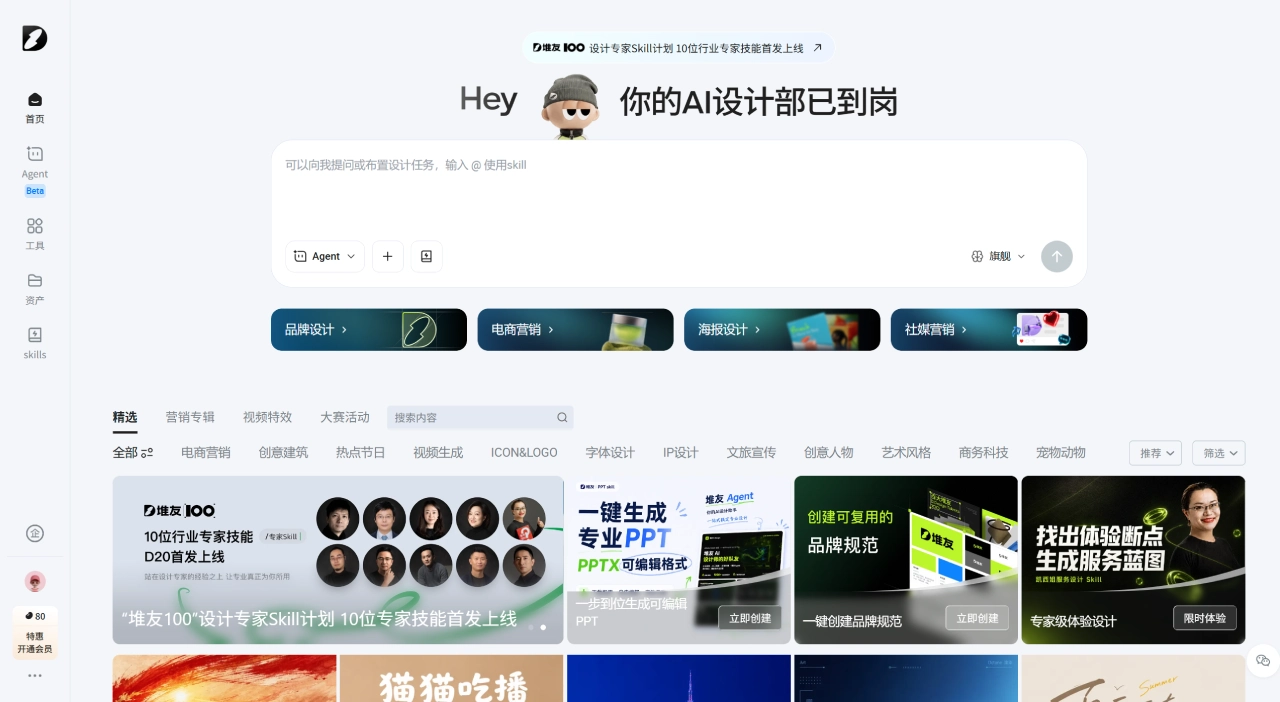
An all-in-one AI design platform launched officially by Alibaba Design, with the slogan "Your good teammate for AI creation." It packages the experience of Alibaba's senior designers into conversational, callable skills, and is deeply optimized for Chinese-language e-commerce marketing scenarios.
Features
AI Reactor: text-to-image and image-to-image, with 50+ style models supported
AI Toolbox: WanTu cutout, one-click erase, AI product images, Luban marketing graphics, creative fusion, AI artistic text, model skin swap, and more
3D asset library: over a thousand free, commercially usable 3D assets with real-time online editing
Professional workflows: ComfyUI/WebUI interfaces, with fine-grained parameter control over SD models
Conversational poster Agent that can batch-generate e-commerce image sets from an uploaded Excel file
Integrated with Visual China licensed assets, with commercial authorization codes automatically provided on download
Advantages
Backed by the Alibaba ecosystem, with e-commerce-grade algorithms and commercial data
Deep optimization for Chinese e-commerce scenarios
Comprehensive copyright protection with clear commercial licensing
Free 3D asset library
Suitable for both zero-entry and professional-level users
Disadvantages
Core capabilities are concentrated on e-commerce scenarios; general creative design and brand VI capabilities are relatively limited
Advanced features consume 堆豆/堆币
Some features are somewhat redundant for non-e-commerce users
3. 01Agent
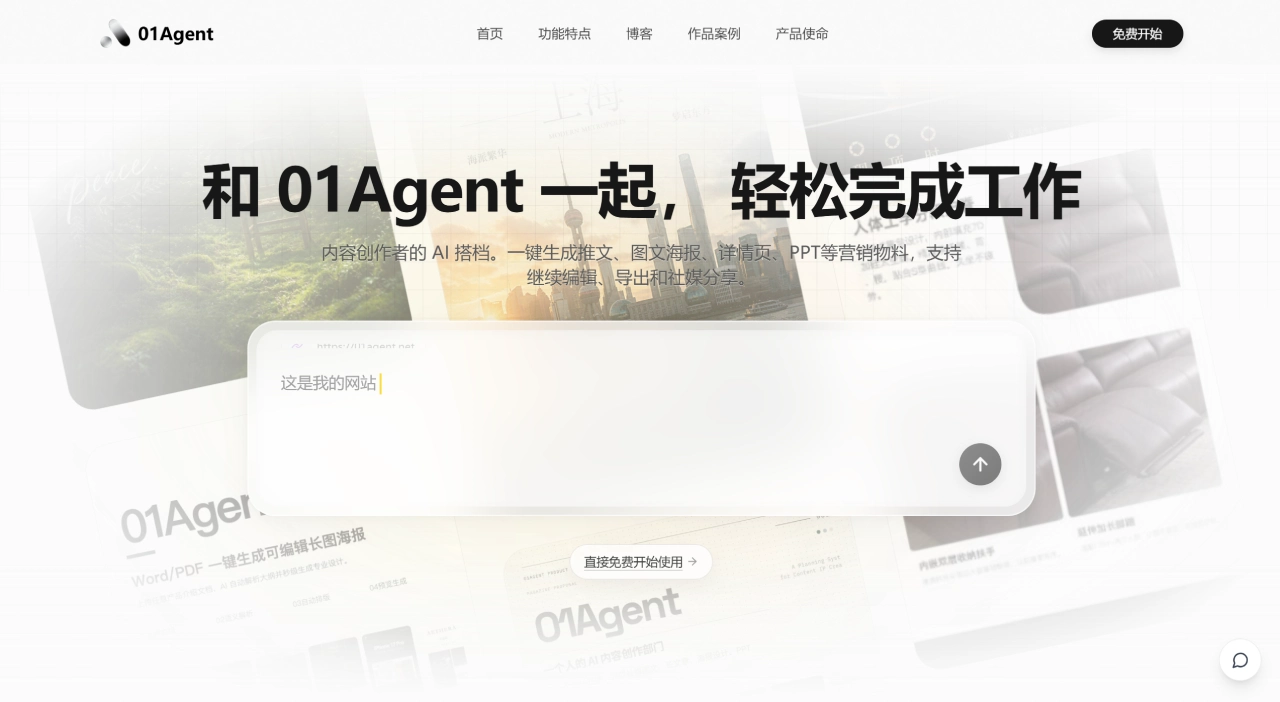
An AI image-and-text creation agent launched by 超空间科技, covering the entire chain from topic selection, creation, layout, and editing to publishing. It targets self-media operators, e-commerce marketers, SMBs, and content creators.
Features
Smart topic selection and full-web trend tracking, automatically recommending high-potential topics
Multi-format content generation: 小红书 image-and-text posts, WeChat Official Account articles, posters, ppt, e-commerce detail pages, and long images
Smart canvas: supports layer-level secondary editing after generation (edit text, drag layers, adjust font/color)
One-click conversion of documents, articles, and website links into posters, with automatic image fetching and layout
Multi-platform size adaptation, with one-click distribution to 小红书, WeChat Official Account, Douyin, and more
Supports export of HD images, PDF, PPT, and PSD; the Agent remembers user preferences
Advantages
Full workflow coverage, from topic selection to distribution
Generated content can be deeply edited, with pixel-level layer modification supported
Deep optimization for social-media platforms, especially 小红书
Highly efficient direct conversion of documents and web pages into posters
Affordable pricing; Lite version is ¥21/month
Disadvantages
Design expertise leans toward "image-and-text layout," with less visual creativity than 星流 and Lovart
Posters that require a strong sense of design still need manual fine-tuning
AI-generated content has a fairly noticeable templated feel
4. Lovart
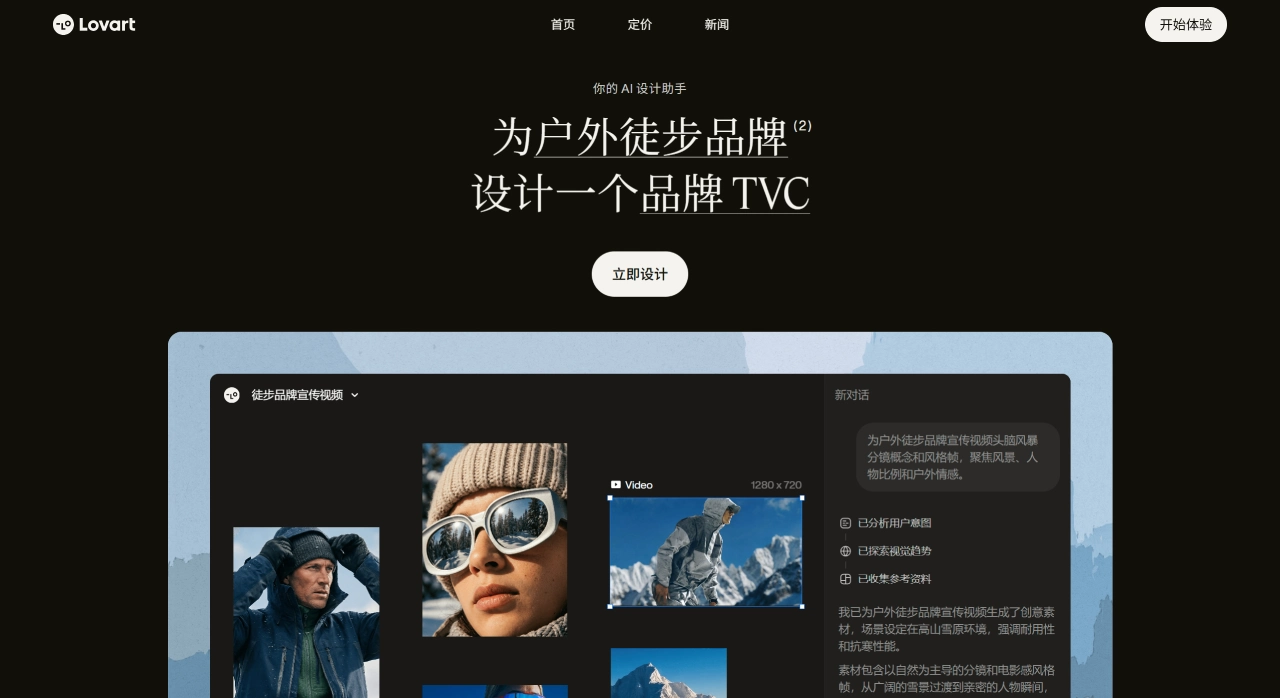
The world's first AI agent dedicated to end-to-end design, integrating cutting-edge multimodal models such as GPT Image-1, Flux Pro, Kling AI, and Suno AI, automatically handling everything from creative ideation to final delivery, with over 50,000 design works generated per day on average.
Features
Conversational interaction; a single sentence can trigger the design workflow
Multimodal generation: images, video, music, 3D scenes, brand VI systems, and storyboards
Built-in "creative reasoning engine" that automatically breaks down requirements and plans subtasks
Infinite canvas for real-time collaboration, with text-image separation, font/layout adjustment, and multi-format export
Three interaction modes: conversational mode, auto-prompt mode, and an enhanced traditional workspace mode
ma, SD and other professional tools
Strengths
Most powerful end-to-end automation capabilities
Integrated with top-tier international multimodal models
Supports complex brand VI and storyboard production
Active overseas designer community with a mature creative ecosystem
Weaknesses
Unstable access from mainland China, slow loading, frequent disconnections
Less adapted to Chinese contexts and traditional Chinese aesthetics than Starflow
Relatively high cost of use
How to Choose
For e-commerce selling, choose Duiyou—backed by Alibaba data with clear commercial licensing, but capabilities outside e-commerce are average.
For high design demands and if you can access overseas tools, choose Lovart—strongest end-to-end capabilities, but access is slow in mainland China and Chinese typography isn't as smooth.
For design capabilities without needing overseas access, choose Starflow—the domestic equivalent of Lovart, with better Chinese and traditional Chinese aesthetics, but credits are consumed quickly and heavy use requires ongoing payment.
For Xiaohongshu, WeChat Official Accounts, and Douyin image-text content, choose 01Agent—streamlined workflow from topic selection to distribution at a low price, but weaker design quality and heavy templating traces.
To sum it up in one sentence: e-commerce uses Duiyou AI, high-end overseas tools use Lovart, domestic alternative is Starflow, and batch social media content uses 01Agent.









