
 Script Planner Assistant▸
 AI Apps
 AI News
Seko vs. Little Skylark: Which AI Short-Drama Generator Is Better in 2026?
小编 ·

Seko vs. Little Skylark: Which AI Short-Drama Generator Is Better in 2026?
SenseTime's Seko and ByteDance's Xiaoyunque (Little Skylark) are both mainstream AI short drama creation tools today, but they take very different design approaches. One emphasizes step-by-step fine-grained control, while the other focuses on one-click video generation. Seko is more like a "producer" you can be involved with throughout the whole process, paying attention to control over the creative workflow; Xiaoyunque, on the other hand, is more like an "executive director," pursuing the convenience of one-click output. This article makes a real-world comparison from dimensions such as generation method, visual quality, generation speed, and digital humans, to help you pick the right tool based on your needs.
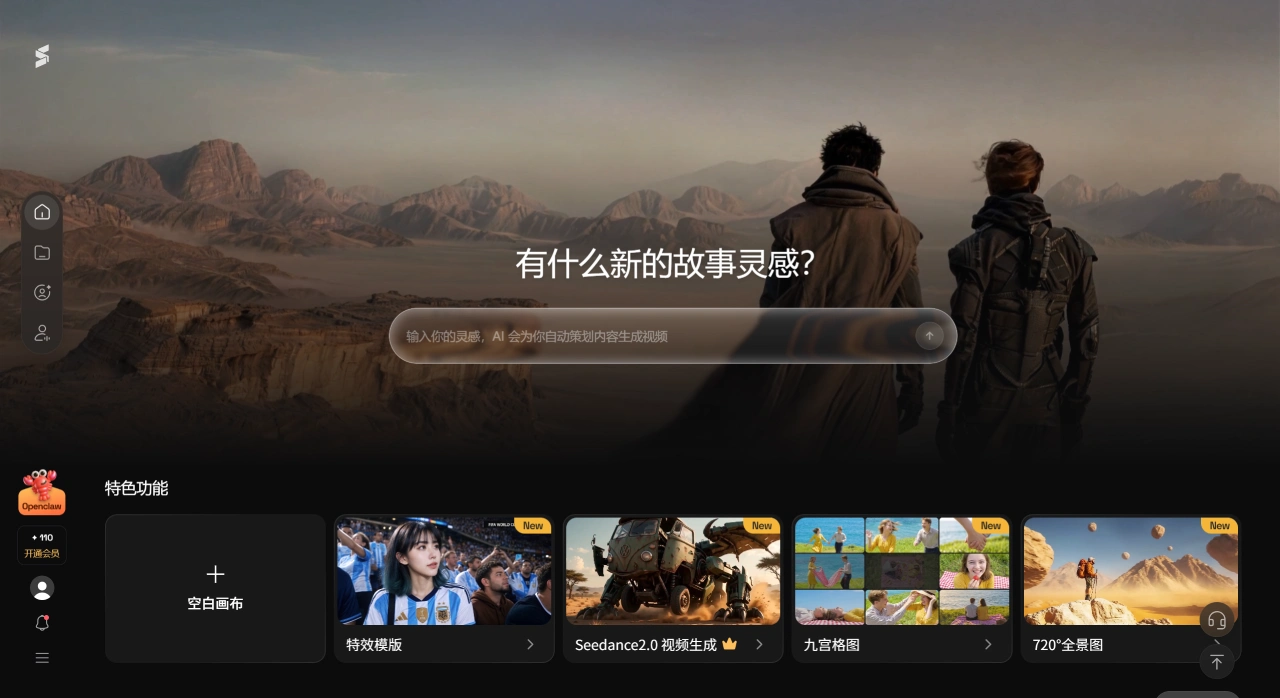
Seko and Xiaoyunque: Their Positioning
Seko breaks down creation into script, storyboard, video, voice-over, and BGM stages, and each step can be adjusted independently. The parameter control is quite detailed, and the camera movement is smoother. Its target users are creators who are willing to spend time polishing their work and have demands for visual quality.
Xiaoyunque, on the other hand, takes a single sentence of input, and the AI automatically handles the script, footage, editing, and voice-over. The interaction is divided into three tiers — Basic, Advanced, and Professional — making it genuinely easy to get started. It targets ordinary users and small B-side clients who want to produce videos quickly and have no editing experience.
Seko and Xiaoyunque: Functional Differences
| Comparison Item | Seko | Xiaoyunque |
|---|---|---|
| Generation Method | Script → Storyboard → Video → Voice-over → BGM, each stage adjustable independently | Input a one-line command, and AI automatically completes script, footage, editing, and voice-over |
| Parameter Control | Supports fine-grained parameter settings, with smoother camera movement | Minimalist interaction, with a three-tier design of Basic/Advanced/Professional |
| Digital Humans | Supports lip-syncing, but limited to a single character | Provides a variety of commercially usable digital human avatars — type in text to generate talking-head videos |
| Scene Rendering | Beautiful visuals, rich scenes, and a strong sense of professional camera work | Leans more toward rapid creativity, with relatively simplified handling of complex scenes and character depiction |
| Music / Voice-over | Few BGM templates; AI music generation takes a long time | Integrated with ByteDance's audio capabilities, supporting voice-over in multiple regional dialects |
| Short Drama Capabilities | Focused on refined production of short films / single scenes | Short Drama Agent launched in March 2026, supporting one-click generation from a 100,000-character script |
| Sharing & Credits | Supports sharing; sign in to get free credits | Fully free in the early stage, with gradual commercialization later on |
Seko offers beautiful visuals, rich scenes, and a strong sense of professional camera work, and supports lip-syncing digital humans, though limited to a single character. Its downside is a bit of an issue with language understanding — when you say "don't include something," it often includes it anyway. The generation speed isn't fast either, there are few BGM templates, and AI music generation takes a long wait.
Xiaoyunque generates videos quickly, with modular features: smart video generation, digital humans, AI design, background replacement, and viral hit replication are all available. For digital humans, it provides a variety of commercially usable avatars — type in text to generate talking-head content, and it also supports multiple regional dialects. A Short Drama Agent was launched in March 2026, enabling one-click video generation from a 100,000-character script. However, it can lag and queue during peak hours, and uploading footage featuring real human faces is temporarily not supported.
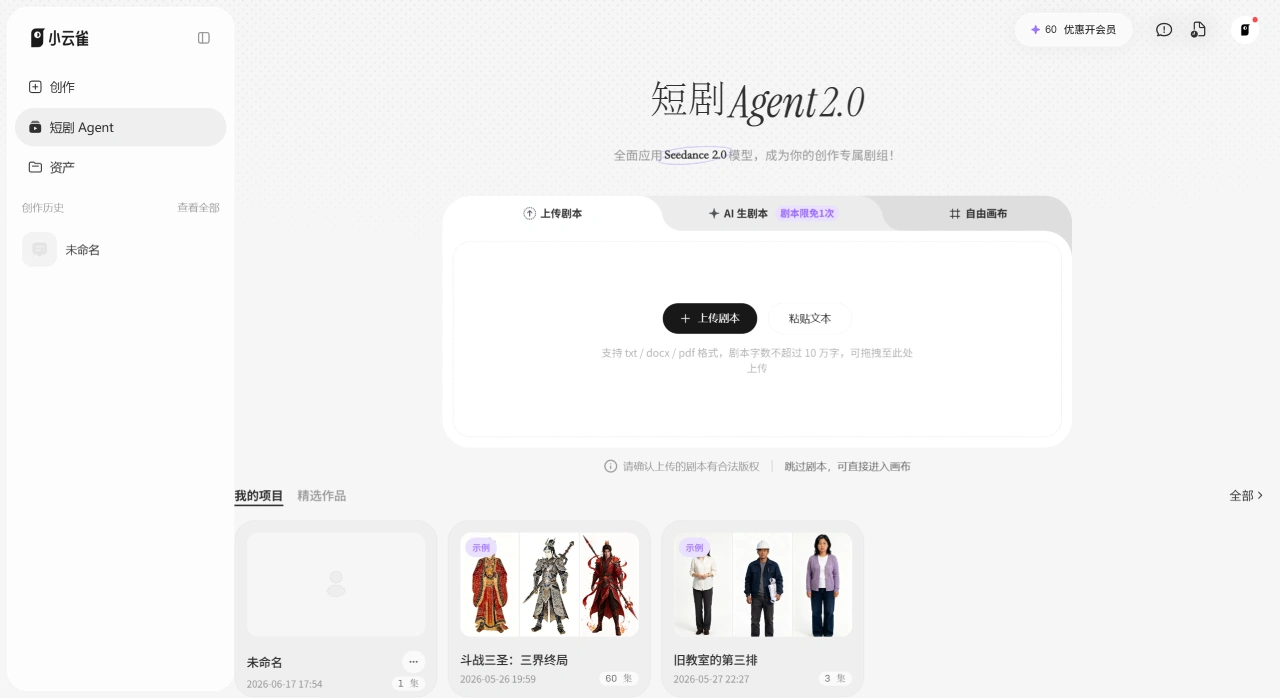
Seko and Xiaoyunque: Pros and Cons
Seko delivers strong visual quality, suited for polished short films. But responses are slow, time-consuming, and its language understanding can be off.
Xiaoyunque has zero barrier to entry and is fast, with strong closed-loop integration within the ByteDance ecosystem. But professional creators may find the controllability insufficient.
Other Aspects
In terms of script handling, Xiaoyunque supports uploading extra-long scripts of up to 100,000 characters and can automatically split them into storyboards; Seko places more emphasis on guiding you to refine the logic through questions. On the technical front, Seko is based on SenseTime's proprietary AI, but it has also integrated Seedance; Xiaoyunque, on the other hand, runs on ByteDance's Seedance 2.0 model, which delivers outstanding image quality. In terms of platform, Seko currently offers a web version, giving away free credits daily; Xiaoyunque primarily pushes the App side. On image quality, Xiaoyunque is rated as close to live-action with rich detail, while Seko's edge lies in character-driven storytelling and consistency in narrative.
How to Choose Between Seko and Xiaoyunque
If you have high demands for video storytelling and character consistency, pursue visual detail and camera movement quality, and want to be deeply involved in every stage, Seko is the better fit — especially for animated short films, educational content, or commercial promos. If you value efficiency and convenience more, want to produce a video with just a single sentence, or need to quickly generate large volumes of short videos, or distribute through the Douyin (TikTok) ecosystem, Xiaoyunque will be more suitable — particularly when you have high demands for image quality. Since Seko has also integrated Seedance, personally, I would choose Seko.









