
 Script Planner Assistant▸
 AI Apps
 AI News
AI Applications in Everyday Life
小编 ·

AI Applications in Everyday Life
Artificial Intelligence (AI) is most commonly portrayed in popular culture as a group of intelligent robots determined to destroy humanity, or at the very least an awe-inspiring theme park. We are safe for now because machines with general artificial intelligence do not yet exist and are not expected to appear anytime soon. You can learn about the risks and benefits of artificial intelligence through this article.
How does artificial intelligence improve social media?
People check their social media accounts regularly, including Facebook, Twitter, Instagram, and other platforms. Artificial intelligence not only works behind the scenes to personalize your feed, but also detects and eliminates fake news.
Artificial intelligence in everyday life: Social media
Twitter has already begun relying on behind-the-scenes artificial intelligence to improve its products, from recommending tweets to combating offensive or racist material and enhancing user experience. To stay on top of customer preferences, they use advanced neural networks to process massive amounts of data.
Deep learning helps Facebook extract value from a growing trove of unstructured datasets obtained from nearly 200 million users, who update their statuses 293,000 times per minute. Most of Facebook's deep learning technology is built on the Torch framework, which focuses on deep learning and neural networks.
Instagram also leverages big data and artificial intelligence to target advertising and combat cyberbullying, as well as to remove abusive comments. As the number of posts on the platform grows, artificial intelligence is becoming increasingly important in showing people information they may be interested in, eliminating spam, and improving user experience.
Chatbots
Chatbots are artificial intelligence programs that can answer questions and provide consumers with relevant content through common queries. Sometimes, chatbots are so successful that it seems as if you are interacting with a real person.
Self-driving cars and aircraft
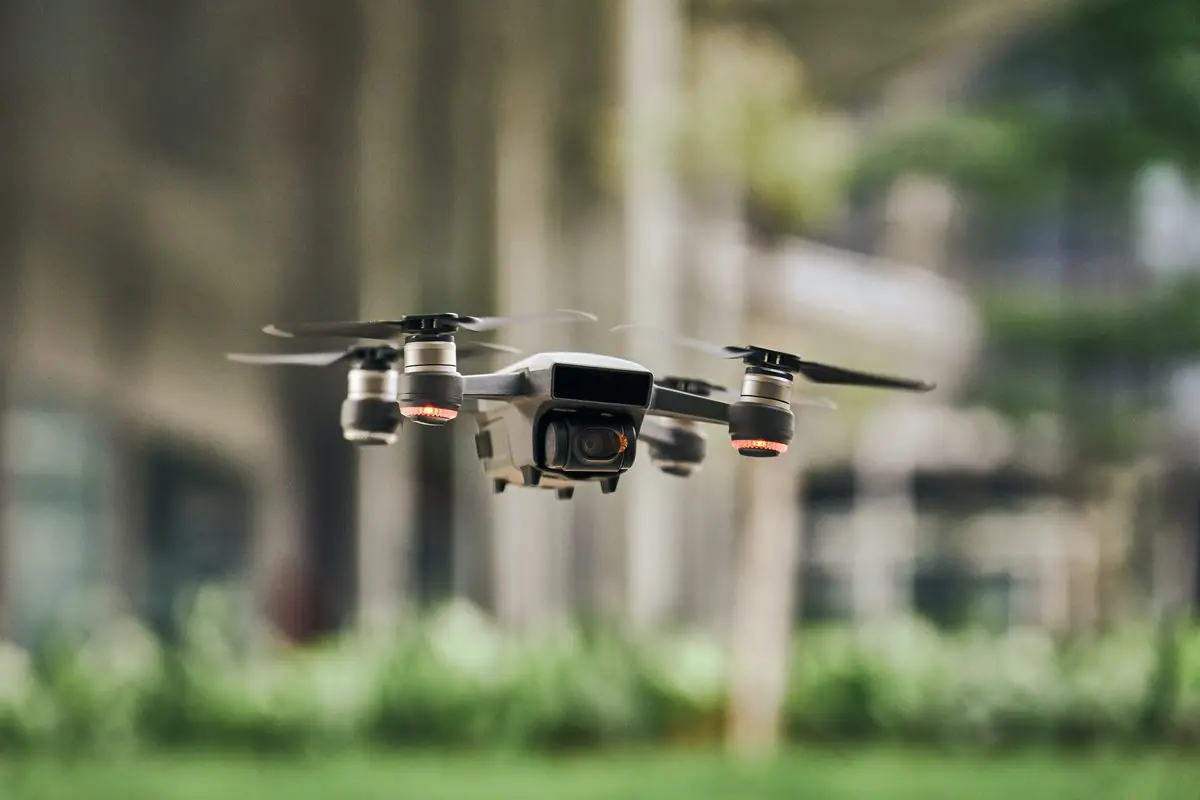
Drones, or unmanned aerial vehicles (UAVs), are already in our skies, conducting surveillance and providing delivery services in various programs, including delivering medications and essentials to the elderly confined to their homes whose mobility has been limited by COVID-19.
Artificial intelligence in everyday life: Self-driving cars
Although the self-driving car market is still in its early stages, there are already enough prototypes and pilot projects to indicate that such vehicles will become more common as artificial intelligence and Internet of Things (IoT) technologies advance. Artificial intelligence in everyday life is growing by the day.
Digital assistants
Virtual assistants such as Siri, Cortana, and Google Assistant make our lives easier. They act as wonderful companions, reminding us to pick up packages and telling us jokes. The software can recognize voice patterns and provide natural language processing capabilities. It also has the potential to learn about users by monitoring work hours, screen time, and other relevant data. Because it employs artificial intelligence, it can practice learning and listening like a human.
Food ordering websites
During mealtimes, tempting notifications about breakfast, lunch, and dinner often come from online ordering apps and websites. This is achieved through artificial intelligence software that can track the times you are most likely to want food. Not only that, artificial intelligence also tracks the types of food you like to eat and offers similar cuisine based on your preferences.
Music and media streaming services
Other great examples of artificial intelligence are the music and video streaming services we use every day. When you use Spotify, Netflix, or YouTube, AI makes judgments for you. These platforms offer recommendations based on your preferences.
Artificial intelligence in everyday life: Music and media streaming services
Keep in mind that the next time you play a recommended video on YouTube, watch a recommended show on Netflix, or engage with any other media, AI is involved.
Plagiarism
The nightmare of college students (or perhaps professors). Whether you are a content manager or a teacher grading papers, you likely face the same problem: the internet has made plagiarism much more convenient.
With an almost unlimited amount of knowledge and data available, unethical students and employees will take advantage of it.
Frankly, no one on earth can compare and contrast someone's article against all accessible data. AI is an entirely different species. Artificial intelligence can analyze massive amounts of data, compare it with relevant texts, and check whether a match exists.
Furthermore, thanks to advances and developments in the field, certain tools can now check sources in other languages as well as images and audio.
Banking
Today, many major banks allow you to deposit checks using your smartphone. Instead of going to the bank, you can deposit a check with just a few taps. Beyond the obvious precautions when accessing a bank account using a phone, the check also requires your signature.
Banks now use artificial intelligence (AI) and machine learning software to read your handwritten signature, compare it with the signature you previously provided to the bank, and authorize the check without risk.
In general, machine learning and artificial intelligence technologies enable computers to complete many tasks more quickly. As a result, operations can be carried out more efficiently, wait times are reduced, and costs are lowered. Artificial intelligence in everyday life is growing by the day.
Credit and fraud
While we are discussing banking, let's talk about fraud for a moment. Every day, a bank processes millions of transactions. For an average person, it is difficult to keep track of all of them and analyze them.
Artificial intelligence in everyday life: Banking
Moreover, the emergence of fraud-prone activities changes every day. With the help of AI and machine learning algorithms, you can process thousands of transactions in a single second. Additionally, they can be trained to recognize situations where problematic activity may occur and prepare for future issues.
Finally, when you apply for a loan or obtain a credit card, the bank must verify your application. The software can now process many elements, such as your credit score and financial history. This means shorter approval wait times and less room for error.
Online commerce (e-commerce) and shopping
Thanks to artificial intelligence (AI) technologies such as machine learning, consumers' online shopping experiences are becoming more personalized and streamlined.
AI-driven automated warehousing and supply chain management systems help commercial businesses better manage their logistics. At the same time, sentiment analysis enables them to better understand and respond to consumer needs and behaviors.
Navigation and travel
The work of artificial intelligence engineers behind navigation applications such as Google Maps and Waze is never-ending. Only satellite images refreshed every second can be effectively cross-checked through the released ML algorithms.
Artificial intelligence in everyday life: Navigation and travel
Researchers at MIT recently developed a navigation method that can label road features in digital maps in real time. These digital maps are also created simultaneously from satellite images, which contain information about bike lanes and parking spaces.
Convolutional neural networks (CNNs) and graph neural networks (GNNs) help reduce repeated route changes. Artificial intelligence also helps determine routes on satellite images covered by vegetation growth using predictive models.
Transportation
Car rental services such as Uber and Lyft are extremely useful because they can provide you with a car almost whenever you need one. However, we underestimate the AI-based programs running behind them. We often receive notifications to call a taxi before heading home from the workplace. How do these applications know when we need a taxi? Because these applications use deep learning techniques and have already identified our daily behaviors, they can do this. Artificial intelligence in everyday life is growing by the day.
Video games
In video games, we often compete against virtual opponents. This virtual player is an avatar of a real gamer, designed to replicate gameplay behavior throughout the process with the help of machine learning and programming, providing users with an enjoyable gaming experience.
Artificial intelligence in everyday life: Video games
Email systems
Email communication systems are very interesting. Unwanted emails are instantly filtered out and flagged as spam or non-urgent emails. When composing a new email, the software suggests possible replies. Some email systems also include the feature of notifying users when a message needs to be sent. All of these useful features require artificial intelligence to exist.
Video games
Artificial intelligence or similar technologies can be found in various video games, including racing games, shooting games, and strategy games. The main goal of incorporating artificial intelligence into games is to provide players with realistic gaming experiences so they can compete on digital platforms. Some companies are now creating computer games to analyze their habits and refine their algorithms.
Job search applications
Growing awareness of users and their needs. The software employed by these applications allows consumers to discover the best possibilities by suggesting jobs, roles, employees, and other relevant information.Audio to Text Converter
Have you ever wondered how an inanimate device responds to your voice commands and converts them into text? What happens after the sound is converted to text? Why don't we encounter any language obstacles when interacting with digital assistants? The most popular response to all of these queries is the use of speech recognition and natural language processing to develop these programs. As previously stated, AI technology is heavily based on these two technologies. As a result, it provides us with a wide variety of intelligent features.
Security and Surveillance
Every country has its own set of rules, but whether having a massive surveillance system is a good idea is still debatable. We may not all agree on the ethics of using such a system, but there is no doubt that it is being utilized, and AI plays an important part in this.
AI in Everyday Life: Security and Surveillance
Because humans cannot keep track of many monitors at the same time, AI makes perfect sense since it allows machines to do so. Due to advancements in technologies such as object recognition and facial recognition, soon all security camera information will be viewed by AI rather than humans. Although AI will take some time to be fully embraced, it will eventually become our future.
Smart Homes
When it comes to utilizing AI to create smart homes, Alexa and Bixby are our top considerations. However, these applications of AI are not limited to smart voice assistants like Alexa and Bixby.
AI is also being used to make homes smarter in a variety of different ways, including smart thermostat devices that use AI to automatically regulate temperature. These AI applications save energy by automatically turning lights on/off based on human presence, smart speakers, apps that adjust lighting colors depending on the time of day, and more. AI in everyday life is on the rise.
Google Predictive Search Algorithm
Whenever you try to look something up on Google, you undoubtedly see some auto-filled search terms in the search bar. This is Google's autocomplete function, which displays predictions as you type each character of your query.
RankBrain is the AI algorithm adopted by Google's predictive search. Its job is to retrieve results based on the data provided in the query. It improves search results for every search, bringing more relevant results to users.
Google employs a variety of techniques in its search engine, including neural networks, deep learning, machine learning, and AI. It is hard to imagine life without Google's search algorithms because they are effective.
Internet of Things
The fusion of AI and the Internet of Things (IoT) provides a wealth of possibilities for creating smarter home technologies that require less human intervention to operate. On the other hand, the AI component can help these gadgets learn from data.
Creating, communicating, aggregating, analyzing, and acting are the five main stages enabled by the IoT. The effectiveness of the "act" step depends on the thoroughness of the analysis; AI adds a lot of value to this process.
The value of the data collected by IoT devices is unlocked through the adaptability of the IoT. Over time, learning from this information helps IoT technology respond more effectively to human signals and needs.
Recipes and Cooking
AI has the potential to improve a variety of things, including home management. However, it may also aid in a variety of activities outside of typical AI research areas. For example, AI can be used to help chefs prepare meals more efficiently.
AI in Everyday Life: Recipes and Cooking
Rasa created an AI system that can analyze food and then provide recipes based on what's in the kitchen and pantry. This AI is ideal for someone who enjoys cooking but doesn't want to spend too much time planning ahead.
Autocorrect
Autocorrect is more than just correcting spelling mistakes; it also suggests the next word in a sentence to the user, making it an essential aid for anyone who types quickly. Have you ever wondered how autocorrect understands what you want to write? It's simple: with the help of pattern recognition (AI), it can save your most frequently used letters and send you the most commonly used texts. This builds a pattern in the device's artificial memory that is later used for suggestions and predictions.
Medical Applications
AI's medical applications are incredible. Devices are being used to identify and treat damaged tissue, including Google AI Eye Doctor, which has partnered with an Indian eye health chain to develop treatments for diabetic retinopathy, a disease that causes blindness. IBM Watson Health also uses computer algorithms to monitor patients' health. With cutting-edge cognitive capabilities such as AI and data processing, healthcare has undergone a remarkable revolutionary change.
Conclusion
AI is continuously evolving due to the ever-increasing data available to machine learning algorithms. This enables AI to function more effectively because trained ML models can be shaped to better handle the various real-world data of users. Here are some of the most prominent examples of AI in everyday life, which are widely available and easy to use. This proves that AI is already transforming our lives, allowing us to be more productive while also directing our efforts toward actual problems.
The future is now. AI technology will only accelerate, expand, and become more important in the future for virtually every aspect of all industries and our daily lives.









