
 Script Planner Assistant▸
 AI Apps
 AI News
Youware Major Update: Integrating MCP Protocol for a Smarter Website Generation Workflow
小编 ·

Youware Major Update: Integrating MCP Protocol for a Smarter Website Generation Workflow
Recently, the AI-based web development tool Youware rolled out a major version update, delivering a smarter webpage generation workflow through deep integration of the MCP protocol. This upgrade breaks down the barriers between asset acquisition and layout implementation found in traditional AI website building — users simply input a straightforward instruction like "create a photography portfolio website with a dynamic map module," and the tool will automatically trigger the MCP protocol to synchronously complete the entire workflow, from parsing Figma design files and calling the Hugeicons icon library, to generating high-definition images via FLUX. It outputs a complete webpage with responsive layout and interactive effects in one click, and when handling sophisticated structures such as multi-column layouts and parallax scrolling, it accurately reproduces design file details while automatically optimizing the visual hierarchy.
A Barrier-Free, Inclusive Experience
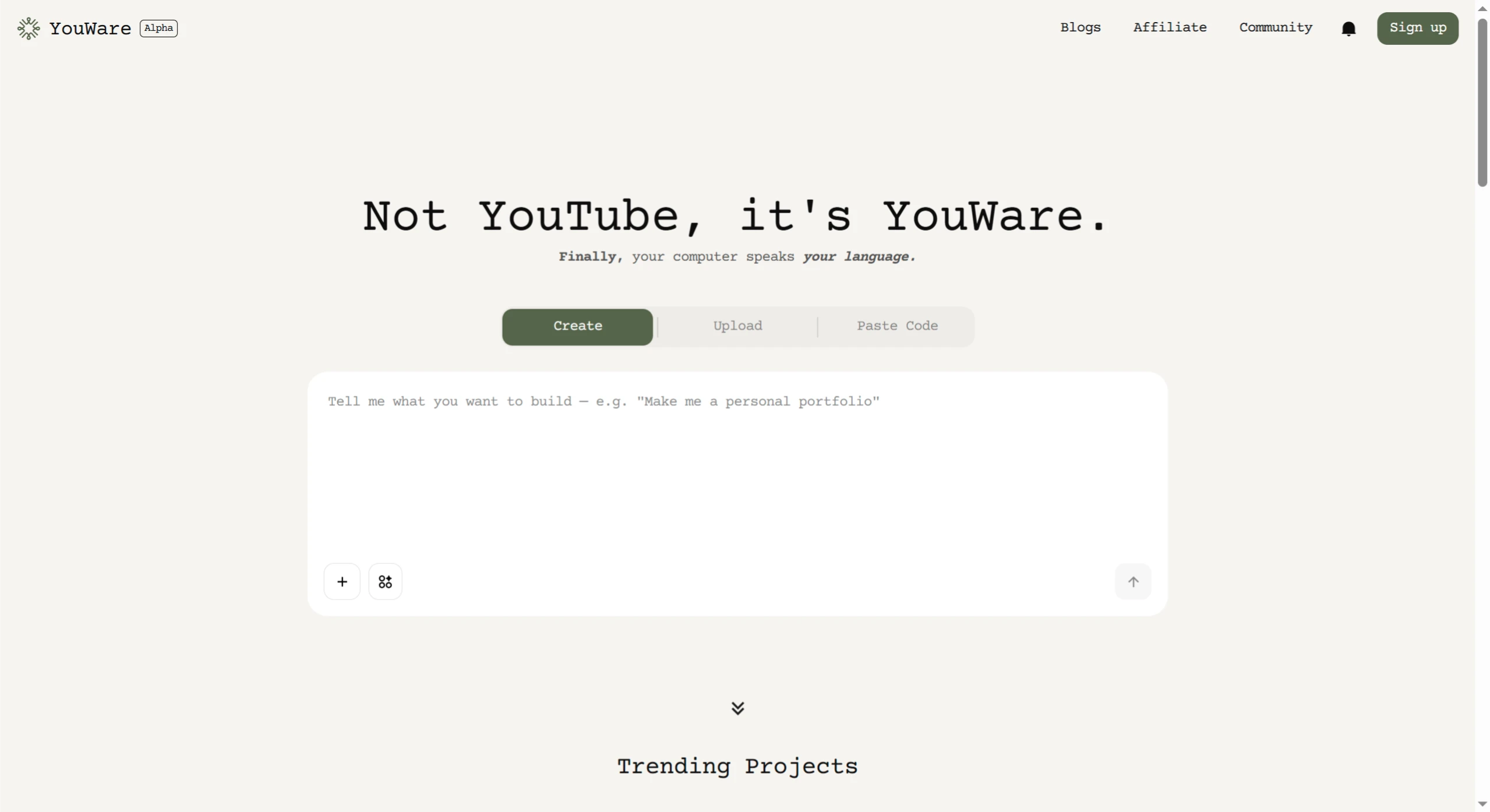
This update continues Youware's signature user-friendly design: after clicking on the MCP function module on the "Create" page, users can directly select the type of service they need — whether it is reading Figma files that require API key authorization, or configuring-free Hugeicons icon calls, the system provides a visualized guidance workflow. It is worth noting that the tool currently maintains a fully free policy for all features, and supports extended services such as embedding Google Maps location data and direct access to the Unsplash image library. Taking travel website building as an example, users do not need to manually enter attraction coordinates; the system can automatically retrieve illustrated introductions and route planning modules from Google Maps based on geographic location keywords in the design file.
Creator Incentives and Community Ecosystem Building
The new version simultaneously launches two innovative features:
Points Growth System: For every 100 valid views a developer's created website receives, 1 point is accumulated. Points can be redeemed for benefits such as cloud server runtime and design asset packs, forming a positive "creation – dissemination – revenue" cycle;
Intelligent Community Interaction: The homepage adds refined category navigation, supporting filtering of cases by industry (e.g., e-commerce / education) and technical type (static pages / dynamic sites). On an individual work's page, when a user clicks the "Random Explore" button, the system recommends high-quality sites with similar styles based on a collaborative filtering algorithm, improving the efficiency of gathering inspiration.
Technical Breakthroughs in Complex Scenarios
In an extreme test case disclosed by the official team, Youware successfully handled the requirements for a cross-border e-commerce website featuring 12 page transitions and 7 dynamic components (such as a floating shopping cart window and infinite scroll loading). Despite issues in the original Figma file such as messy layer naming and missing vector icons, the tool's intelligent parsing engine powered by the MCP protocol automatically matched 98% of icon resources in the Hugeicons library and invoked FLUX's image enhancement algorithm to optimize blurry assets. To address the occasional layout data loss issue with the Figma API, the system's built-in AI fine-tuning module automatically fills in details such as paragraph spacing and text-image wrapping. The final generated webpage achieved a Google PageSpeed score of 89 (out of 100), balancing aesthetics and performance.
This upgrade marks the evolution of AI website building tools from single-function automation to an ecosystem-based stage of "intelligent production + community collaboration." According to the development team, future efforts will focus on expanding MCP protocol compatibility with design tools such as Webflow and Adobe XD, and optimizing the stability of Figma file transmission under large data volumes, further improving the generation accuracy for complex enterprise-level sites.









