
 Script Planner Assistant▸
 AI Apps
 AI News
UC Berkeley Unveils Fully Open-Source Humanoid Robot BHL
小编 ·

UC Berkeley Unveils Fully Open-Source Humanoid Robot BHL
UC Berkeley has developed a humanoid robot called BHL, costing only $5,000 and being fully open-source. It uses 3D printing technology, has a low barrier to entry, and can be customized, making it ideal for individuals and laboratories. The design of BHL is highly flexible, allowing users to freely combine functional modules according to their needs. It is also equipped with high-efficiency drive actuators and a powerful control system, enabling complex teleoperation with impressive flexibility and intelligence.
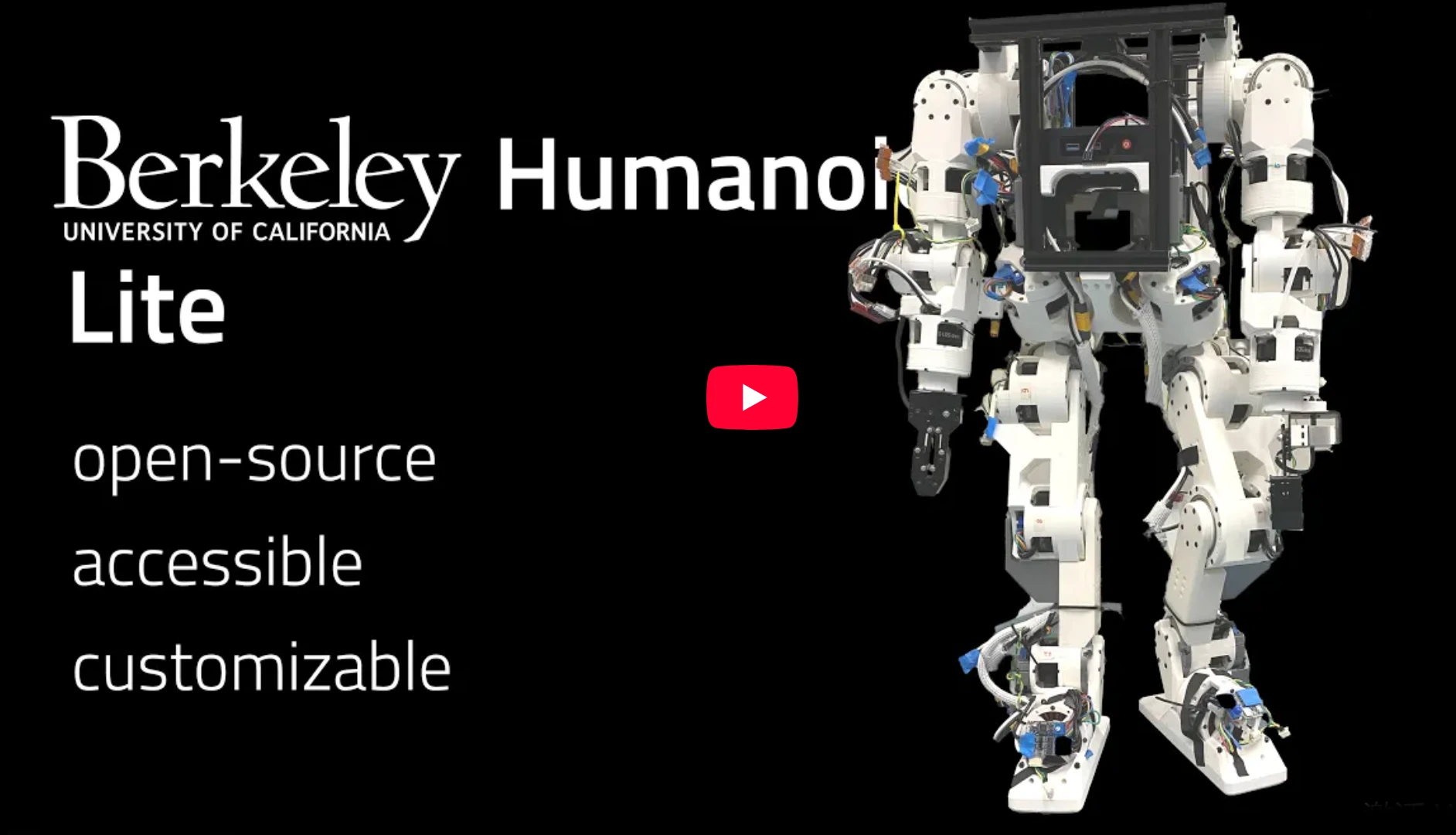
Advantages of the BHL Robot
Low Cost and Easy Accessibility
Cost Control: The total cost of BHL is kept under $5,000. Sourcing all components in China costs about $3,236, while in the United States it is around $4,312.
Easily Available Materials: All materials can be obtained through 3D printing or online shopping platforms (such as Amazon, Taobao) with a single click.
Open-Source and Customizability
Open-Source Design: All hardware equipment and software code of BHL are open-source, and the relevant CAD files, programming code, and training resources can be found on its GitHub page.
Highly Customizable: Users can flexibly modify and customize the robot according to their own needs, such as reconfiguring the robot's form, including quadruped, centaur, and mobile base configurations.
Technical Features of the BHL Robot
3D Printing Technology: All non-standard structural components are manufactured using Fused Deposition Modeling (FDM) technology, which significantly lowers the manufacturing barrier.
Cycloidal Gear Design: BHL adopts a 3D-printed cycloidal gear design, which maintains mechanical efficiency as high as 90% while reducing costs.
Powerful "Brain" and Sensors: Equipped with an Intel N95 mini PC as its "brain," a smartphone-grade IMU as its attitude sensor, and powered by a 6S 4000mAh lithium polymer battery.
Reinforcement Learning Capability: BHL uses reinforcement learning to achieve sim-to-real transfer of motor skills. In lab tests, a reinforcement learning controller fully trained in a simulated environment was loaded onto the real robot and was able to walk without any manual tuning.
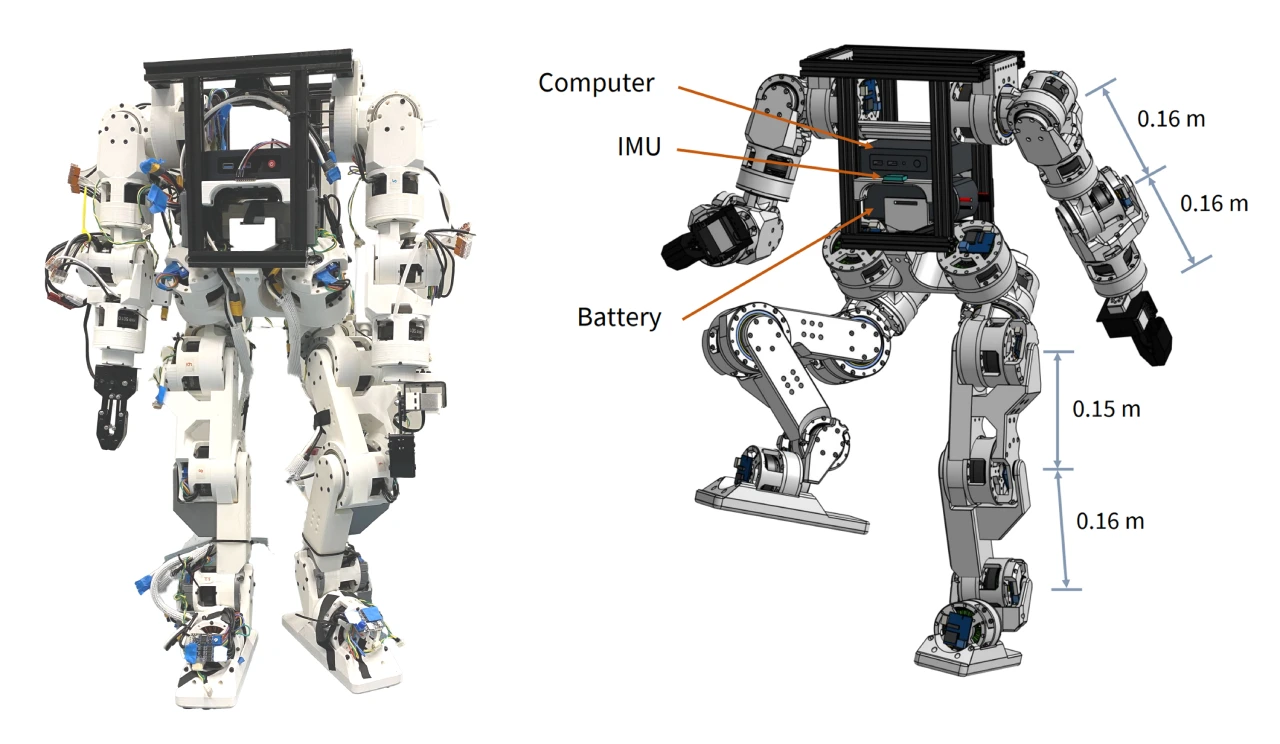
Performance of the BHL Robot
Basic Functions: BHL can perform bipedal walking, teleoperation, and other functions, and can also complete tasks such as twisting a Rubik's cube, unpacking packages, and writing.
Performance Advantage: Despite being priced far lower than commercial humanoid robots, BHL delivers remarkably impressive performance. Its "performance-per-dollar" ratio surpasses that of most commercial platforms priced an order of magnitude higher.
This humanoid robot BHL project is led by four Chinese scholars—Yufeng Chi, Qiayuan Liao, Junfeng Long, and Xiaoyu Huang—all of whom are pursuing PhDs at UC Berkeley, dedicated to research in robotic control systems.
Paper:https://doi.org/10.48550/arXiv.2504.17249
Project Page:https://lite.berkeley-humanoid.org/
Github:https://github.com/hybridrobotics/berkeley-humanoid-lite
Project Documentation:https://berkeley-humanoid-lite.gitbook.io/docs









