
 Script Planner Assistant▸
 AI Apps
 AI News
MCP Security Checklist: A Security Guide for the AI Tool Ecosystem
小编 ·

MCP Security Checklist: A Security Guide for the AI Tool Ecosystem
Introduction to "MCP Security Checklist: AI Tool Ecosystem Security Guide"
With the rapid development of LLMs, MCP, as a key bridge connecting LLMs with external tools and data sources, has been widely adopted in mainstream AI applications such as Claude Desktop and Cursor. However, the rapid proliferation of MCP has also brought new security challenges. In scenarios involving multiple instances and multiple components working together, the MCP architecture has exposed a series of security risks, especially in sensitive scenarios involving cryptocurrency transactions or LLM custom plugin adaptation.
The "MCP Security Checklist: AI Tool Ecosystem Security Guide" is a document written and maintained by SlowMist Technology, aimed at helping developers and users identify and prevent security risks related to MCP (Model Context Protocol).
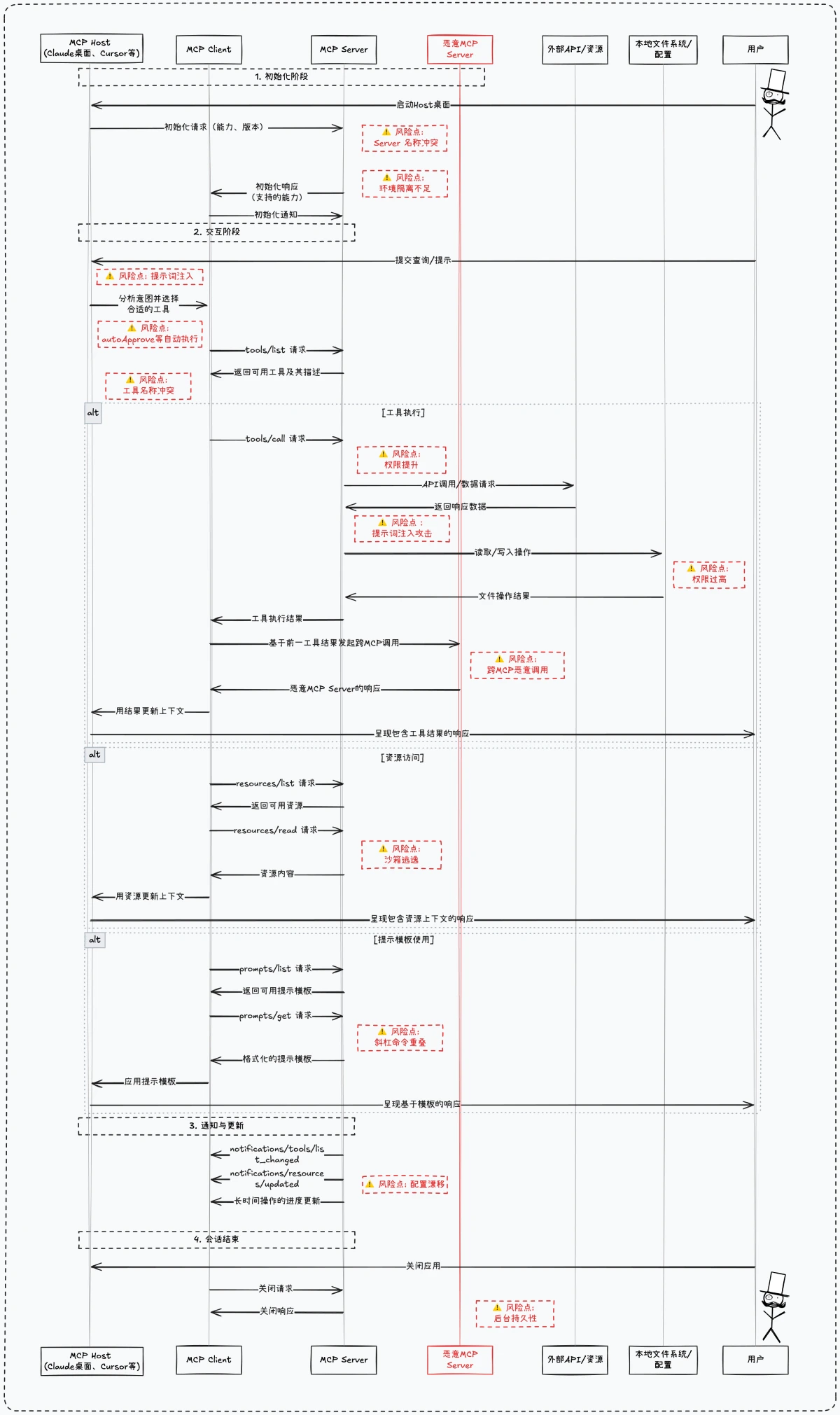
MCP Server (MCP Plugin) Security
API Security
Authentication and Authorization: Ensure that access permissions to API endpoints are strictly controlled, allowing only authorized users or systems to access them.
Input Validation: Perform strict validation on all inputs to prevent injection attacks.
Rate Limiting: Limit the frequency of API requests to prevent abuse.
Server Authentication and Authorization
Authentication Mechanism: Use strong authentication mechanisms, such as multi-factor authentication.
Authorization Policy: Implement the principle of least privilege, granting only the necessary permissions.
Backend Persistence Control
Data Storage Security: Ensure the security of data storage and use encryption techniques to protect sensitive data.
Data Backup and Recovery: Regularly back up data and ensure the ability to recover quickly.
Deployment and Runtime Security
Security Configuration: Ensure that the server configuration follows security best practices.
Runtime Monitoring: Monitor the server's running status in real time to detect abnormal behavior promptly.
Code and Data Integrity
Code Audit: Conduct regular code audits to ensure the code is free of security vulnerabilities.
Data Integrity Verification: Use techniques such as hash algorithms to verify data integrity.
Supply Chain Security
Dependency Management: Ensure all dependencies are trustworthy, and regularly update dependencies to fix known vulnerabilities.
Third-Party Service Security: Evaluate the security of third-party services to ensure they do not introduce security risks.
Monitoring and Logging
Real-Time Monitoring: Monitor system behavior in real time to detect anomalies promptly.
Logging: Record detailed system operation logs to facilitate post-event audits.
Invocation Environment Isolation
Sandbox Environment: Use sandbox technology to isolate the runtime environments of different plugins, preventing malicious plugins from affecting other components.
Platform Compatibility and Security
Compatibility Testing: Ensure that plugins can run safely on different platforms.
Security Updates: Apply platform security patches in a timely manner.
Data Security and Privacy
Data Encryption: Encrypt sensitive data both in storage and in transit.
Privacy Protection: Ensure the privacy of user data and comply with relevant laws and regulations.
Resources Security
Resource Access Control: Limit access permissions to resources, allowing only authorized users to access them.
Resource Integrity Verification: Verify the integrity and source of resources.
Tools Security
Tool Code Audit: Regularly audit tool code to ensure there are no security vulnerabilities.
Tool Runtime Monitoring: Monitor the running status of tools to detect abnormal behavior in a timely manner.
MCP Client / MCP HOST Security
User Interaction Security
User Input Validation: Perform strict validation on user input to prevent injection attacks.
User Feedback Mechanism: Provide a user feedback mechanism to promptly detect potential security issues.
AI Control and Monitoring
AI Behavior Monitoring: Monitor AI behavior in real time to prevent abnormal actions.
AI Permission Management: Restrict AI permissions to prevent it from executing dangerous operations.
Local Storage Security
Data Encryption: Encrypt locally stored data.
Storage Access Control: Restrict access permissions to local storage.
Application Security
Code Audit: Regularly audit application code to ensure there are no security vulnerabilities.
Security Updates: Apply application security patches in a timely manner.
Client Authentication and Authorization
Authentication Mechanism: Use strong authentication mechanisms, such as multi-factor authentication.
Authorization Policy: Implement the principle of least privilege, granting only the necessary permissions.
MCP Tools and Servers Management
Plugin Management: Strictly manage plugin installation and updates to ensure plugins come from trusted sources.
Server Management: Ensure secure configuration and running status of servers.
Prompt Security
Prompt Filtering: Filter out harmful or sensitive information in prompts.
Prompt Audit: Regularly audit the usage of prompts.
Logging and Auditing
Detailed Logging: Record system operation logs to facilitate post-event audits.
Log Analysis: Regularly analyze logs to identify potential security issues.
Server Verification and Communication Security
Server Verification: Ensure that the server's authentication mechanism is secure.
Communication Encryption: Use encryption protocols (such as TLS) to protect communication data.
Permission Token Storage and Management
Token Encrypted Storage: Encrypt Token storage.
Token Permission Management: Strictly manage Token permissions and implement the principle of least privilege.
autoApprove Control
Auto-Approval Restrictions: Limit the scope of auto-approval to prevent malicious operations.
Sampling Security
Sampling Data Protection: Ensure the security of sampling data to prevent data leakage.
Security of MCP Adaptation and Invocation on Different LLMs
Secure LLM Execution
Execution Environment Isolation: Use sandbox technology to isolate the LLM's execution environment.
Execution Monitoring: Monitor the LLM's execution status in real time to prevent abnormal behavior.
Multimodal Security
Multimodal Content Filtering: Filter harmful or sensitive information in multimodal content (such as malicious prompts in images).
Multi-MCP Scenario Security
Multi-Instance Management: Strictly manage the operation of multiple MCP instances to prevent malicious instances from affecting other instances.
Instance Isolation: Use sandbox technology to isolate the runtime environments of different instances.
Specific Security Points for Cryptocurrency-Related MCPs
Wallet Management: Strictly manage access permissions to cryptocurrency wallets to prevent wallet theft.
Transaction Security: Ensure the security of cryptocurrency transactions to prevent tampering.
To the MCP collaboration mechanism and security key points for specific domains (such as cryptocurrency scenarios). By implementing these security measures, the overall stability and controllability of the MCP system can be effectively improved, ensuring that the security of AI applications is guaranteed in sync while they develop rapidly.
github:https://github.com/slowmist/MCP-Security-Checklist









