
 Script Planner Assistant▸
 AI Apps
 AI News
OpenAI Launches o3 and o4-mini: What's New and How Do They Differ?
小编 ·

OpenAI Launches o3 and o4-mini: What's New and How Do They Differ?
Openai has once again stunned the world with the release of two reasoning models: o3 (the most powerful reasoning model) and o4-mini (an efficient and lightweight model)! This update not only achieves a leap-forward improvement in reasoning capabilities, but also introduces the "thinking with images" feature for the first time, giving AI the true ability to "think with images"!

Features of the OpenAI o3 Model
Powerful reasoning capabilities: o3 is currently OpenAI's most powerful reasoning model. It performs well in fields such as coding, mathematics, science, and visual perception, and has set new records in multiple benchmarks including Codeforces, SWE-bench, and MMMU.
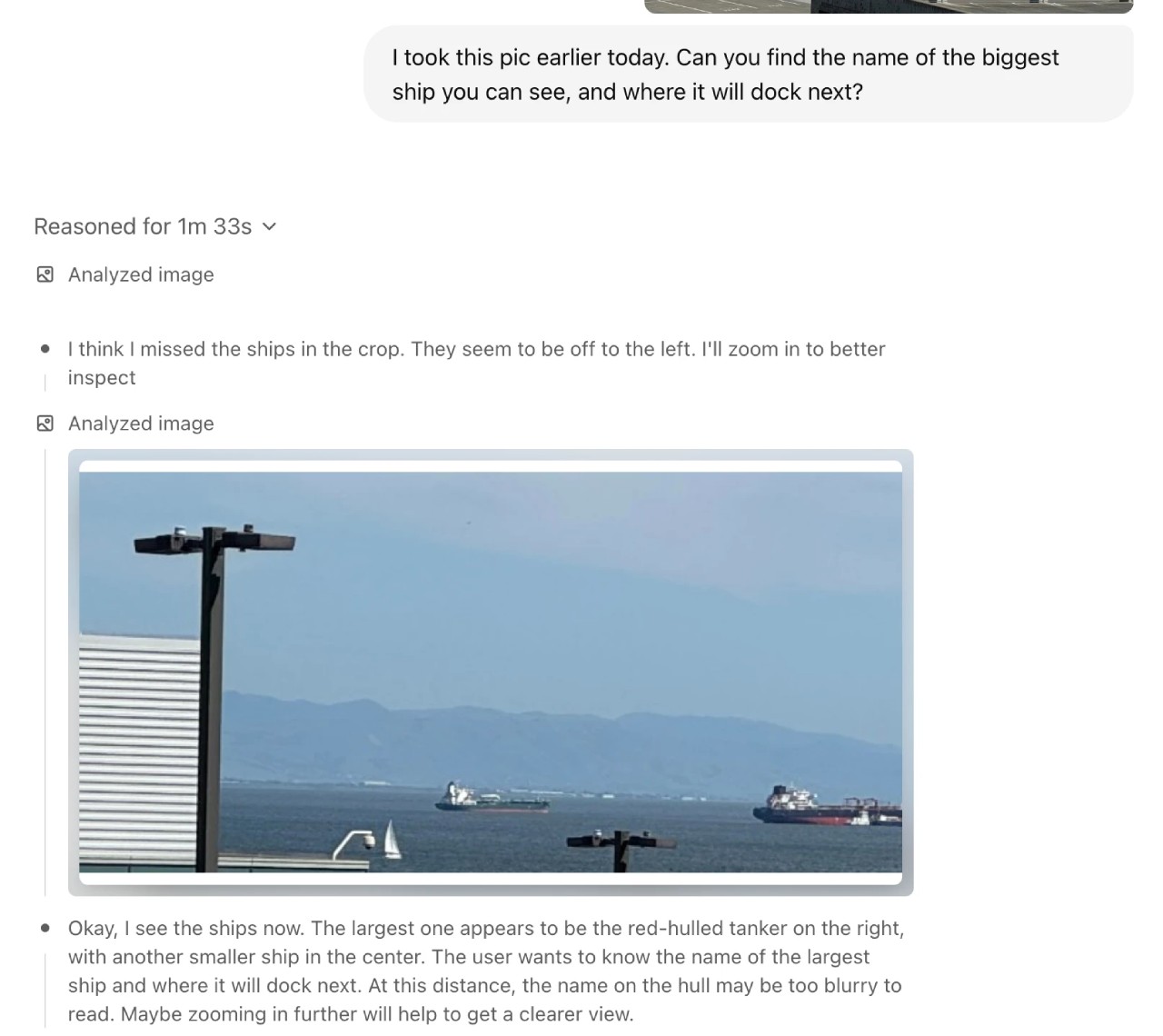
Multimodal understanding: For the first time, visual information is integrated into the reasoning process, enabling the analysis of visual inputs such as images, charts, and graphs, helping users solve complex programming and visual tasks more efficiently.
Tool usage capability: It can intelligently use and combine every tool in ChatGPT, including searching the web, analyzing uploaded files, generating images, etc., to solve more complex problems.
Applicable scenarios: Suitable for advanced queries that require multifaceted analysis where the answer may not be obvious, such as complex programming tasks, scientific research, and business consulting.
Features of the OpenAI o4-mini Model
Efficient reasoning: o4-mini is a smaller model that focuses on fast, cost-effective reasoning, and performs exceptionally well on math, coding, and visual tasks.
High cost-effectiveness: It has achieved high scores in the AIME 2024 and 2025 tests, and scored as high as 99.5% on the AIME 2025 test when combined with the Python interpreter.
High concurrency support: Due to its efficiency, o4-mini supports significantly higher usage limits than o3, making it suitable for high-concurrency scenarios.
Applicable scenarios: Suitable for scenarios that require quick responses, such as real-time data analysis, simple programming assistance, and everyday Q&A.
Differences Between o3 and o4-mini
Model Size and Performance
o3: Currently OpenAI's most powerful reasoning model, suitable for handling complex, multifaceted problems. It performs exceptionally well in fields such as coding, mathematics, science, and visual perception. It has set new records in multiple benchmarks, for example, scoring over 2700 on Codeforces.
o4-mini: A smaller model that focuses on fast, cost-effective reasoning. It performs exceptionally well on math, coding, and visual tasks, and notably achieved a high score of 99.5% on the AIME 2025 test when combined with the Python interpreter.
Cost and Efficiency
o3: Has higher inference costs, requiring ten times the compute compared to o1.
o4-mini: Known for its high cost-effectiveness, supports higher usage limits, and is suitable for high-concurrency scenarios.
Applicable Scenarios
o3: Suitable for advanced queries that require in-depth analysis and multifaceted reasoning, such as complex programming tasks, scientific research, and business consulting.
o4-mini: Better suited for scenarios that require quick responses, such as real-time data analysis, simple programming assistance, and everyday Q&A.
Summary of the Comparison Between o3 and o4-mini
| Feature | o3 | o4-mini |
|---|---|---|
| Model Size | Large | Small |
| Performance | Strong, suitable for complex tasks | Fast and efficient, suitable for simple tasks |
| Cost | High | Low |
| Usage Limits | Lower | Higher |
| Applicable Scenarios | Advanced queries, complex analysis | Quick response, high-concurrency scenarios |
ChatGPT Plus, Pro, and Team users can use them now. Overall, o3 is currently OpenAI's most powerful reasoning model, suitable for handling complex, multifaceted problems, while o4-mini is faster and more cost-effective, suitable for scenarios requiring quick response and high concurrency.
Detailed introduction:https://openai.com/index/introducing-o3-and-o4-mini/









