
 Script Planner Assistant▸
 AI Apps
 AI News
What's the Difference Between Llama 4 Scout and Maverick?
小编 ·

What's the Difference Between Llama 4 Scout and Maverick?
On April 5, 2025, Meta released its latest generation of open-source ai models Llama 4, which include Llama 4 Scout and Llama 4 Maverick. Both of these AI models are the first multimodal models to adopt a Mixture of Experts (MoE) architecture. What are the differences between them?
Key Differences Between Llama 4 Scout and Llama 4 Maverick:
Llama 4 Scout
Parameter Size: 17 billion active parameters, 16 "expert" models, with a total of 109 billion parameters.
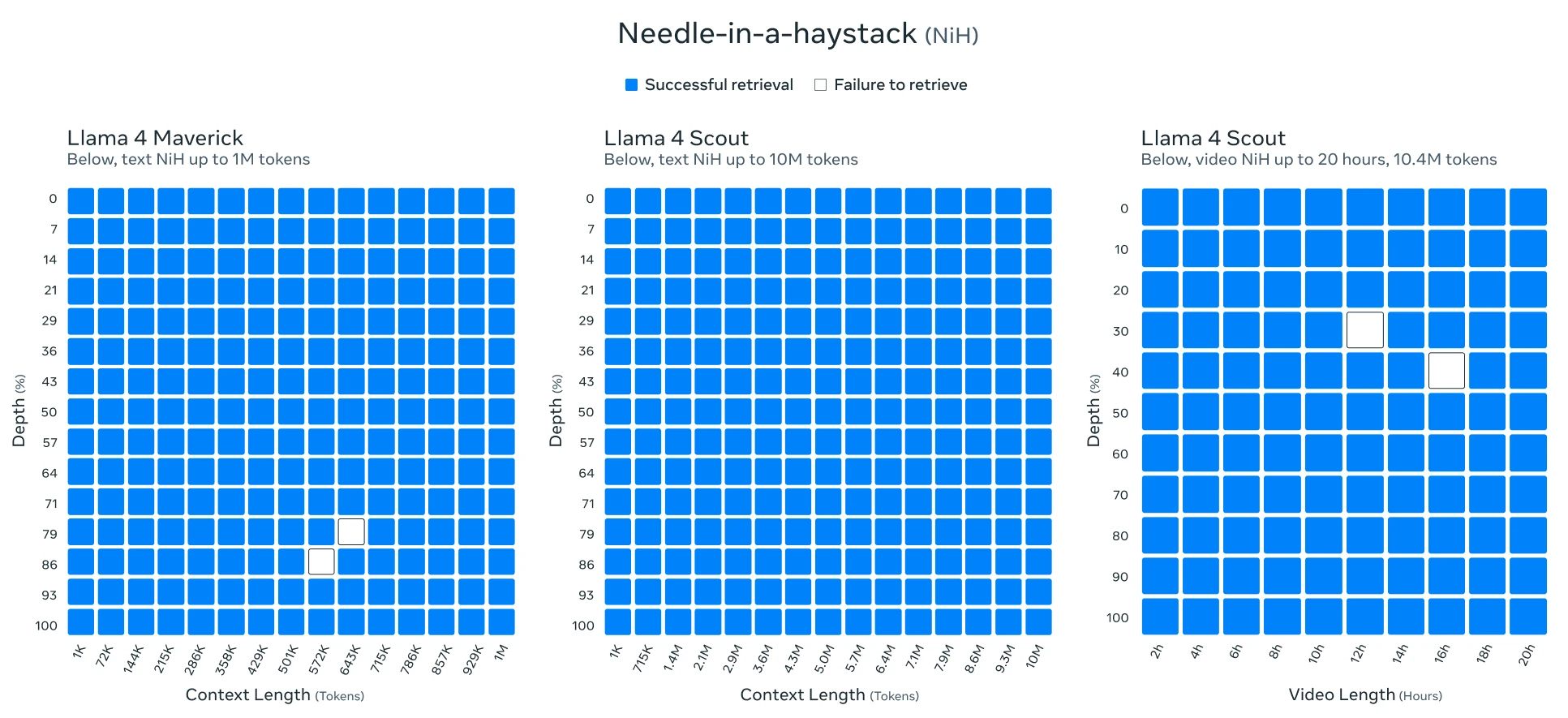
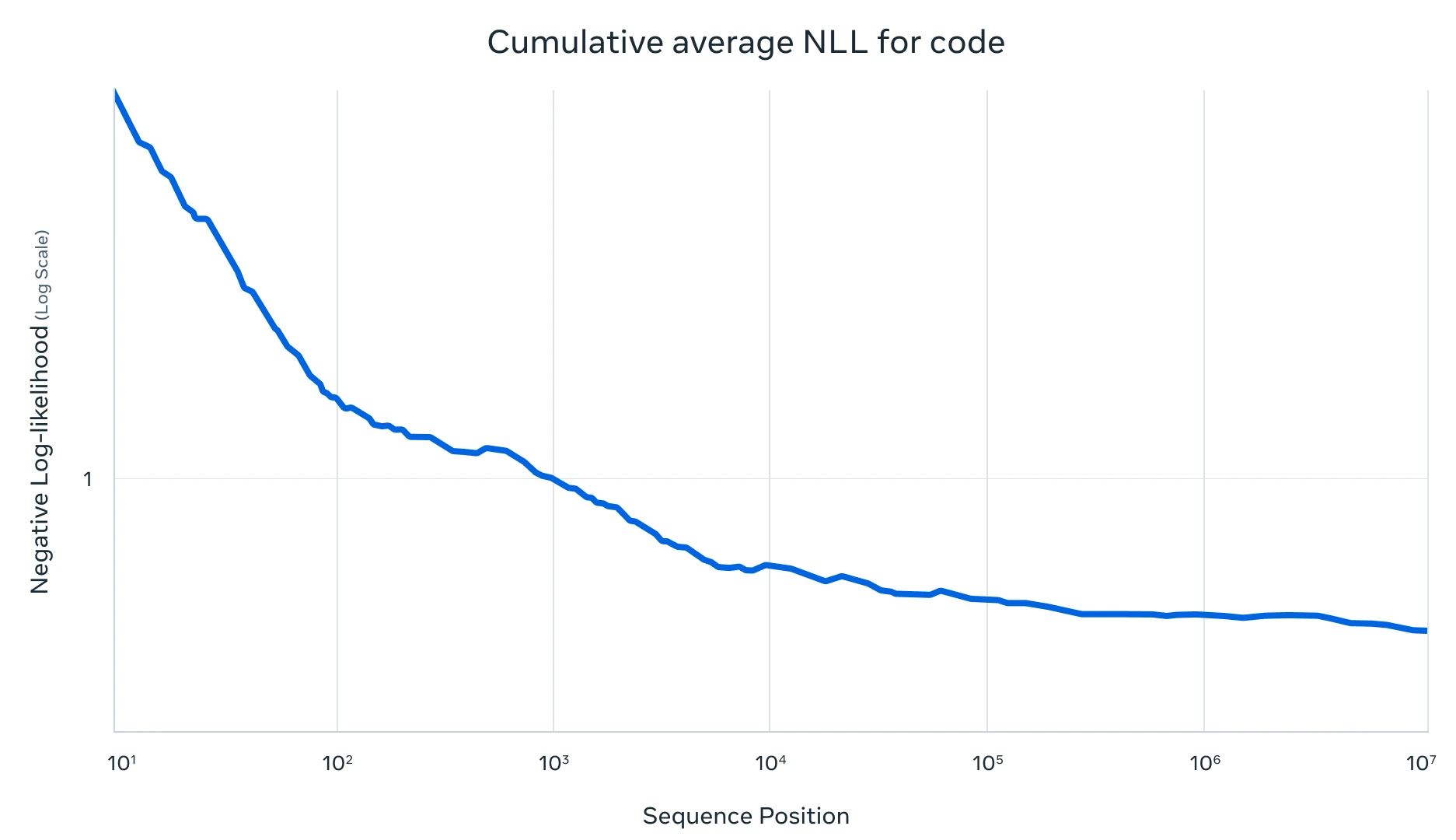
Context Window: Supports a context window of up to 10 million tokens, making it perform exceptionally well when handling lengthy documents.
Use Cases: Excels at document summarization and reasoning over large codebases, suitable for scenarios requiring efficient reasoning and long-text processing.
Hardware Requirements: Can run on a single NVIDIA H100 GPU, with relatively low resource requirements after Int4 quantization.
Llama 4 Maverick
Parameter Size: 17 billion active parameters, 128 "expert" models, with a total of up to 400 billion parameters.
Context Window: Supports a context window of 1 million tokens.
Use Cases: Outperforms models such as OpenAI's GPT-4o and Google's Gemini 2.0 in creative writing, code generation, translation, reasoning, long-text context summarization, and image benchmarks.
Hardware Requirements: Needs to run on an NVIDIA H100 DGX host or a device of equivalent performance.
Comparison Between the Two
Performance: Maverick performs stronger on multimodal tasks and reasoning capabilities, while Scout has more advantages in long-text processing and document summarization.
Resource Requirements: Scout is more suitable for resource-constrained scenarios because it can run on a single GPU; Maverick requires higher hardware configurations.
Use Cases: Scout is suitable for scenarios that need to handle large amounts of text, such as document processing and code reasoning; Maverick is more suitable for tasks requiring multimodal interaction and complex reasoning, such as creative writing and image processing.
Inference Cost
Llama 4 Scout: Due to its smaller model size and efficient quantization techniques, the inference cost is relatively low, making it suitable for applications that require quick response and low resource consumption.
Llama 4 Maverick: Although its total number of parameters is larger, its inference cost is also optimized thanks to the Mixture of Experts architecture. Meta estimates that the inference cost of Llama 4 Maverick is $0.19 to $0.49 per million tokens (with an input-to-output ratio of 3:1), making it much cheaper than proprietary models such as GPT-4o.
Llama 4 Scout is more suitable for scenarios that require handling long text and resource-constrained environments, while Llama 4 Maverick excels in reasoning and code generation capabilities, making it suitable for applications that require high performance and multimodal processing. Both achieve efficient resource utilization through the Mixture of Experts architecture, but the specific resource requirements and costs depend on your own application scenario and hardware.









