
 Script Planner Assistant▸
 AI Apps
 AI News
Open-Sora 2.0 vs OpenAI Sora: Features and Differences
小编 ·

Open-Sora 2.0 vs OpenAI Sora: Features and Differences
Open-Sora 2.0 is the latest open-source AI video generation model released by Luchentech (潞晨科技), featuring high performance, low cost, and full open-source availability. Sora by OpenAI is an advanced AI video generation tool launched by OpenAI, capable of producing high-quality dynamic videos based on text descriptions. The latest version is Sora Turbo. What are the differences between the two?
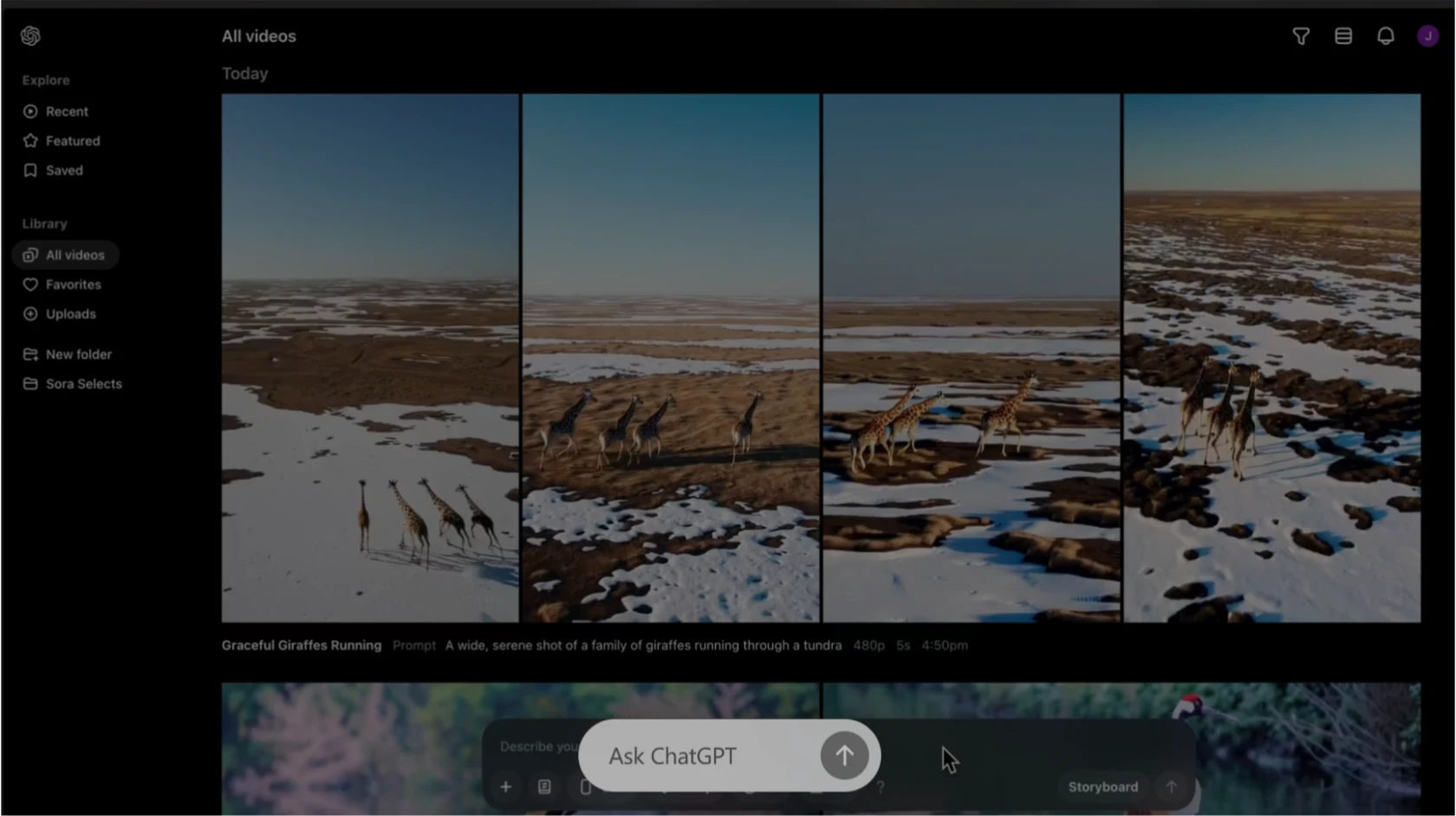
Features of Open-Sora 2.0 and OpenAI Sora
Features of Open-Sora 2.0
High Efficiency: Low training cost (approximately $200,000) and fast inference speed (generates 16 frames of video in 1.3 seconds).
High Performance: Performance is close to OpenAI's Sora, supporting high-quality text-to-video generation.
Innovative Architecture: Adopts a 3D autoencoder, Flow Matching, and full attention mechanism.
Applicable Scenarios: Suitable for low-cost, high-performance video generation needs, such as content creation, education, and commercial applications.
Open Source: Fully open-source, supporting free use, modification, and extension.
Features of OpenAI Sora
High-Quality Generation: Generates realistic video content with outstanding creativity and diversity.
Multimodal Understanding: Supports seamless text-to-video conversion and can combine multiple modalities of input.
Advanced Technology: Built on a diffusion transformer architecture and pre-trained at scale.
Application Scenarios: Suitable for creative video production, virtual reality, education, and other fields.
Closed-Source and Commercialized: Closed-source design, better suited for commercial applications and creative development.
Differences Between Open-Sora 2.0 and OpenAI Sora
| Comparison Dimension | Open-Sora 2.0 | OpenAI Sora |
|---|---|---|
| Model Architecture | Adopts a 3D autoencoder, Flow Matching training framework, 3D full attention mechanism, and MMDiT architecture | Based on a diffusion transformer (denoising latent diffusion model), generating videos by denoising 3D "patches" |
| Parameter Scale | 11 billion parameters | Not publicly disclosed, but estimated to be large given the high training cost |
| Training Cost | Approximately $200,000 (equivalent to 224 GPUs), significantly lower than other comparable models | Training cost is high; a single training run may cost millions of dollars |
| Performance | The performance gap with OpenAI's Sora on the VBench evaluation narrowed from 4.52% to 0.69%, nearly on par; excels in visual quality, text consistency, and other metrics | Excels in the realism and creativity of generated videos, but has limitations in complex physical simulations and causal reasoning |
| Open-Source Status | Fully open-source, including model weights, inference code, and the entire distributed training pipeline | Closed-source |
| Application Scenarios | Suitable for scenarios requiring low-cost, high-performance video generation | Suitable for scenarios with extremely high video generation quality requirements where cost is not a concern |
Similarities
Video Generation Capability: Both possess powerful text-to-video (T2V) generation capabilities, allowing users to generate corresponding video content by inputting text descriptions.
High-Quality Visual Effects: Both can generate high-quality videos, supporting high resolution (e.g., 720p or higher) and smooth frame rates (e.g., 24fps), delivering high detail and dynamic effects in visual performance.
In summary, Open-Sora 2.0 is open-source, low-cost, and high-performance, ideal for large-scale customization and flexible development, while OpenAI Sora is closed-source, high-quality, and creatively outstanding, suitable for commercial and creative applications.









