
 Script Planner Assistant▸
 AI Apps
 AI News
Xiamen University: Download the 150-Page PPT "DeepSeek Large Model and Enterprise Application Practice" — A Must-Have Guide for Enterprise Users
小编 ·

Xiamen University: Download the 150-Page PPT "DeepSeek Large Model and Enterprise Application Practice" — A Must-Have Guide for Enterprise Users
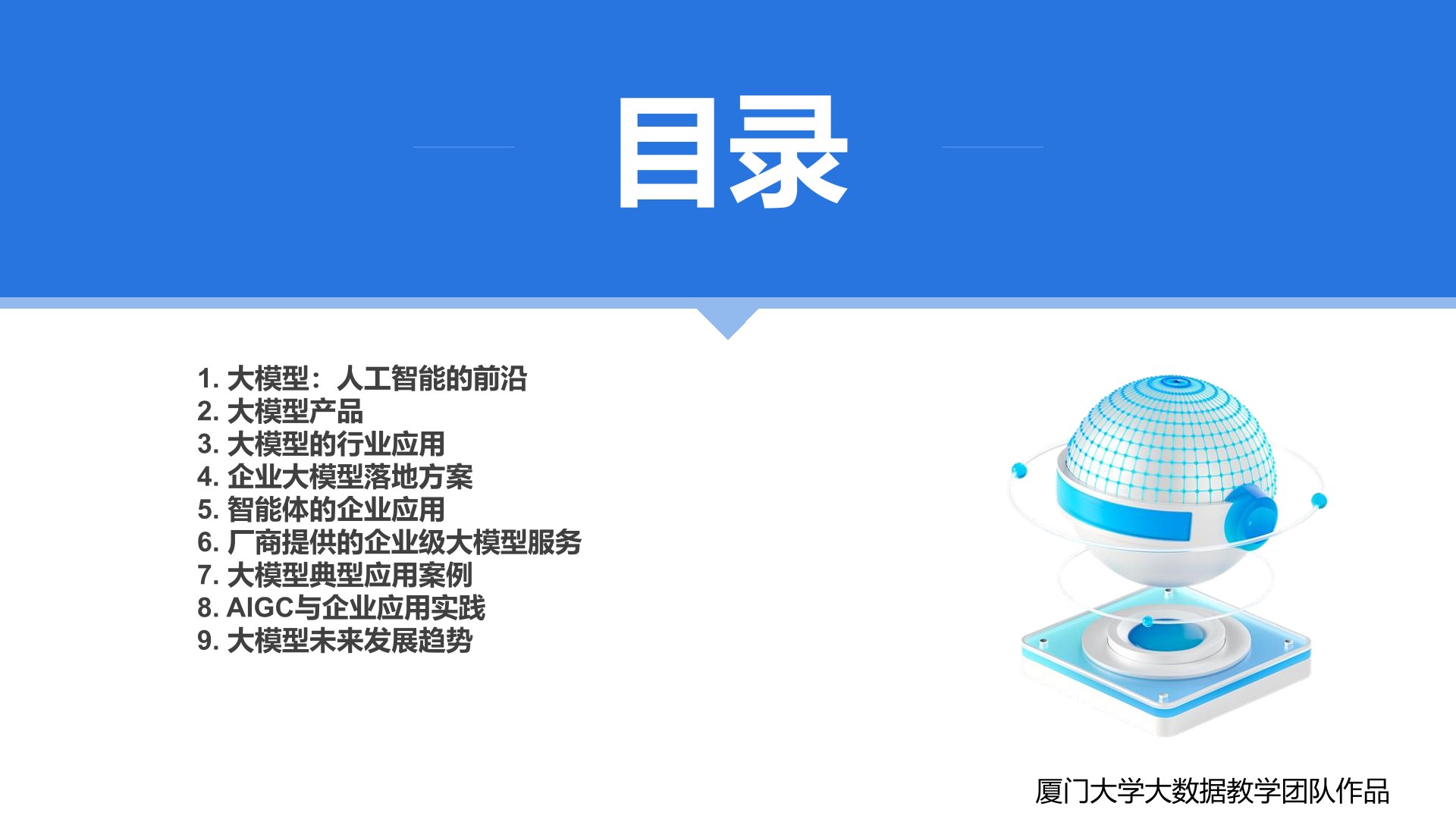
"DeepSeek Large Model and Its Enterprise Application Practice" is a detailed report written by Associate Professor Lin Ziyu of Xiamen University and his big data teaching team on DeepSeek large model and its enterprise application practice, aimed at providing enterprise personnel with popular science and application guidance on large model technology. The report provides a comprehensive introduction from the basic concepts, development history, and classification of large models, to domestic and foreign large model products, industry applications, enterprise implementation solutions, intelligent agent applications, vendor services, and future development trends. It is rich in content and detailed in case studies, making it an important reference for enterprises to understand and apply ai large model technology.
Baidu Netdisk Link: https://pan.baidu.com/s/1pGicv8p_Jh5AdenPjl4Ckg?pwd=7awy Extraction Code: 7awy
1. Basic Concepts and Development History of Large Models
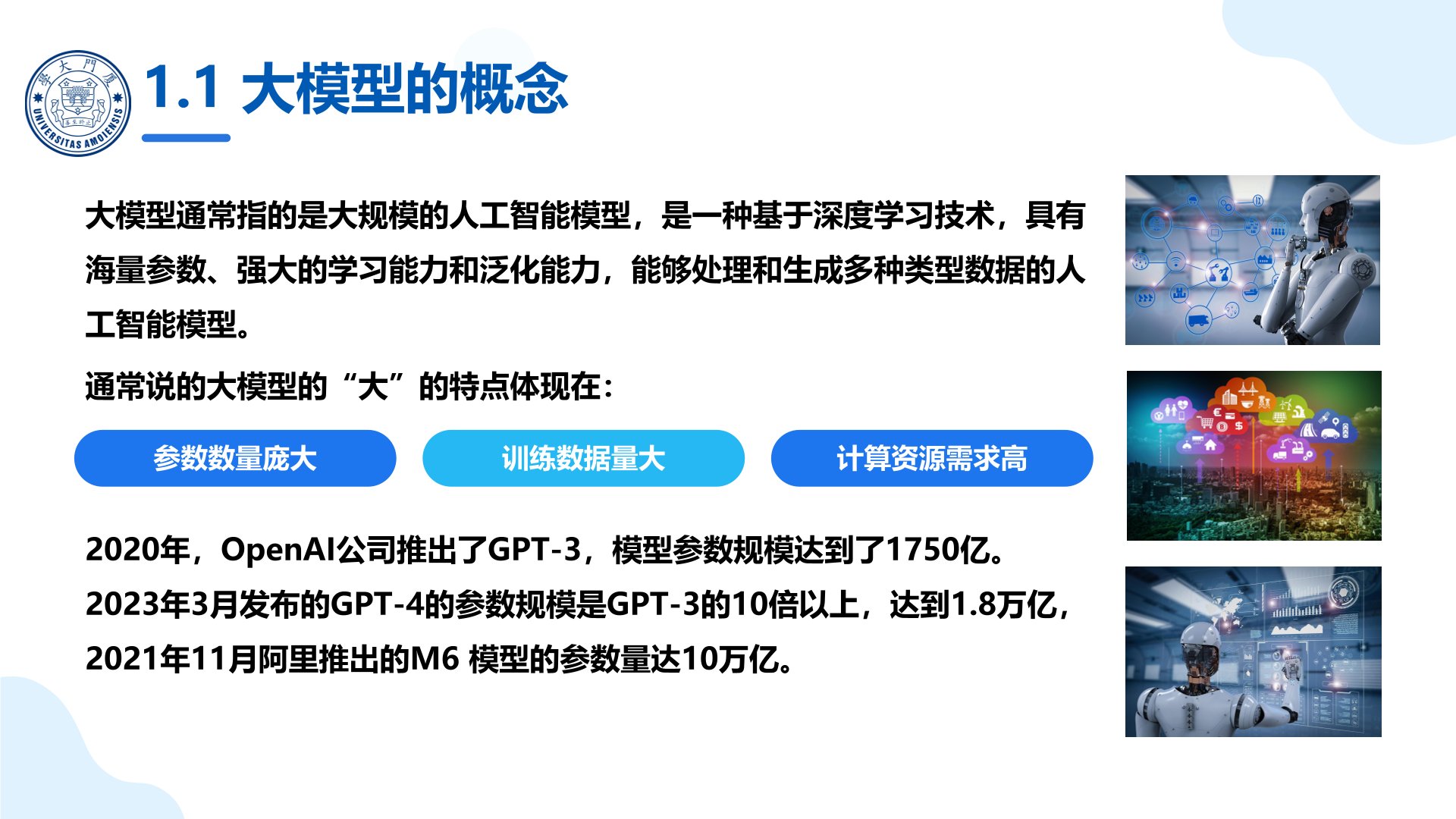
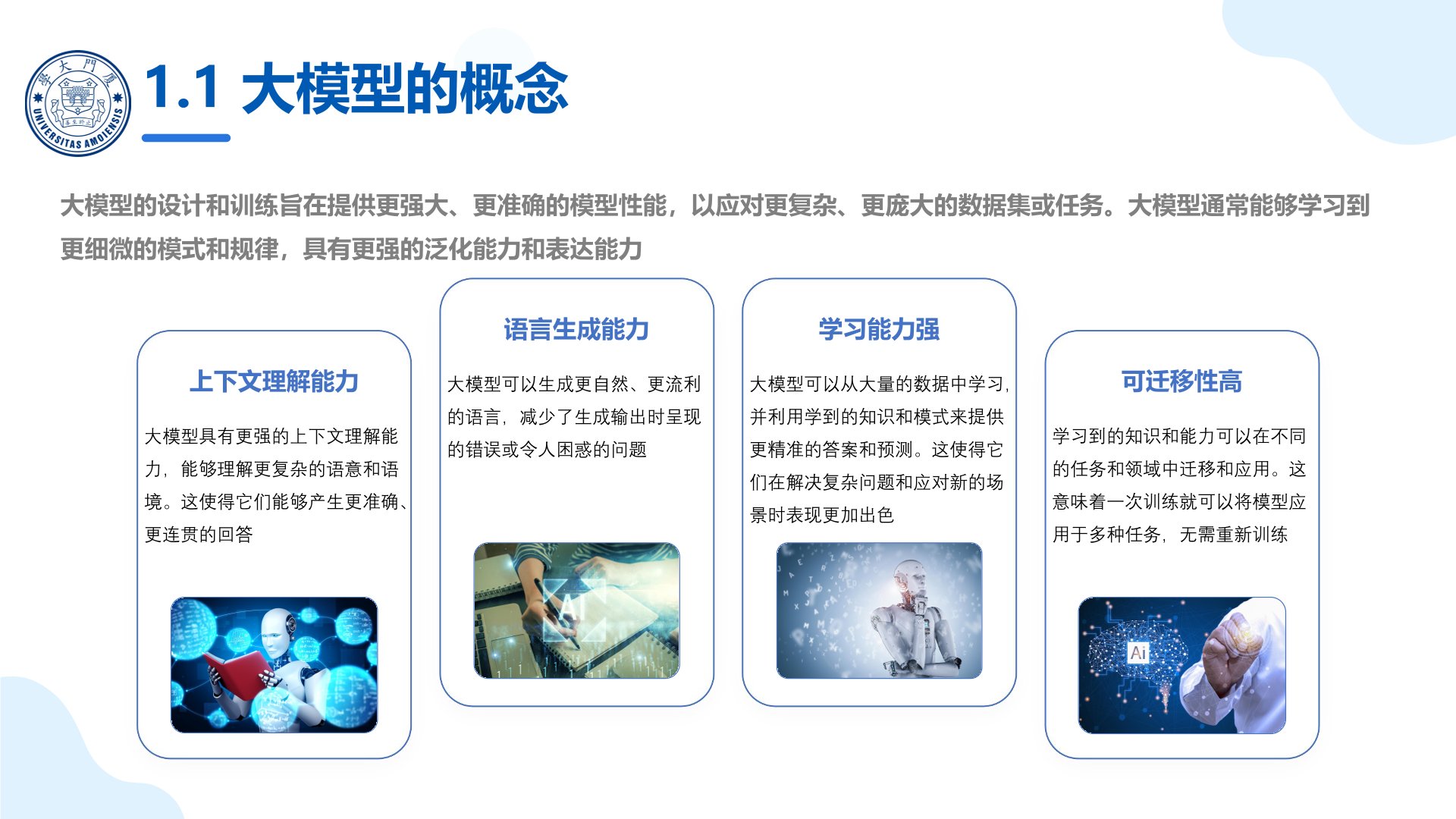
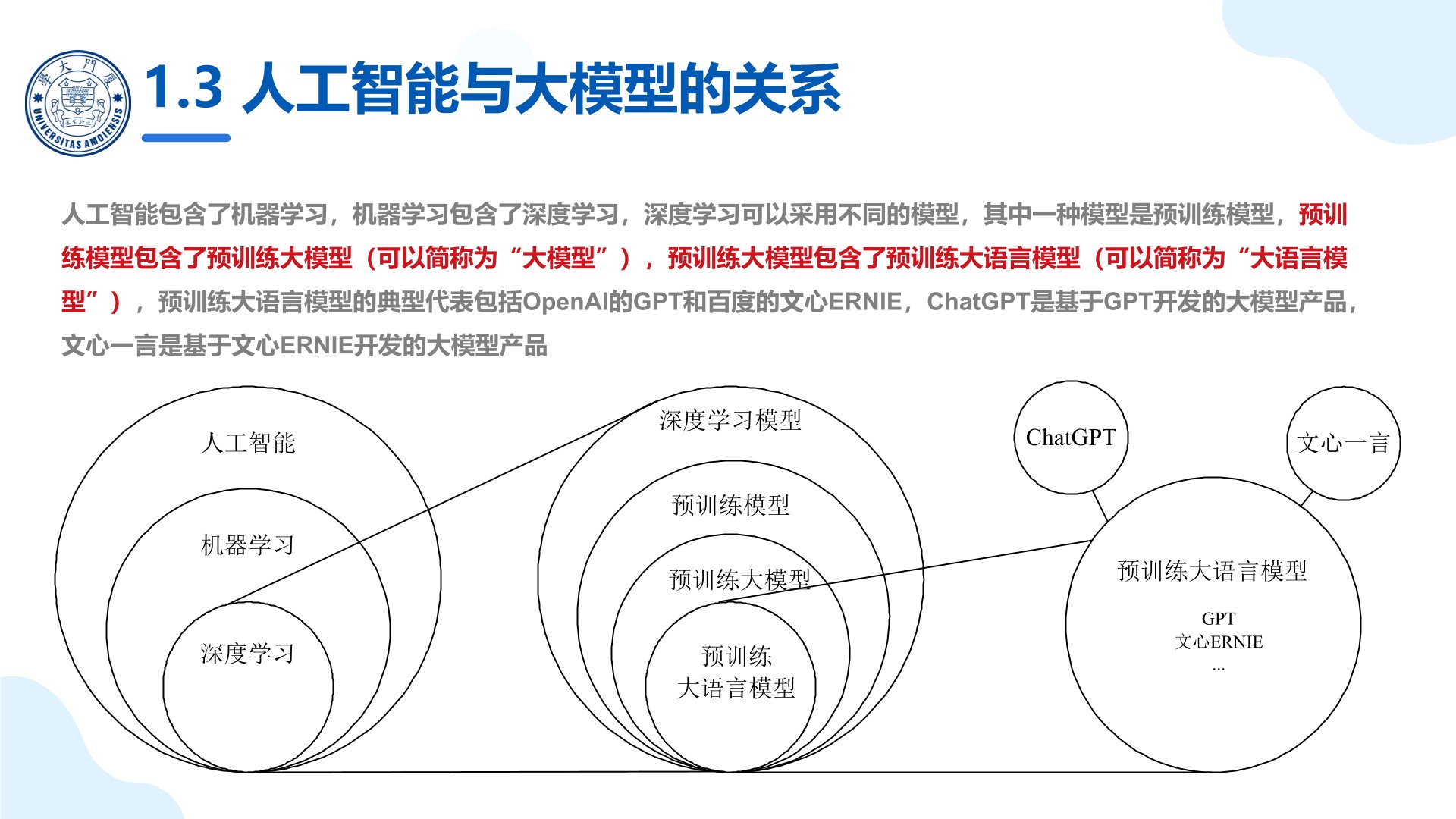
Definition: A large model is an artificial intelligence model based on deep learning technology with massive parameters and strong learning and generalization capabilities, capable of processing multiple types of data.
Characteristics: Huge number of parameters, large training data volume, and high demand for computing resources.
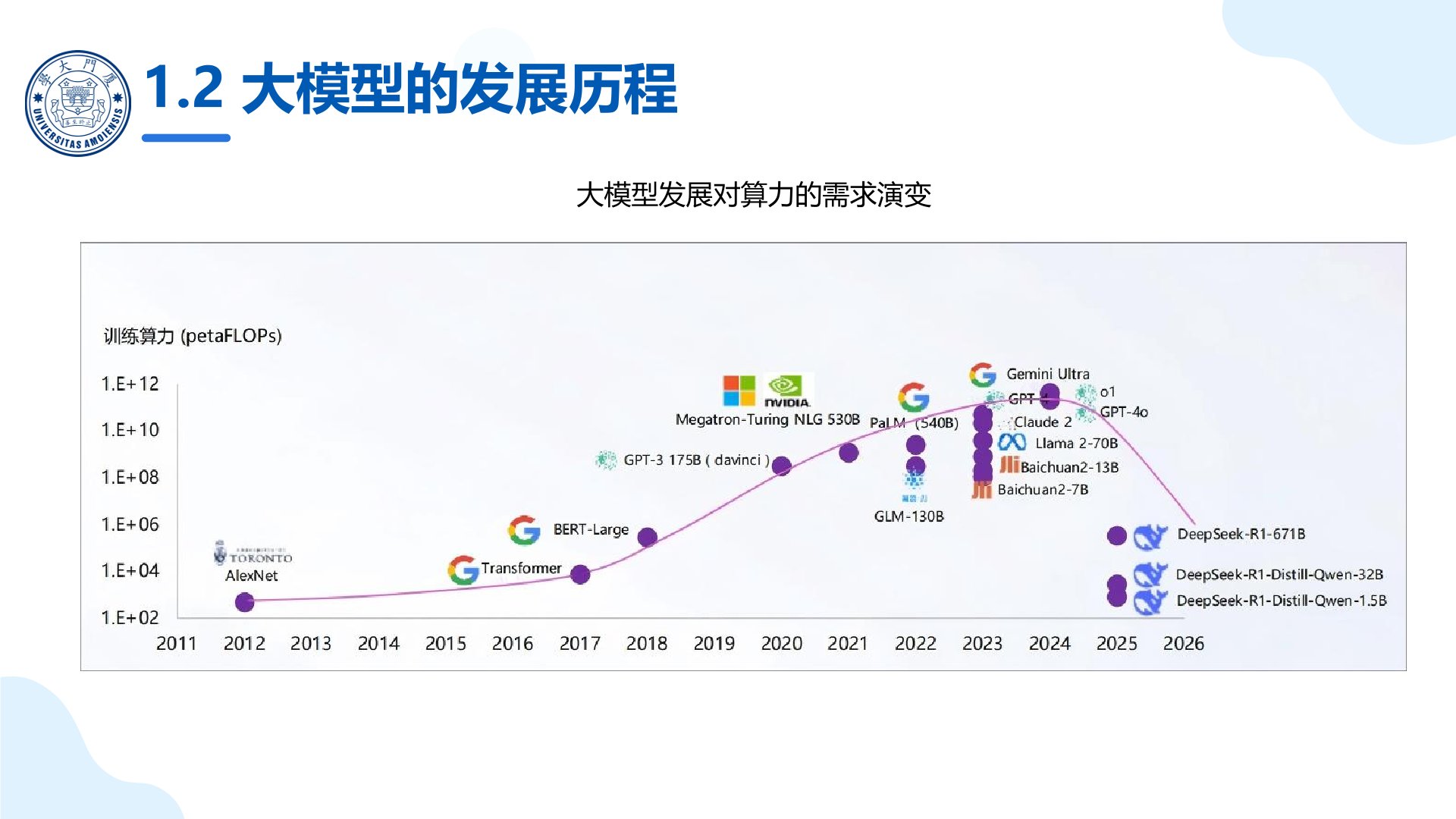
Development History: Divided into the embryonic period, accumulation period, and explosion period. In recent years, with technological progress, the parameter scale of large models has continued to break through, such as GPT-3 (175 billion parameters), GPT-4 (1.8 trillion parameters), and Alibaba M6 (10 trillion parameters).
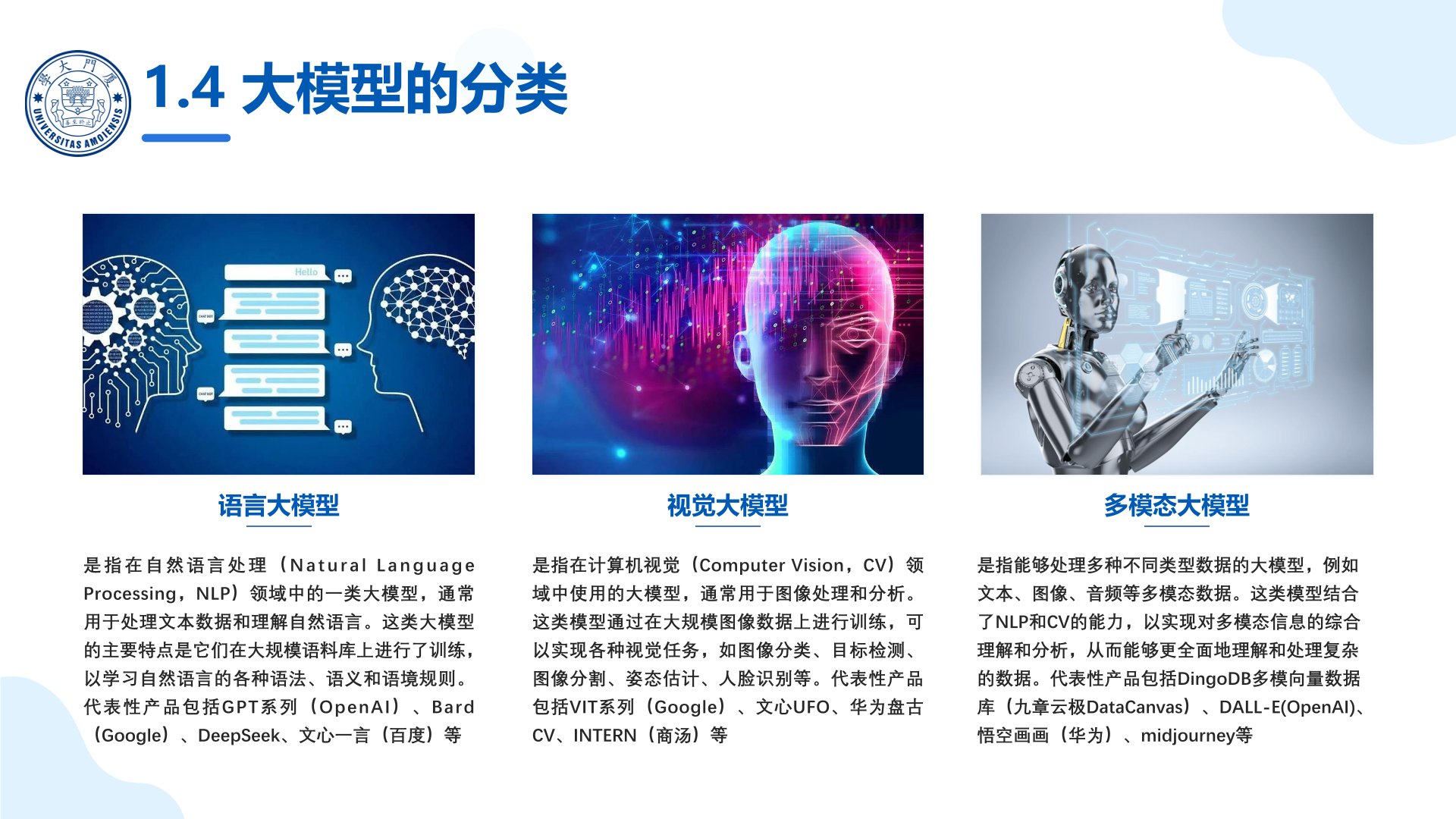
Classification: Language large models, visual large models, and multimodal large models; categorized by application domain into general large models (L0), industry large models (L1), and vertical large models (L2).
2. Domestic and Foreign Large Model Products
Foreign Products:
ChatGPT: Based on the Transformer architecture, capable of generating natural language text, widely used in customer service, question-answering systems, and other fields.
Gemini: Released by Google, supporting multimodal data processing, applied in question answering, summary generation, etc.
Sora: A text-to-video large model released by OpenAI, marking a major breakthrough for AI in the field of video generation.
OpenAI o3: A reasoning model, adept at complex logical reasoning and multi-step problem solving.
Domestic Products:
DeepSeek: Performs outstandingly in mathematical reasoning and performance, with high cost-effectiveness, hailed as "a mysterious force from the East."
Tongyi Qianwen: A multimodal language model launched by Alibaba Cloud, supporting multilingual and multi-domain applications.
Doubao AI: Developed by ByteDance, leading in user numbers, adept at text creation and language interaction.
ERNIE Bot: Baidu's knowledge-enhanced large model, widely used in intelligent customer service, smart home, and other fields.
Kimi: An AI assistant launched by Moonshot AI, supporting multi-format file processing and long text processing.
3. Industry Applications of Large Models
Wide range of application fields, covering natural language processing, computer vision, speech recognition, recommendation systems, medical health, financial risk control, industrial manufacturing, bioinformatics, autonomous driving, climate research, etc.
DeepSeek application scenarios: including customer service and support, personalized recommendations, education and training, medical and health, finance and investment, content creation and media, smart home and IoT, legal and compliance, gaming and entertainment, etc.
Integration with other technologies: such as RPA (Robotic Process Automation), knowledge graphs, IoT, data analysis and visualization technologies, achieving smarter business process automation and decision support.
4. Enterprise Large Model Implementation Solutions
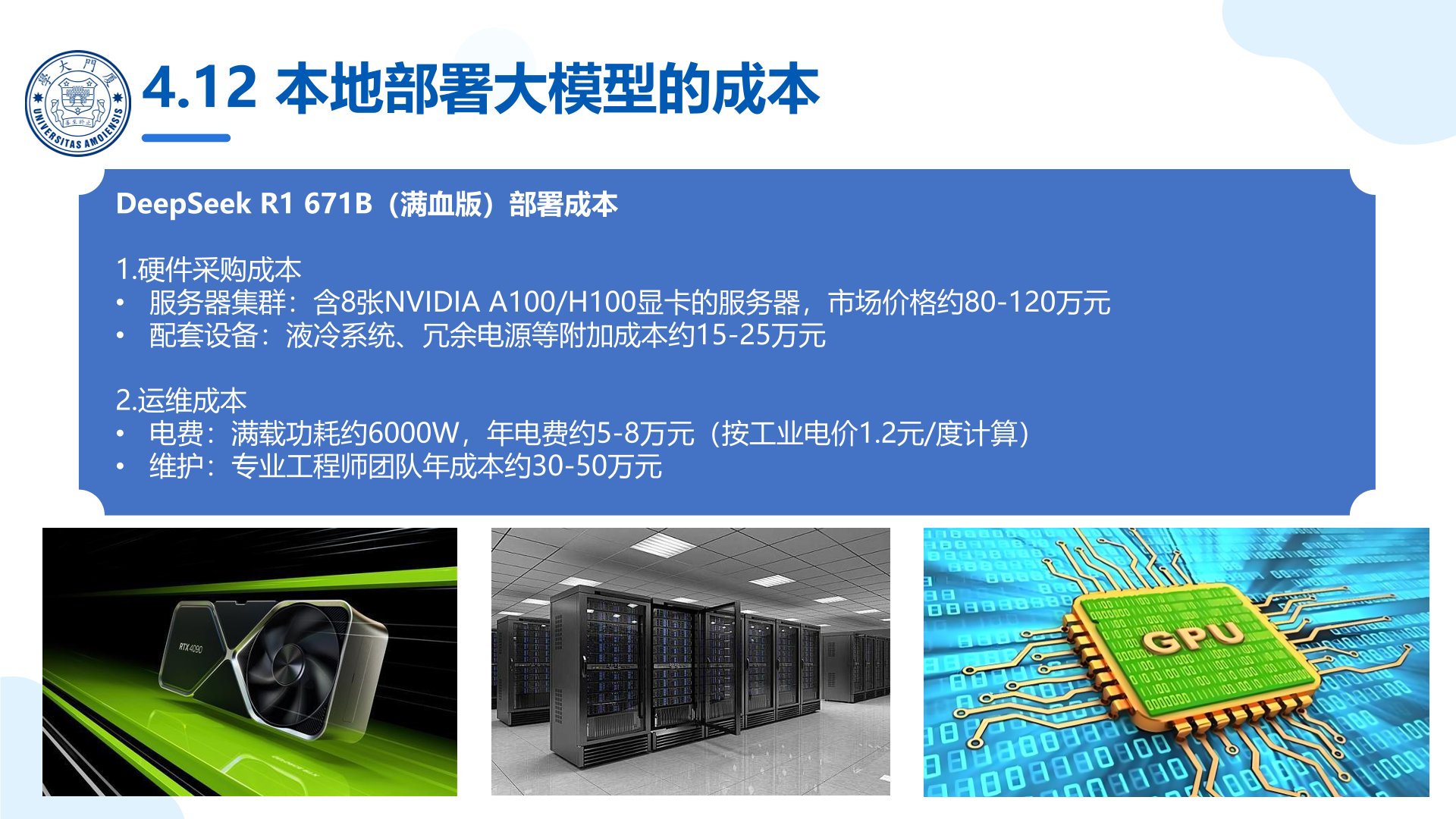
Ways to empower enterprises: reducing costs, improving efficiency, optimizing business processes, and improving product quality.
Implementation scenarios: dialogue assistants, report generation, auditing and compliance, intelligent operations and manufacturing optimization, knowledge management, data analysis, coding assistants, etc.
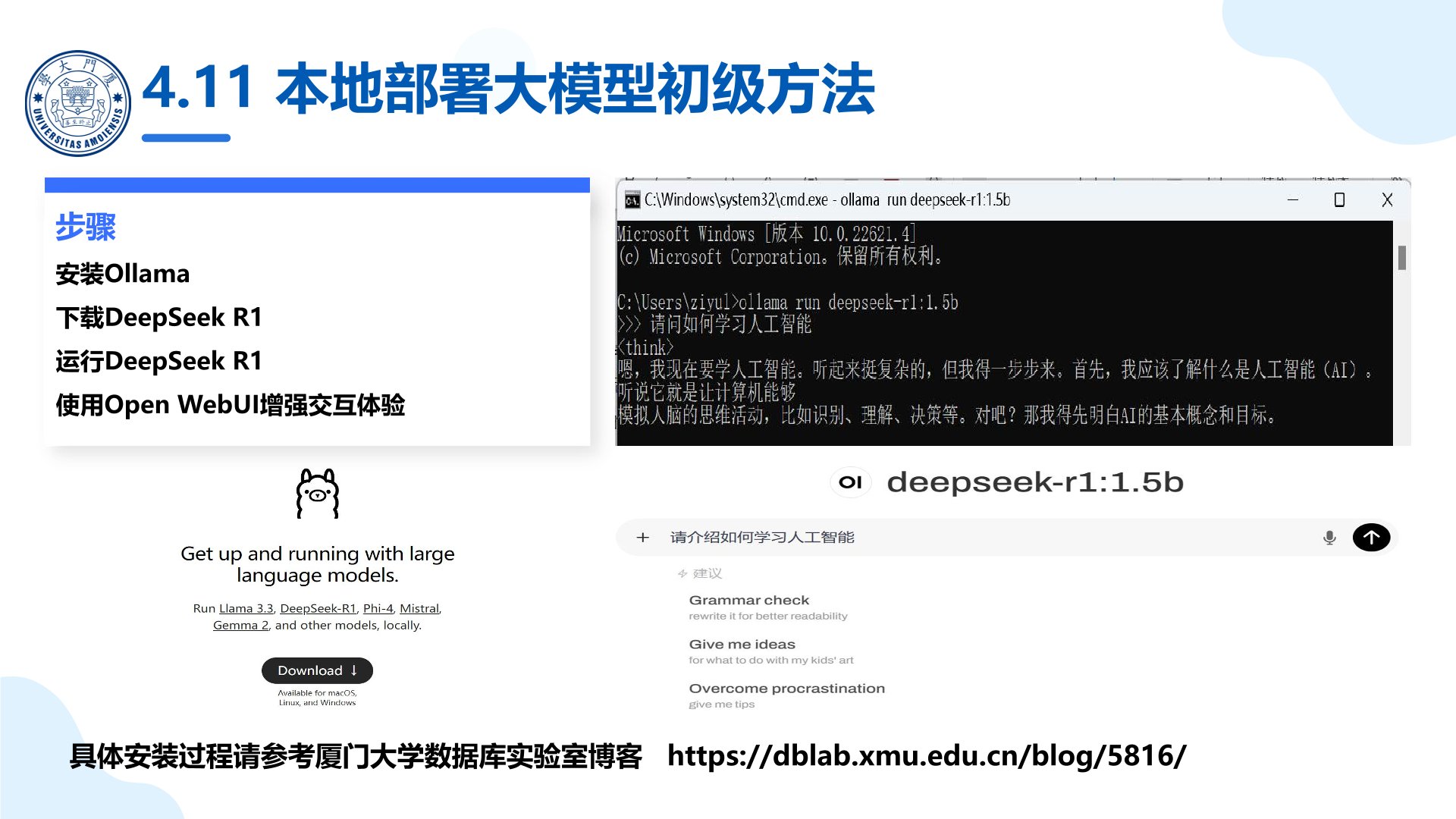
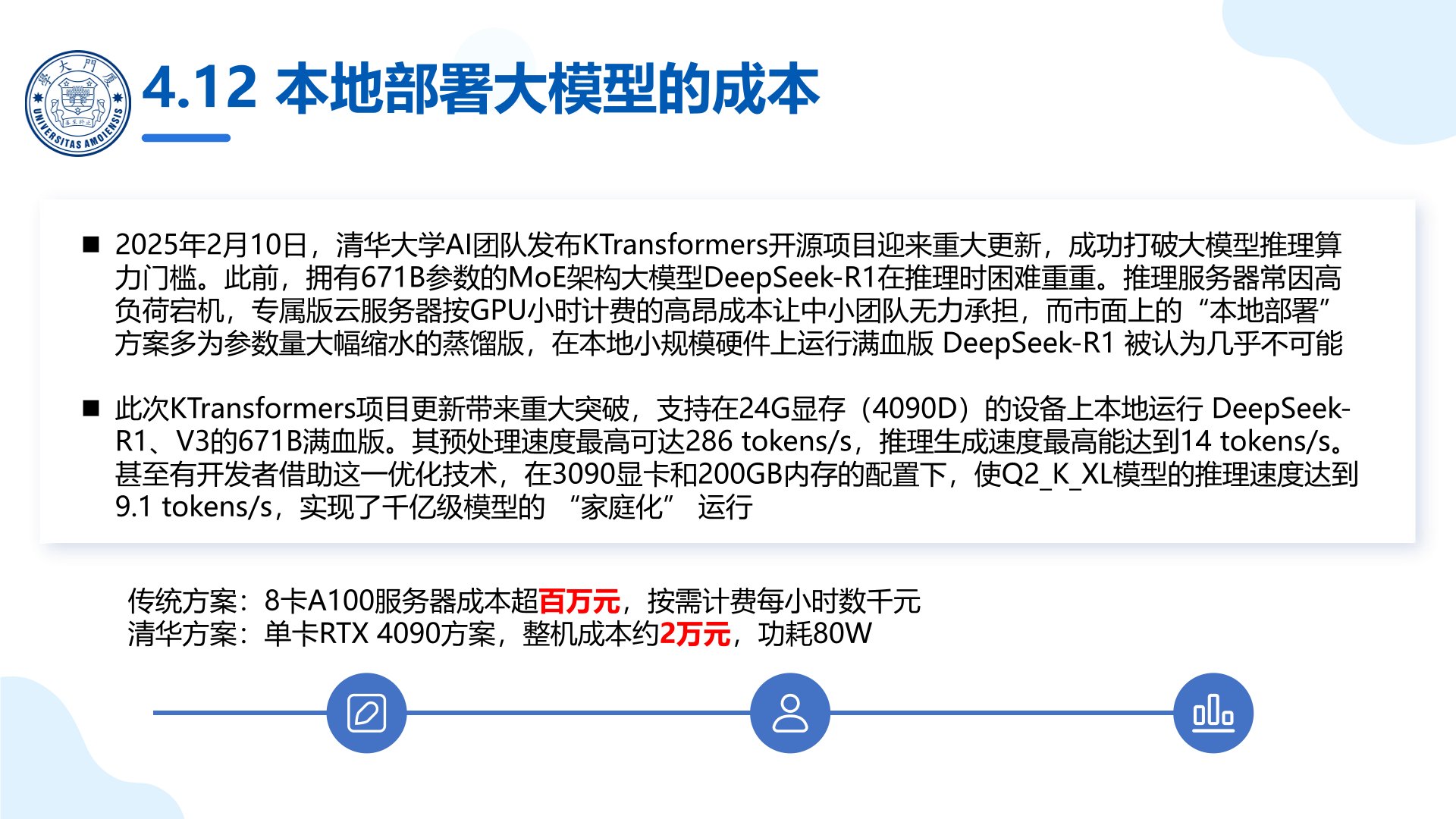
Deployment methods: cloud deployment, local/intranet deployment, edge deployment, hybrid deployment, containerized/microservice deployment, federated deployment.
Planning roadmap: build an internal enterprise knowledge base in the short term, develop industry-specific large models in the medium term, and establish AI Agent workflows in the long term.
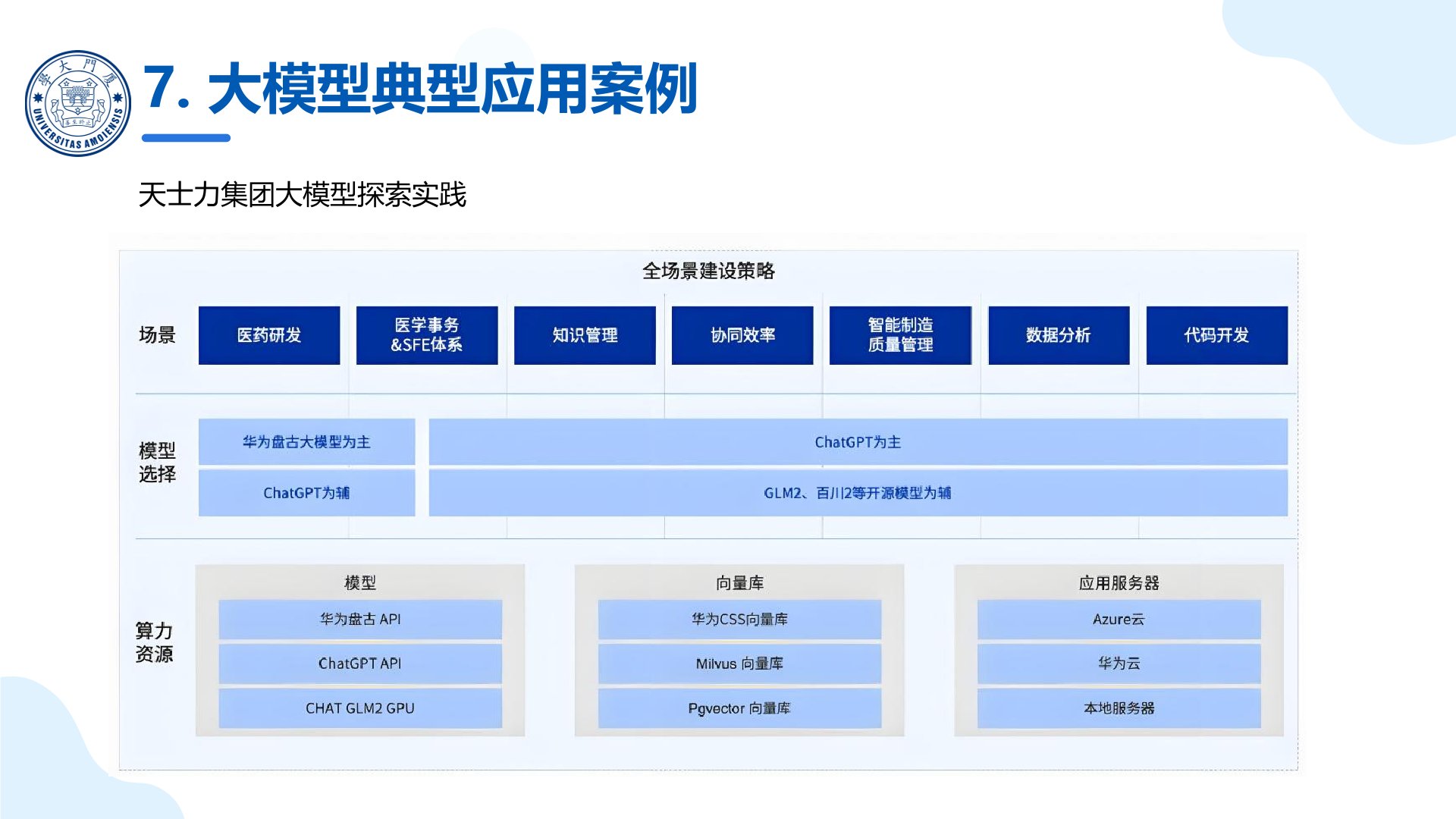
Key steps for integrating AI large models: requirement scenario definition, model selection, model optimization, application integration, and model deployment.
Technical architecture design: including data source layer, data collection and preprocessing layer, model training and evaluation layer, model deployment and service layer, business logic and user interface layer, and security and compliance layer.
5. Enterprise Applications of Intelligent Agents
Concept: An intelligent agent (AI Agent) is a system that mimics human intelligent behavior, capable of perceiving its environment and making autonomous decisions.
Differences from RAG: RAG focuses on knowledge retrieval and generation, while intelligent agents possess autonomous planning and decision-making capabilities.
Typical types: productivity agents, agent frameworks, voice AI agents, data analysis agents, personal assistant agents, programming AI agents, customer service agents, digital workers.
Product cases: such as OpenAI's Operator and Deep Research, as well as domestic intelligent agent development platforms like Coze, etc.
6. Enterprise-grade Large Model Services Provided by Vendors
Enterprise-grade large model implementation solutions: cloud vendors, AI application enterprises, emerging large model application development service providers, etc. provide comprehensive services.
DeepSeek large model all-in-one machine: provides full-size model support, dynamic resource scheduling, deep adaptation to industry scenarios, full lifecycle management, data security, and localized deployment.
Dimensions for enterprises to consider when choosing large model products: response speed, input length and multi-turn interaction capability, Q&A accuracy, answer credibility, language personalization, knowledge base construction difficulty, information security factor, vertical domain training capability, cost-effectiveness, and integration and expansion capabilities.
Professional consulting services: help enterprises set target scenarios, optimize selection methods, ensure outcome quality, promote organizational collaboration, and promote the conversion of results.
7. Typical Large Model Application Cases
Medical field: RuiPath, the pathology large model from Ruijin Hospital in cooperation with Huawei, significantly improves pathology diagnosis efficiency.
Manufacturing: Dongguan Artificial Intelligence Large Model Center, providing out-of-the-box algorithm services and AI development platforms to help upgrade the manufacturing industry.
Enterprise-level applications: Yunnan Baiyao Group builds a large model application development platform, significantly improving data processing efficiency.
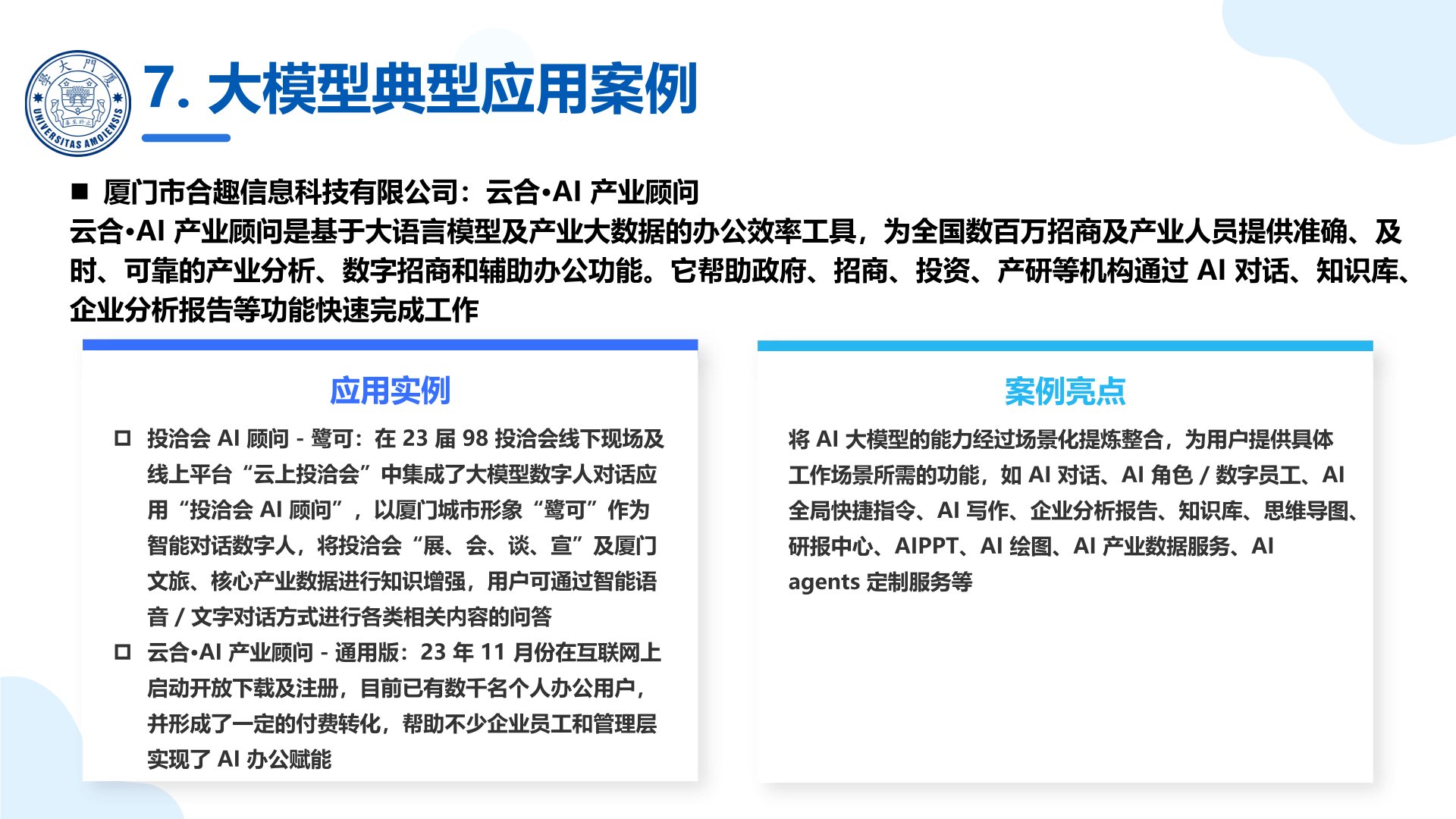
Intelligent office: Yunhe · AI Industry Consultant, providing efficient office tools for investment promotion and industrial personnel.
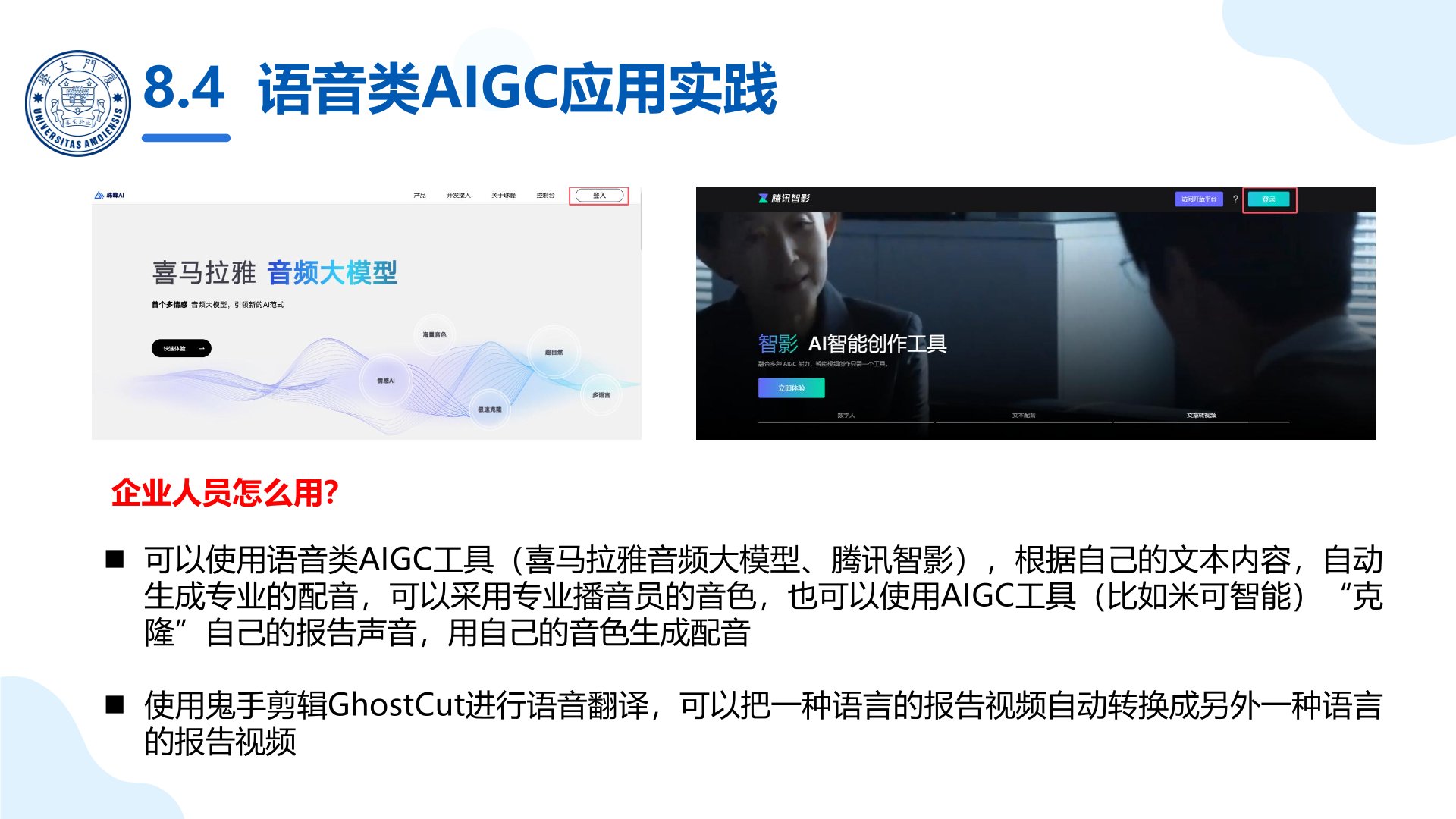
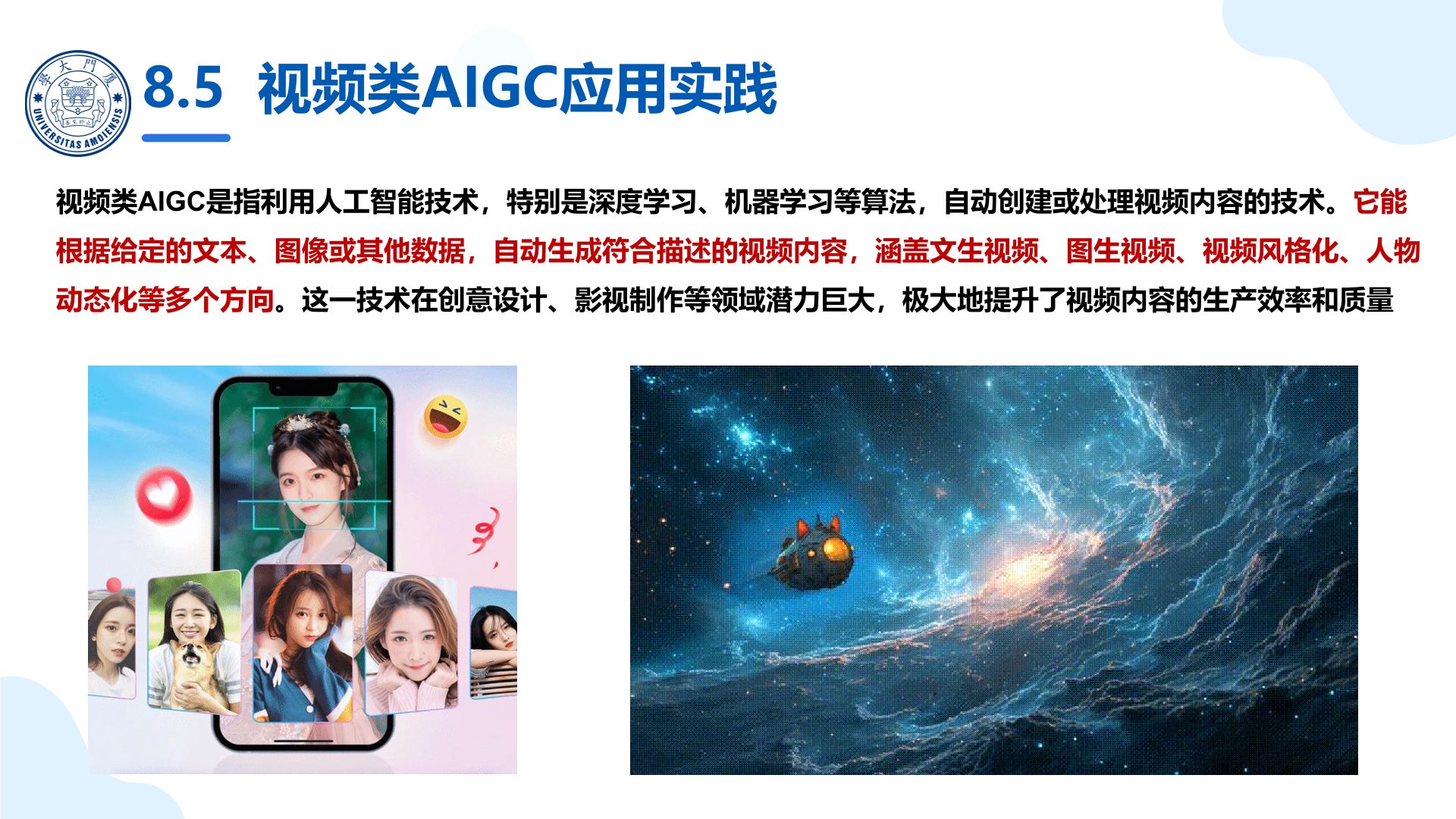
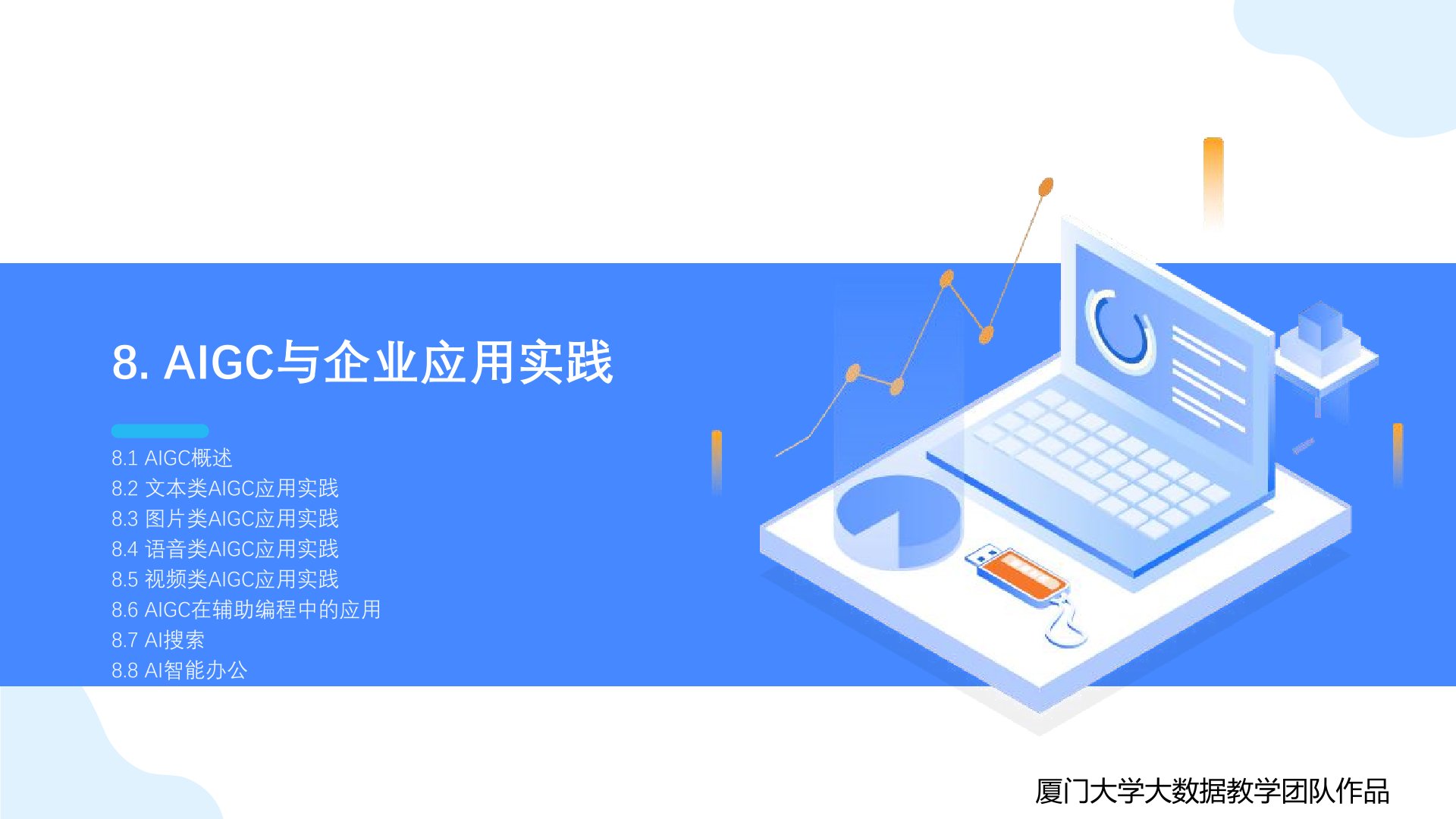
8. AIGC (Artificial Intelligence Generated Content) and Enterprise Application Practice
AIGC overview: Using AI technology to generate text, music, images, video, and other content, driving content creation, productivity improvement, and user experience enhancement.
Application scenarios: covering e-commerce, office, gaming, entertainment, film and television, animation, art, education, design, media, life, and many other fields.
AIGC large model tools: such as ChatGPT, DeepSeek, iFlytek Spark, Tongyi Qianwen, ERNIE Bot, Doubao, Kimi, etc.
Prompt techniques: be concise and clear, consider the audience, break down complex tasks, use affirmative instructions, be example-driven, clarify roles, follow rules, and use natural language responses.
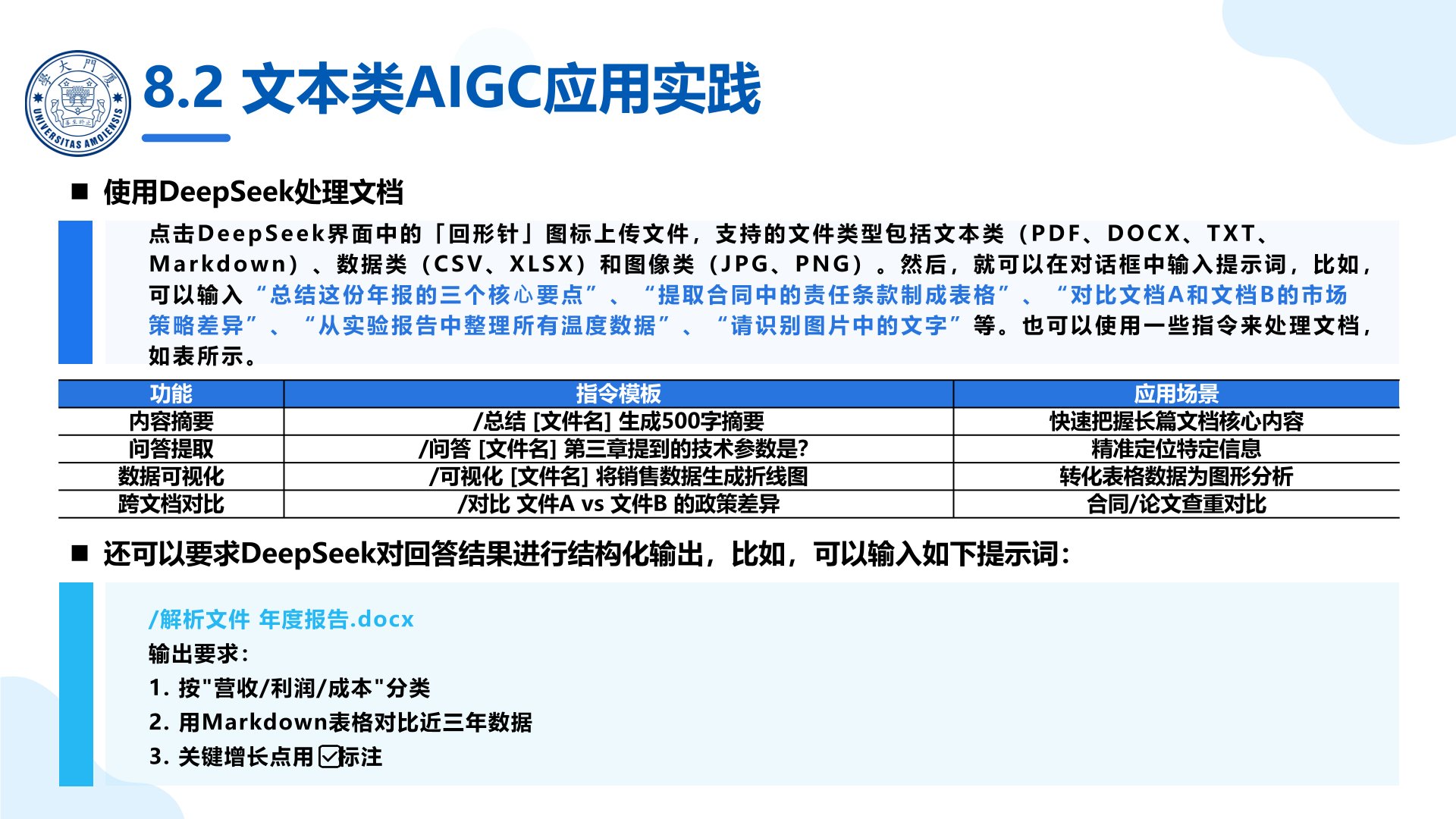
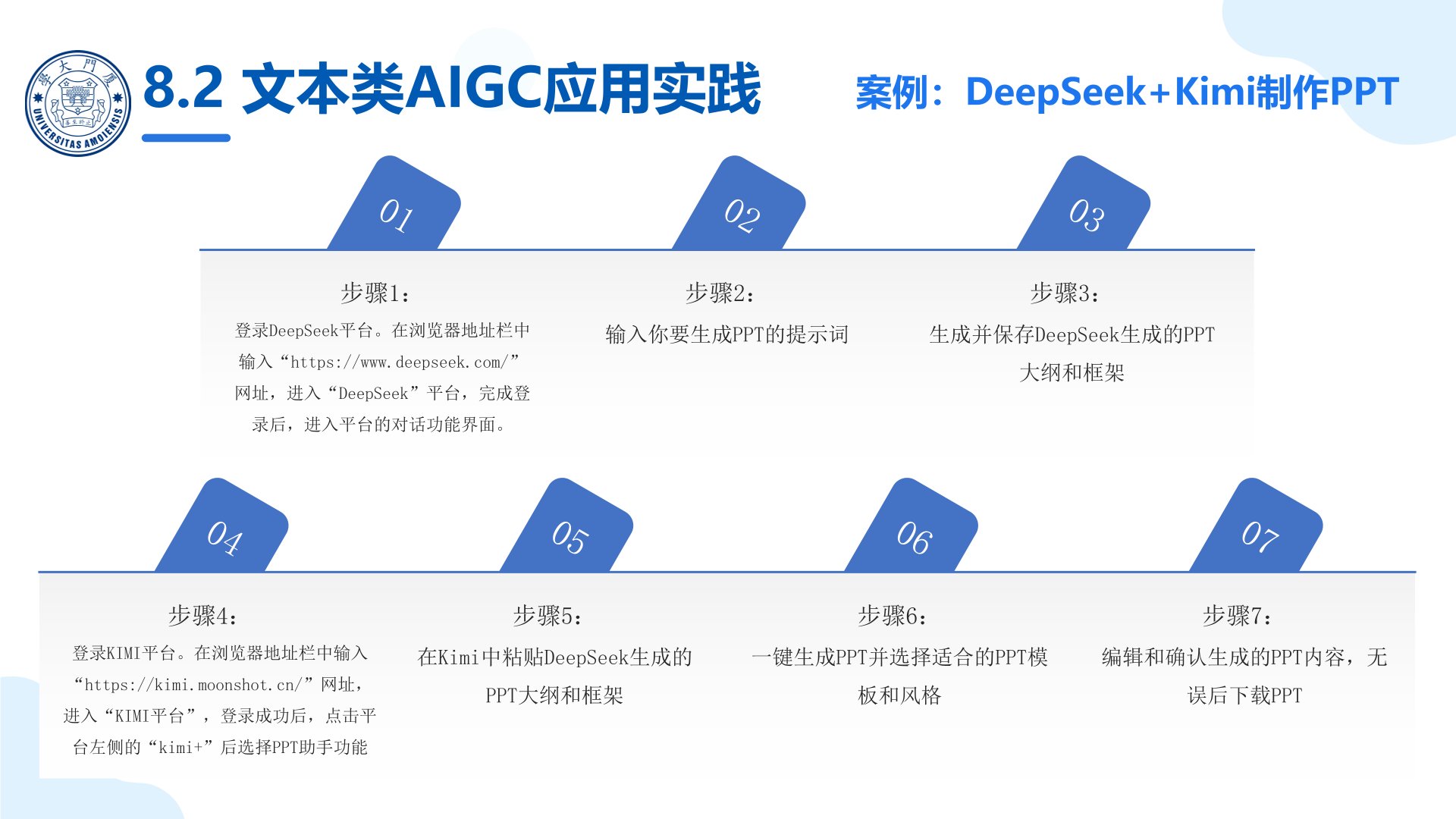
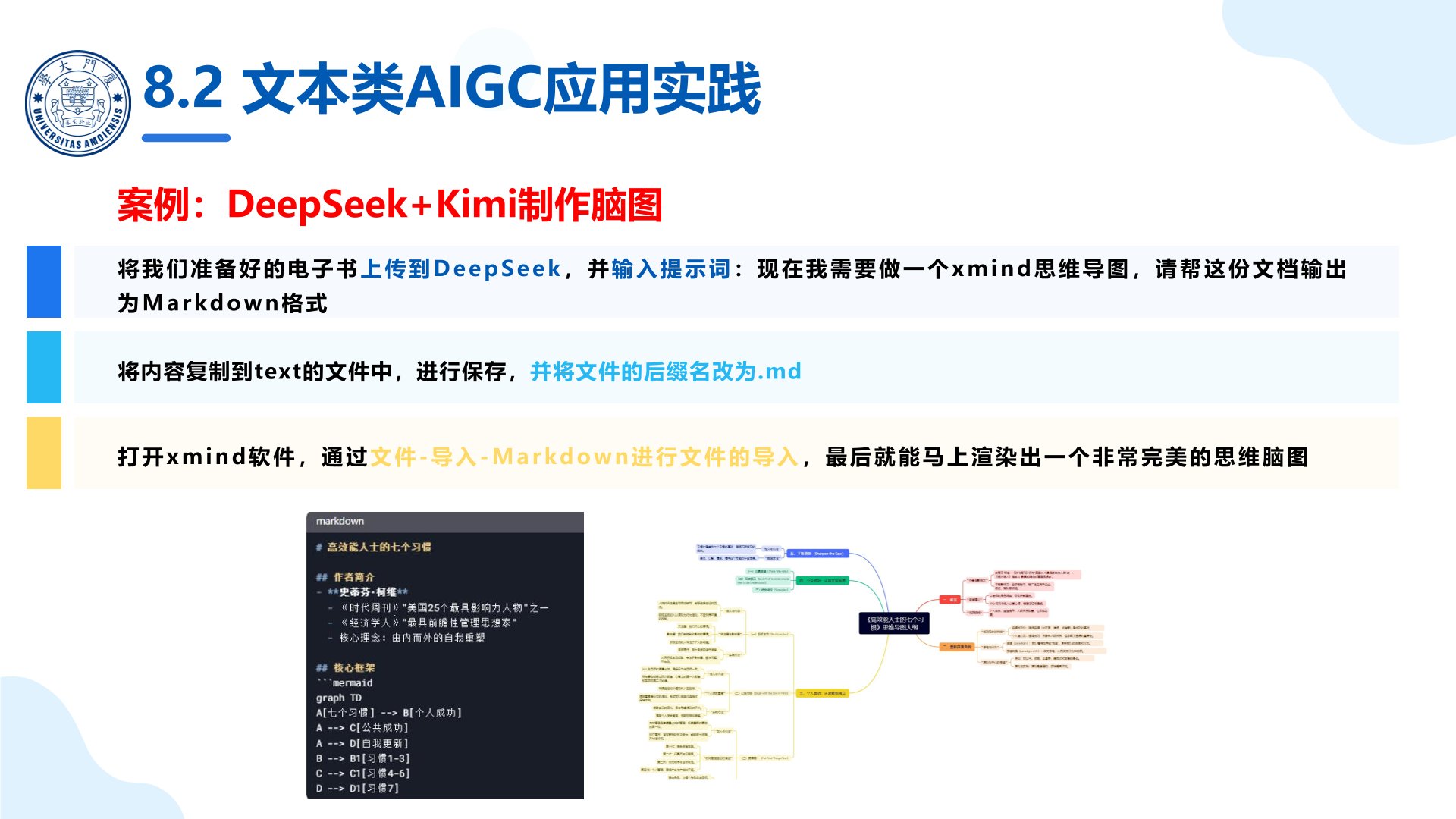
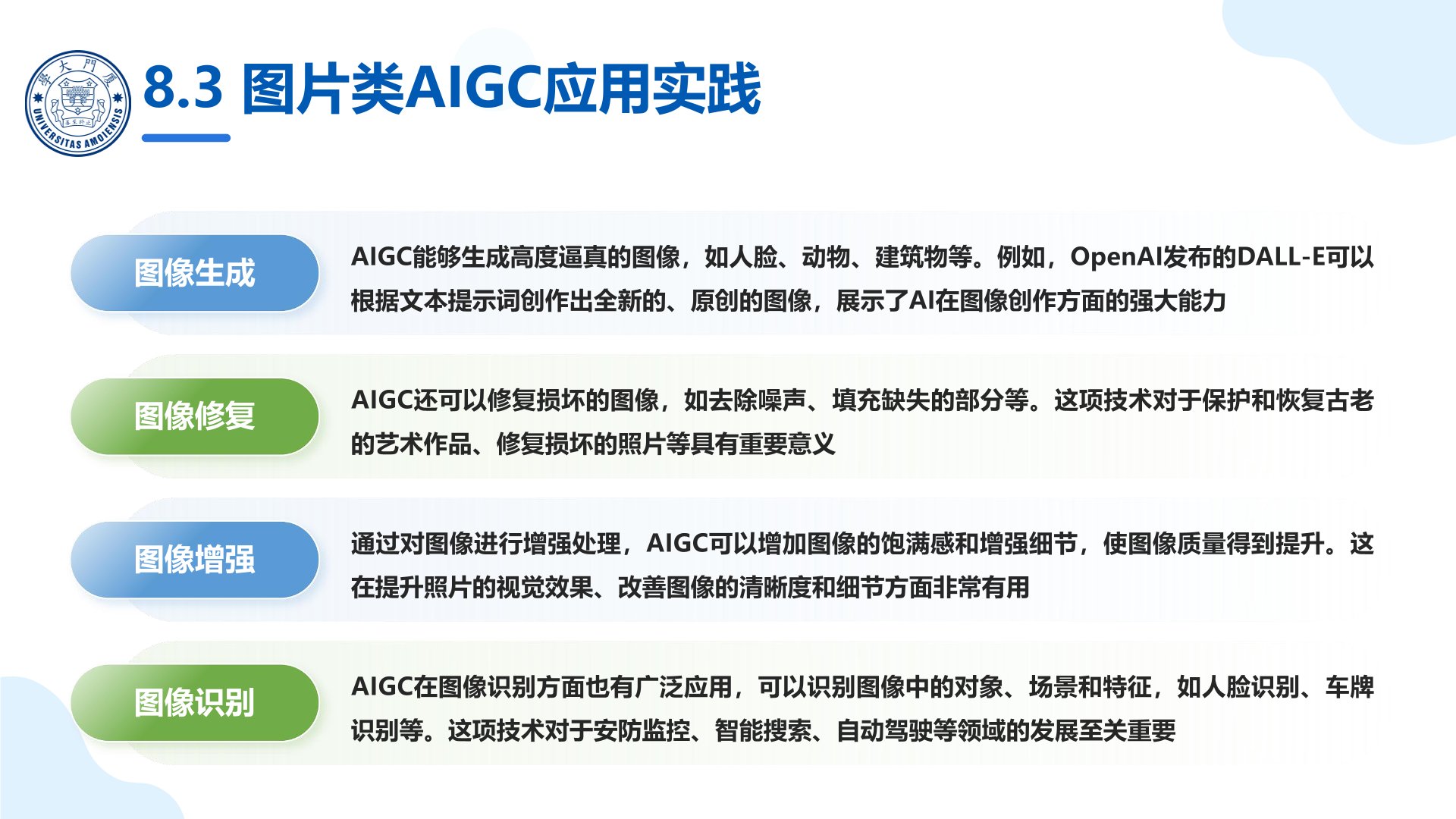
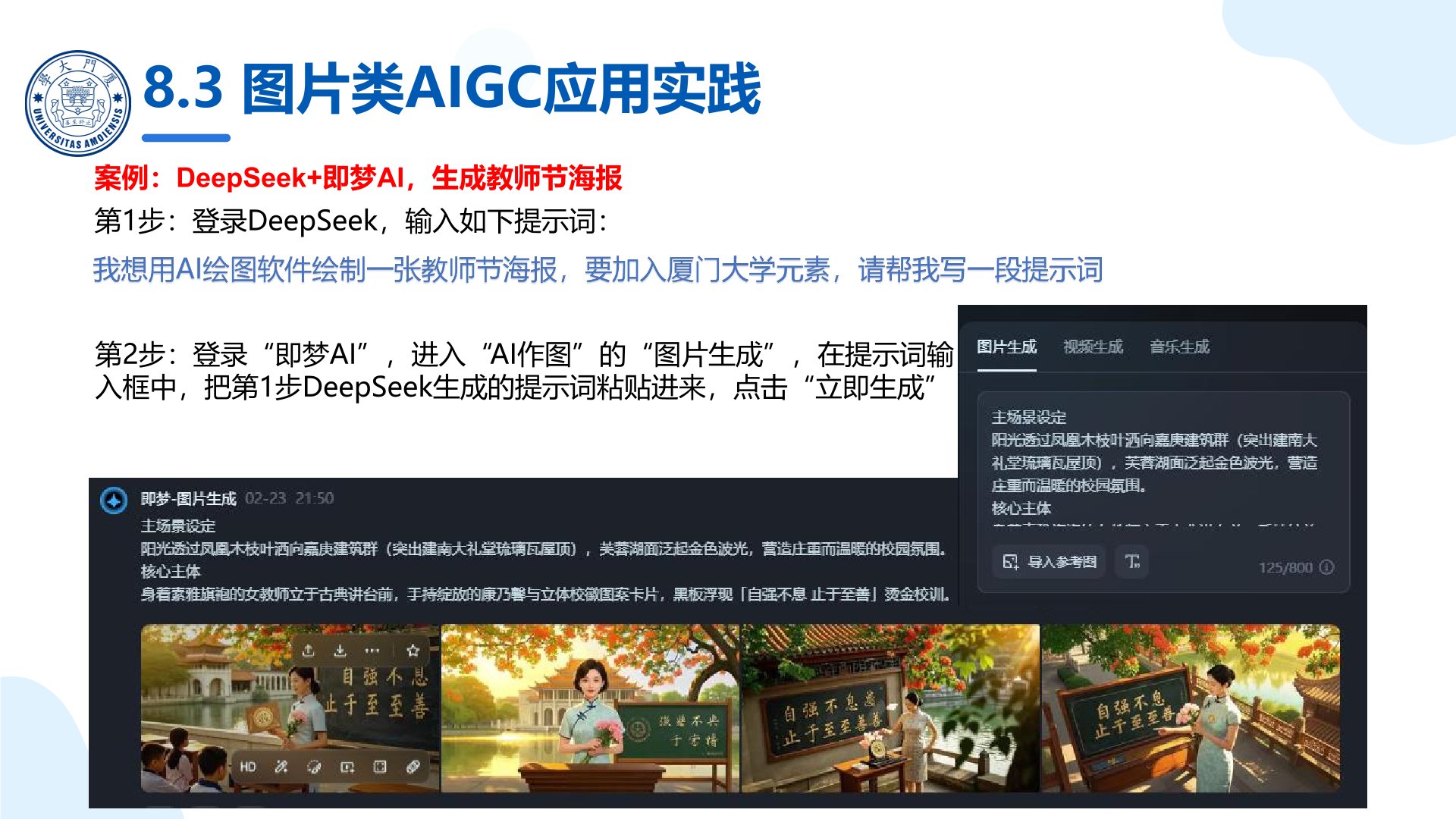
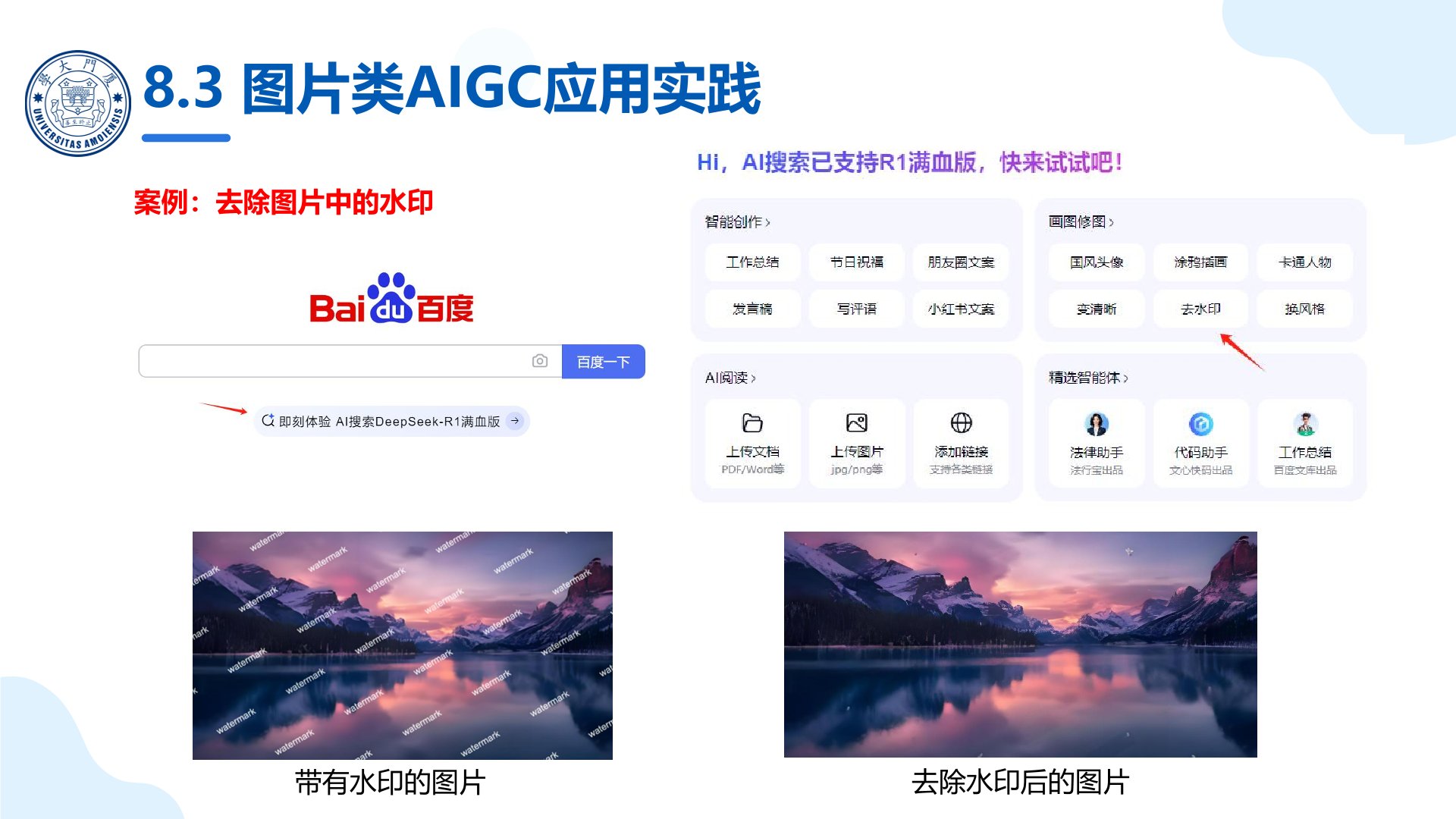
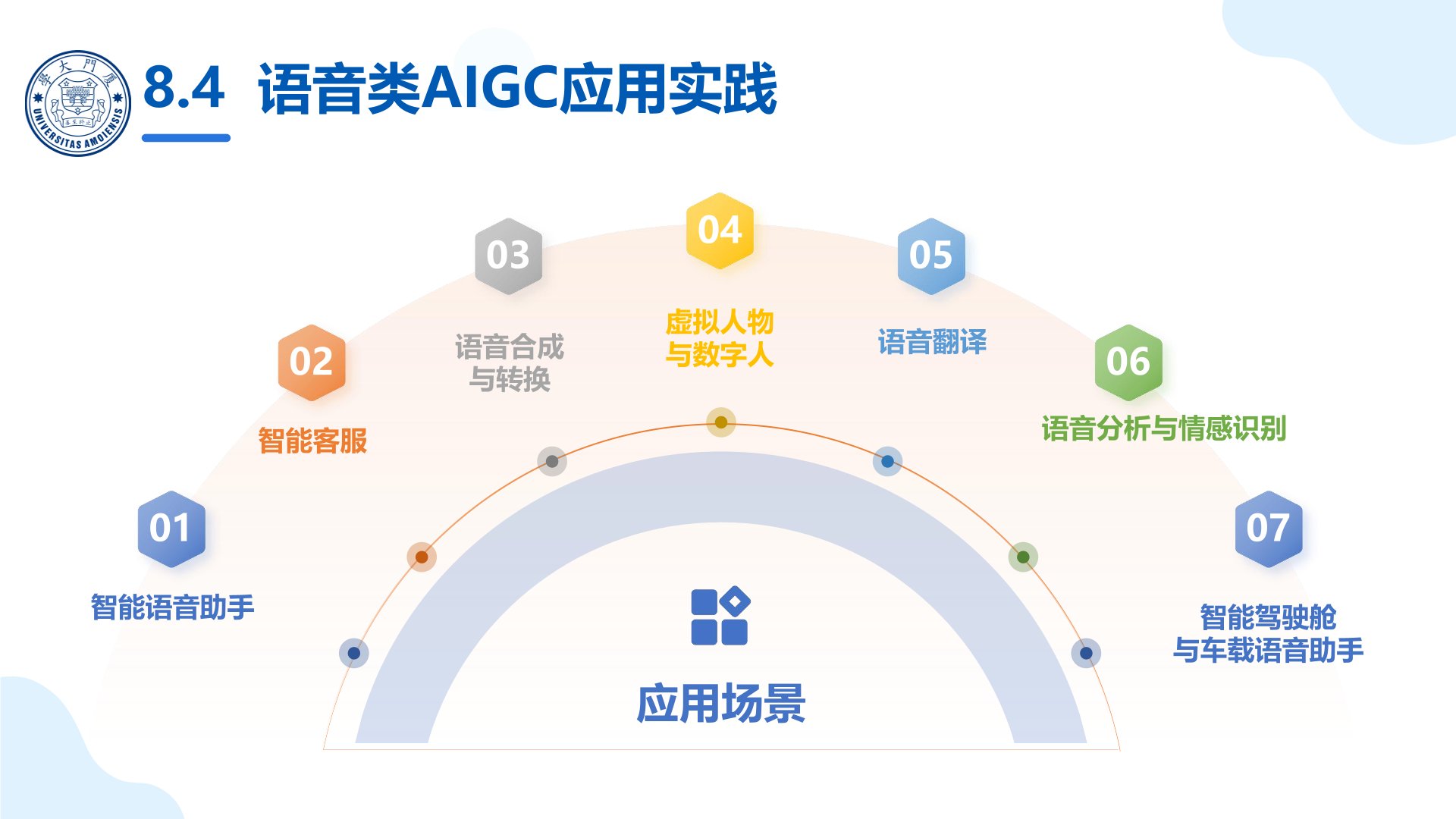
Application practices: including text, image, voice, and video AIGC applications, as well as AIGC applications in assisted programming, AI search, and intelligent office.
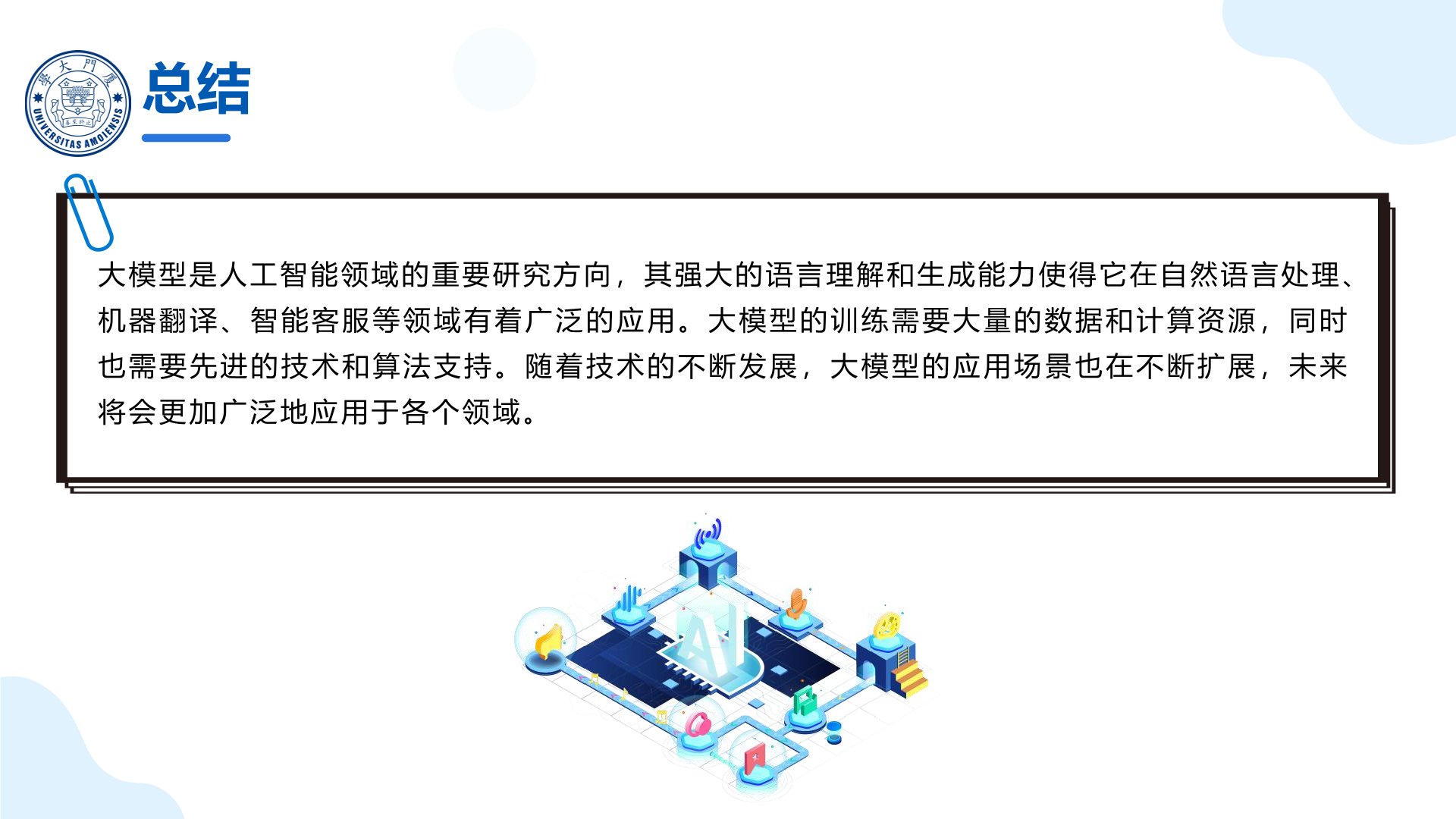

9. Future Development Trends of Large Models
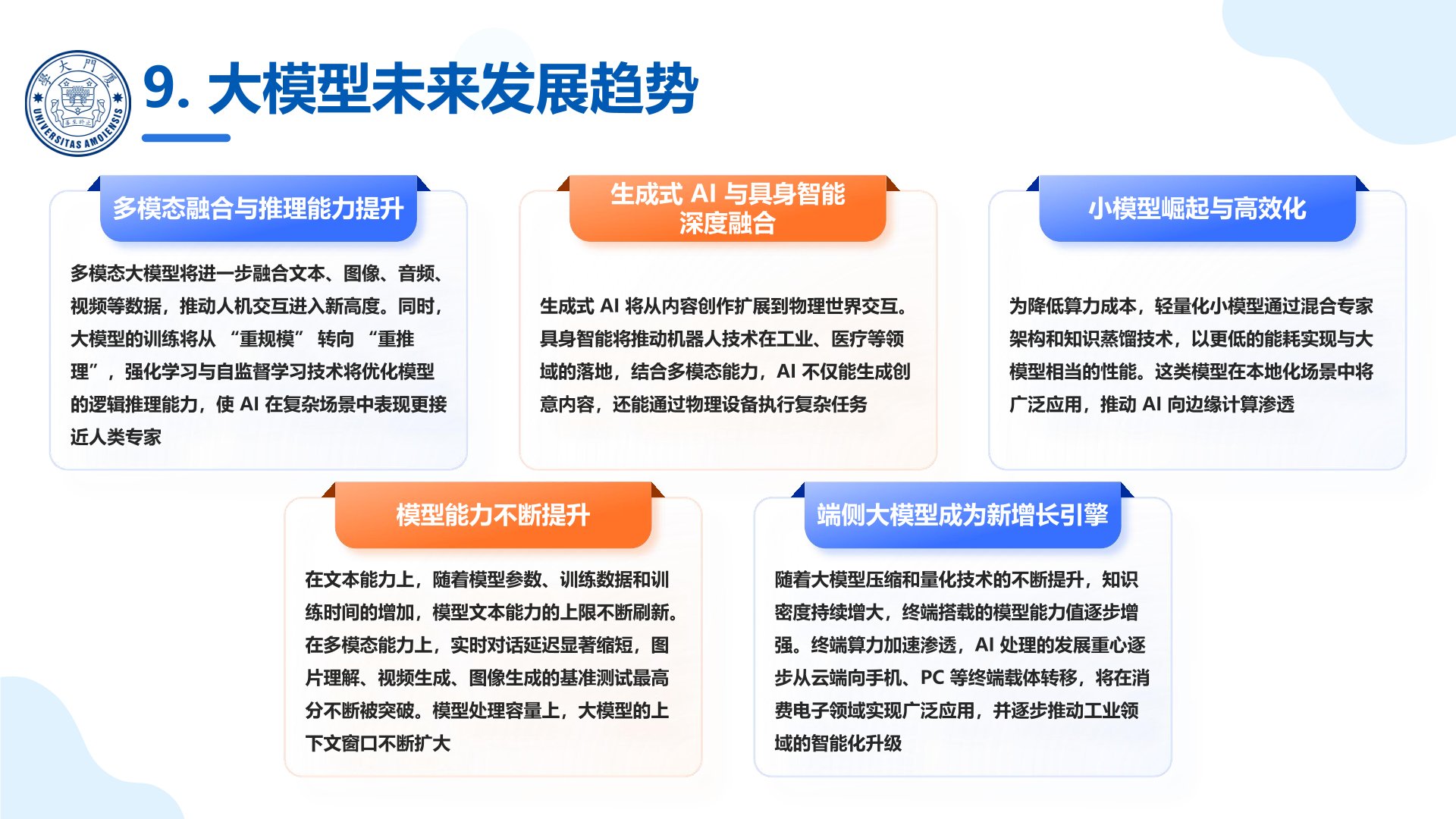
Multimodal fusion and improved reasoning capabilities: Large models will integrate text, image, audio, video, and other data, strengthening logical reasoning capabilities.
Generative AI and embodied intelligence: Generative AI will expand from content creation to physical world interaction, driving the implementation of robot technology.
Rise of small models and higher efficiency: Lightweight small models achieve high performance through mixed expert architectures and knowledge distillation techniques.
On-device large models: Accelerated penetration of edge computing power drives the widespread application of AI in consumer electronics and industrial fields.
Continuous improvement of model capabilities: continuous advancement in text capabilities, multimodal capabilities, real-time dialogue latency, image understanding, and video generation.









