
 Script Planner Assistant▸
 AI Apps
 AI News
VLM-R1: An R1-Style Vision-Language Model with Greater Stability and Generalization
小编 ·

VLM-R1: An R1-Style Vision-Language Model with Greater Stability and Generalization
What is VLM-R1?
VLM-R1 (Visual Language Model - R1) is a brand-new open-source visual language model developed by the Om ai Lab team. Its core lies in successfully transferring the DeepSeek R1 method to the visual language domain, achieving higher stability and generalization capability.
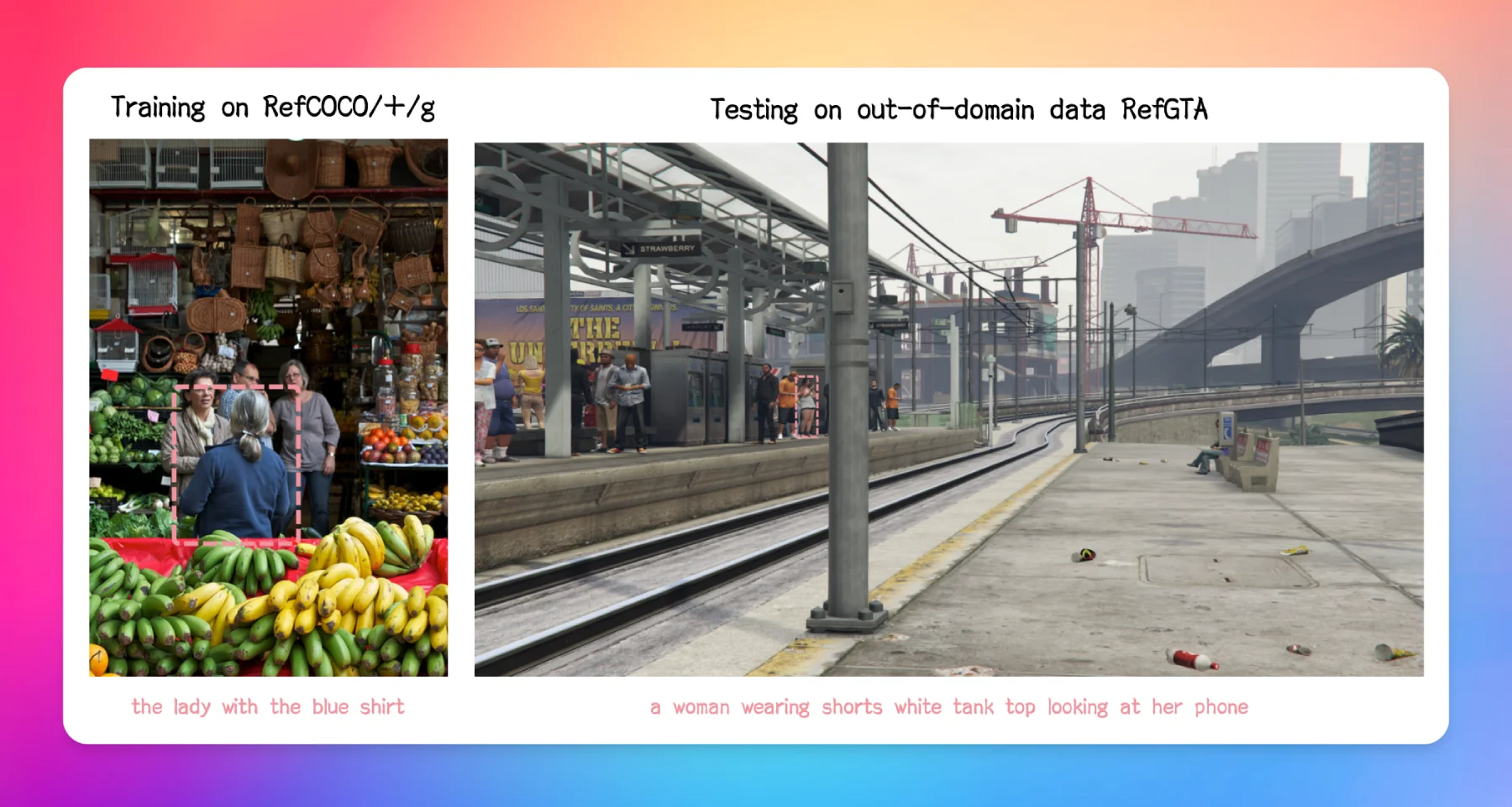
VLM-R1 is built on Qwen2.5-VL and enhances visual understanding through reinforcement learning. In visual tasks, especially in cross-domain data understanding, it outperforms traditional SFT models, demonstrating strong visual content comprehension ability and representing one of the significant breakthroughs in the development of multimodal AI.
Technical Background of VLM-R1:
VLM-R1 draws its inspiration from the R1 method open-sourced by the DeepSeek team last year, which employs GRPO (Group Relative Policy Optimization) reinforcement learning technique and achieved remarkable results on pure text large models. The VLM-R1 team applied this method to visual language models, successfully opening up a new chapter in the multimodal field.
Main Features of VLM-R1:
Cross-Domain Robustness: Even in complex and unpredictable application environments, VLM-R1 is able to maintain a high level of performance.
Outstanding Generalization Ability: Unlike traditional supervised fine-tuning (SFT), VLM-R1's performance continues to improve over time on unseen tasks or out-of-distribution data, demonstrating strong adaptability and flexibility.
Ease of Use: The complete training and evaluation pipeline allows users to get started and conduct experiments in just a few steps, which is extremely convenient for researchers and engineers who wish to leverage advanced AI technologies.
Efficient Resource Utilization: Dynamic optimization techniques enable training models with large-scale parameters (up to billions) on a single GPU, lowering hardware cost barriers while improving efficiency.
Technical Implementation of VLM-R1:
Built on top of Qwen2.5-VL, VLM-R1 compares the R1 approach with the traditional SFT method. The results show that the R1 model outperforms traditional SFT models in terms of stability, generalization, and depth of understanding. In addition, VLM-R1 demonstrates its professional capabilities in visual recognition, knowledge reasoning, and text expression through a practical case study.
Application Scenarios of VLM-R1:
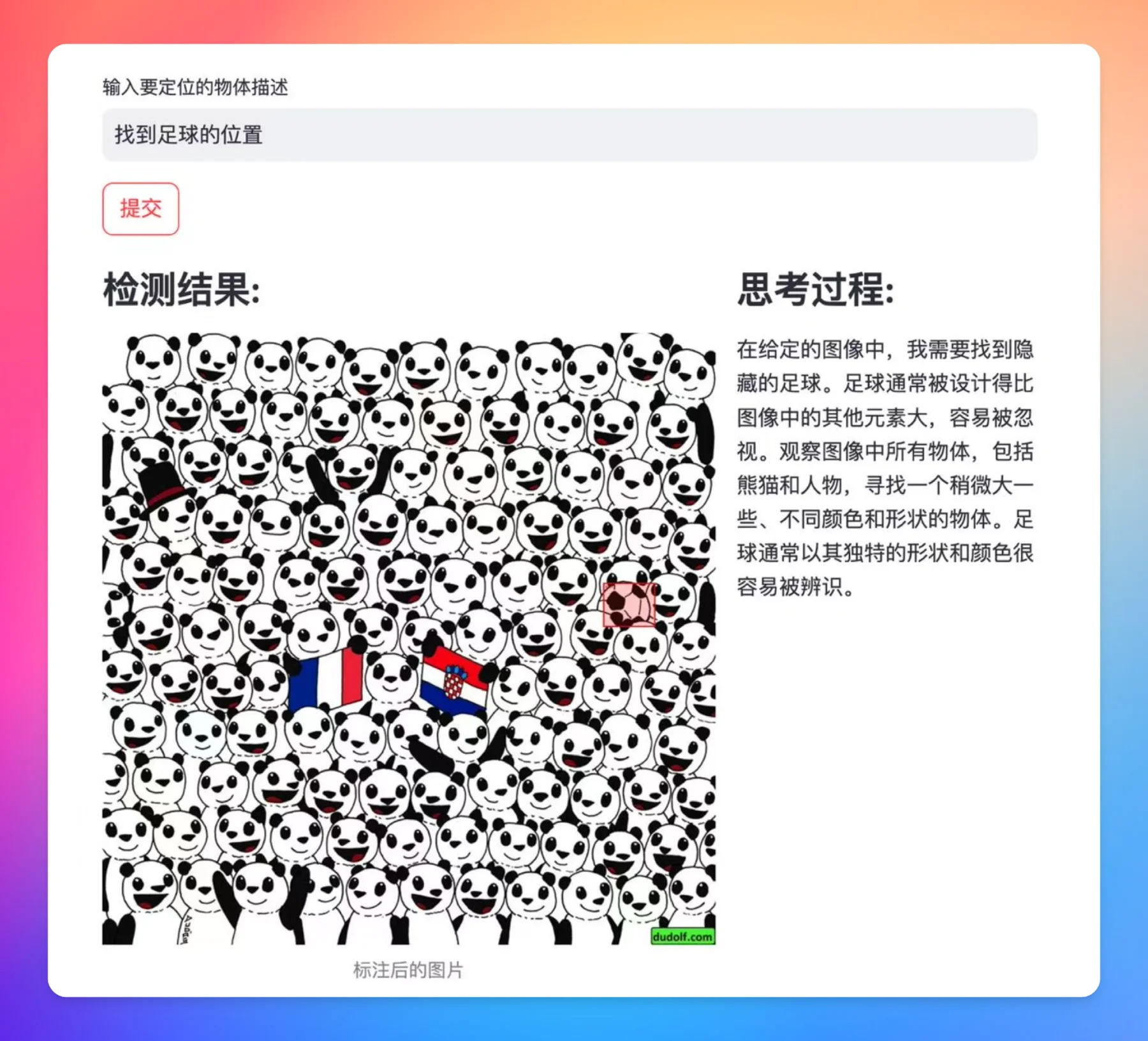
VLM-R1 has demonstrated outstanding performance in multiple real-world applications. For example, in fields such as intelligent assistants, autonomous driving systems, and virtual reality, its powerful processing capability and flexibility give it broad application potential in multimodal interactions. In one specific demonstration case, when given a photo containing a variety of ingredients, VLM-R1 accurately identified the food with higher protein content—an egg pancake—and further explained the reasoning behind it. Additionally, it can precisely locate the position of marked objects in an image, fully showcasing its exceptional capabilities in text generation, logical reasoning, and visual perception.
Related Links for VLM-R1:
GitHub Repository:https://github.com/om-ai-lab/VLM-R1
Demo:https://huggingface.co/spaces/omlab/VLM-R1-Referral-Expression









