
 Script Planner Assistant▸
 AI Apps
 AI News
SWE-Lancer: OpenAI's Open-Source Benchmark for Software Engineering Capability
小编 ·

SWE-Lancer: OpenAI's Open-Source Benchmark for Software Engineering Capability
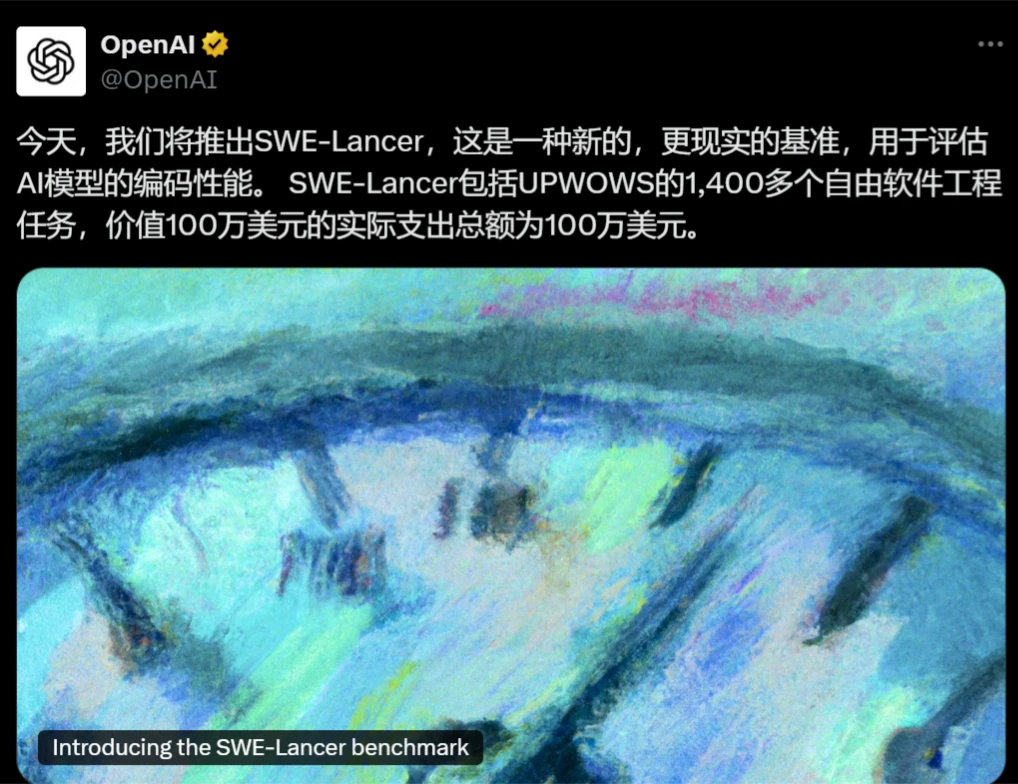
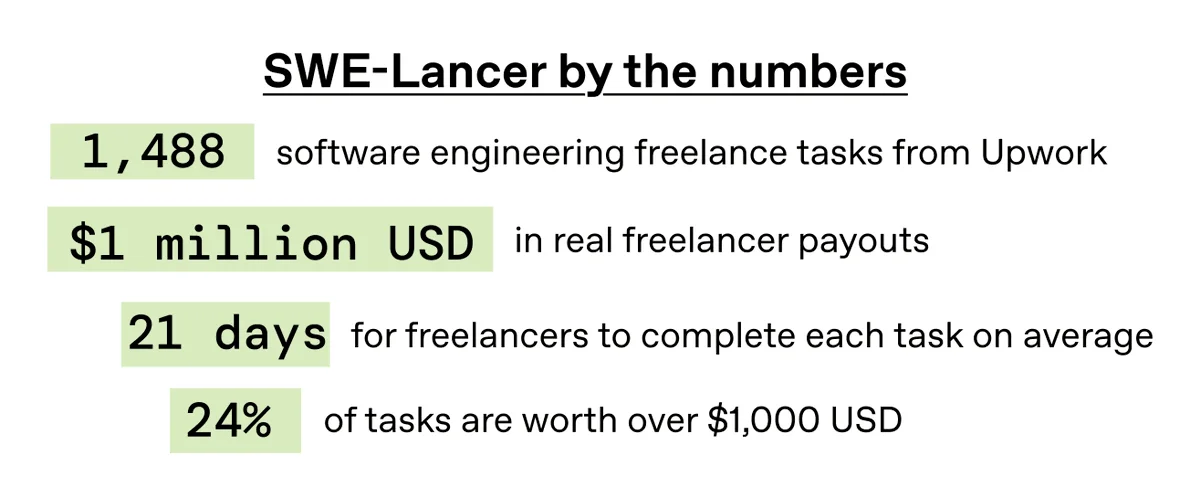
SWE-Lancer is a benchmark released by Openai, primarily used to evaluate model performance on freelance software engineering tasks. The benchmark collects over 1,400 tasks from Upwork, with a total value of approximately $1 million. SWE-Lancer focuses on assessing code patches and management decisions by having models select the best proposal from multiple options, simulating the role-based work scenarios of engineering teams as realistically as possible.
Core Evaluation Dimensions:
Diversity of Evaluation Tasks
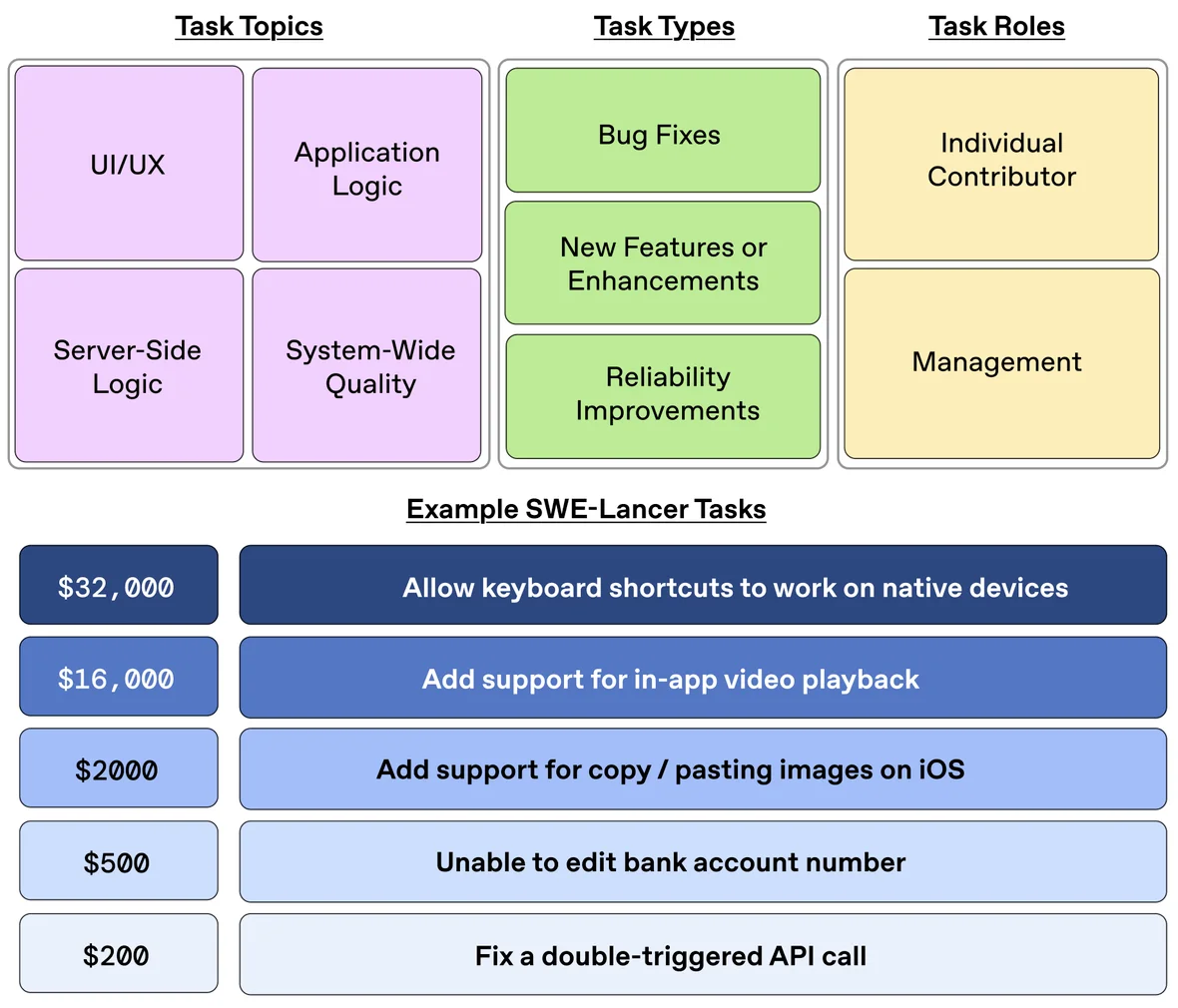
SWE-Lancer covers a wide variety of software development task types, making it a highly effective tool for analyzing model capabilities. It requires the model to choose the best solution from multiple given options, an approach that allows the benchmark to more realistically reflect the workflows of engineering teams.
Economic Value Evaluation
This benchmark not only evaluates technical capabilities but also considers the economic value of tasks. This evaluation approach opens up a new perspective for measuring the effectiveness of models in real-world applications, enabling developers to better understand the potential economic benefits that AI models may bring.
Features of SWE-Lancer:
Real-World Tasks: SWE-Lancer includes a range of real software development tasks, covering everything from minor bug fixes to large-scale feature implementations, ensuring effective evaluation of models in real development scenarios.
End-to-End Testing: Unlike traditional unit testing, SWE-Lancer adopts an end-to-end testing approach, which requires models to handle complete problems, more closely approximating the decision-making processes of software engineers in actual work.
Multi-Option Evaluation: The model must select the best proposal from multiple possible solutions, simulating the decision-making process engineering teams face when dealing with problems.
Economic Value Mapping: The tasks total a value of $1 million, reflecting both the complexity and importance of the tasks, as well as demonstrating the potential economic impact that model performance may produce.
Applications of SWE-Lancer:
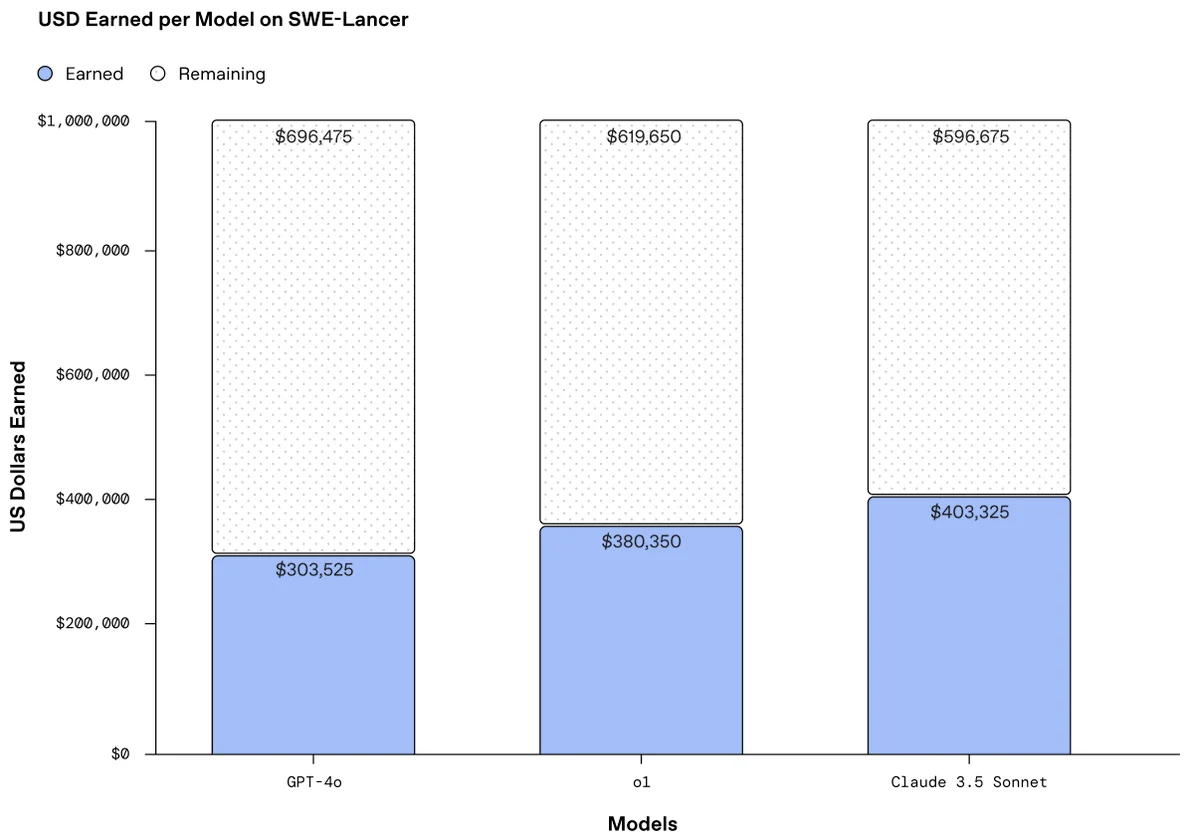
Model Performance Evaluation: Provides a testing platform for researchers and developers to test and compare the performance of large language models on software engineering tasks.
Software Development Assistance: In the long run, SWE-Lancer may help optimize the application of artificial intelligence in software development, such as automated code review, error fix suggestions, and more.
Education and Training: Can serve as a teaching tool, helping students and developers understand best practices in software engineering as well as the challenges they face.
Industry Standard: Has the potential to become an industry standard for evaluating the practical utility of artificial intelligence in the field of software engineering.
How to Use SWE-Lancer:
Select Tasks: Choose one or more tasks to evaluate from the task list provided by SWE-Lancer.
Model Processing: Input the selected tasks into the artificial intelligence model, which will execute the tasks based on its own training and capabilities.
Result Evaluation: Evaluate the results generated by the model, checking whether they meet the preset quality standards, and analyze them in light of the tasks' economic value.
Paper:https://arxiv.org/abs/2502.12115
Details:https://openai.com/index/swe-lancer/









