
 Script Planner Assistant▸
 AI Apps
 AI News
Tsinghua University PDF Download: "How Ordinary People Can Benefit from DeepSeek"
小编 ·

Tsinghua University PDF Download: "How Ordinary People Can Benefit from DeepSeek"
Friends! Tsinghua University has done it again! This time they are bringing you a brand-new DeepSeek tutorial "How Ordinary People Can Capture the DeepSeek Dividend," and this is already the third installment.
The first two tutorials, "DeepSeek: From Beginner to Master" and "How DeepSeek Empowers Workplace Applications", were absolutely amazing! I followed the content carefully and picked up a bunch of super practical AI tips for using DeepSeek. It really felt like my understanding of DeepSeek leveled up.
Be sure to check out the new tutorial, friends—let us discover the wonderful world of DeepSeek together!
Tsinghua University "How Ordinary People Can Capture the DeepSeek Dividend" PDF Download:
Baidu Netdisk Download:https://pan.baidu.com/s/1cW13n8Z8sQ3XtOG6KwC98g?pwd=u7f7
"How Ordinary People Can Capture the DeepSeek Dividend" was written by the doctoral team led by Tao Wei at Tsinghua University. It explores how ordinary people can leverage DeepSeek to capture the AI dividend. It primarily introduces the Chinese tech company DeepSeek and the features and applications of its open-source reasoning model DeepSeek-R1, and provides detailed guidance on how to use DeepSeek to solve problems in work, study, life, and social relationships.
1. Information About DeepSeek
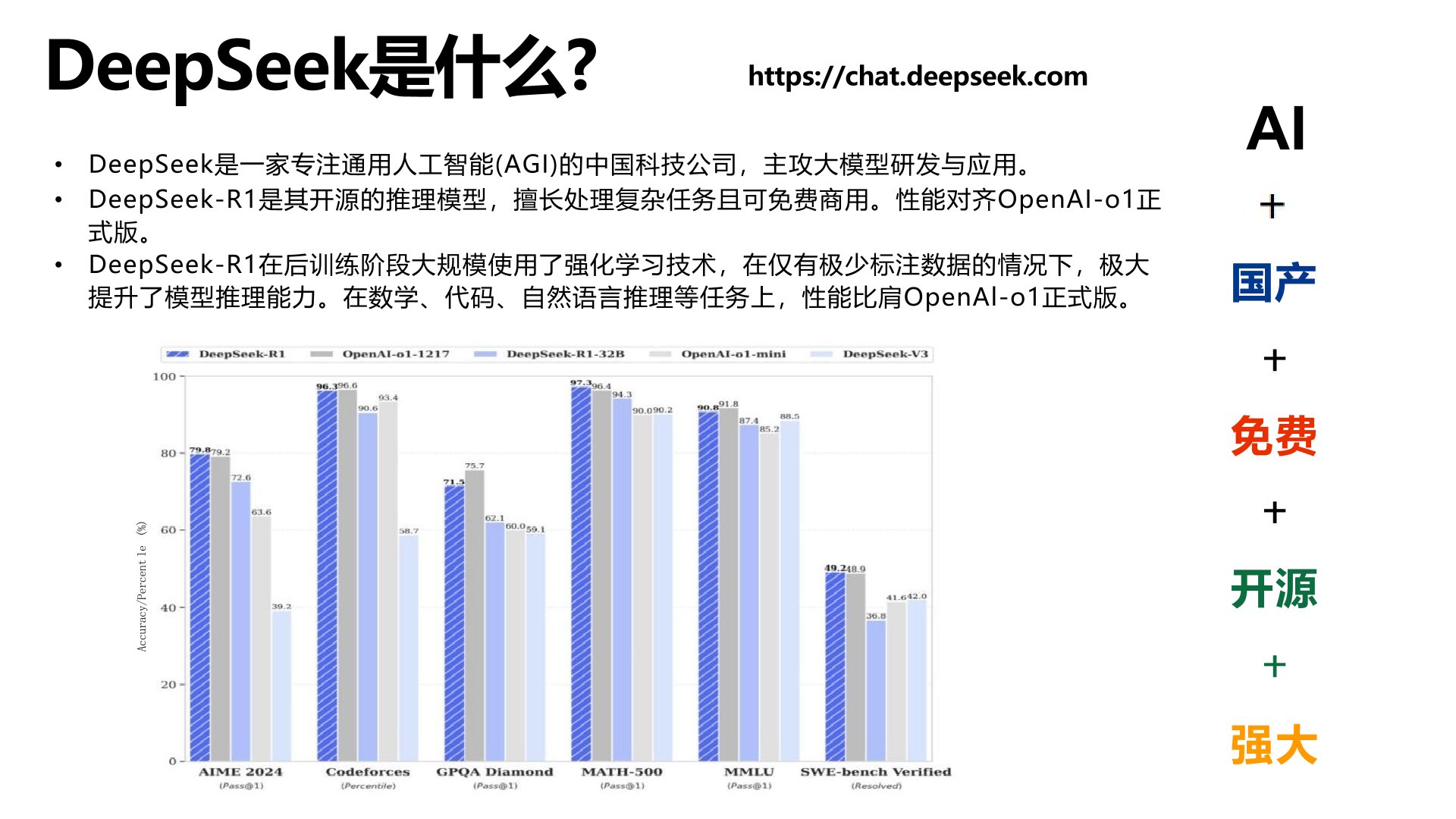
About DeepSeek: DeepSeek is a Chinese tech company focused on Artificial General Intelligence (AGI), specializing in the R&D and application of large models.
Features of DeepSeek-R1: An open-source reasoning model that excels at handling complex tasks and is free for commercial use, with performance on par with the official version of OpenAI-o1. It uses reinforcement learning techniques in the post-training stage to enhance the model's reasoning ability, performing outstandingly on tasks such as math, code, and natural language reasoning.
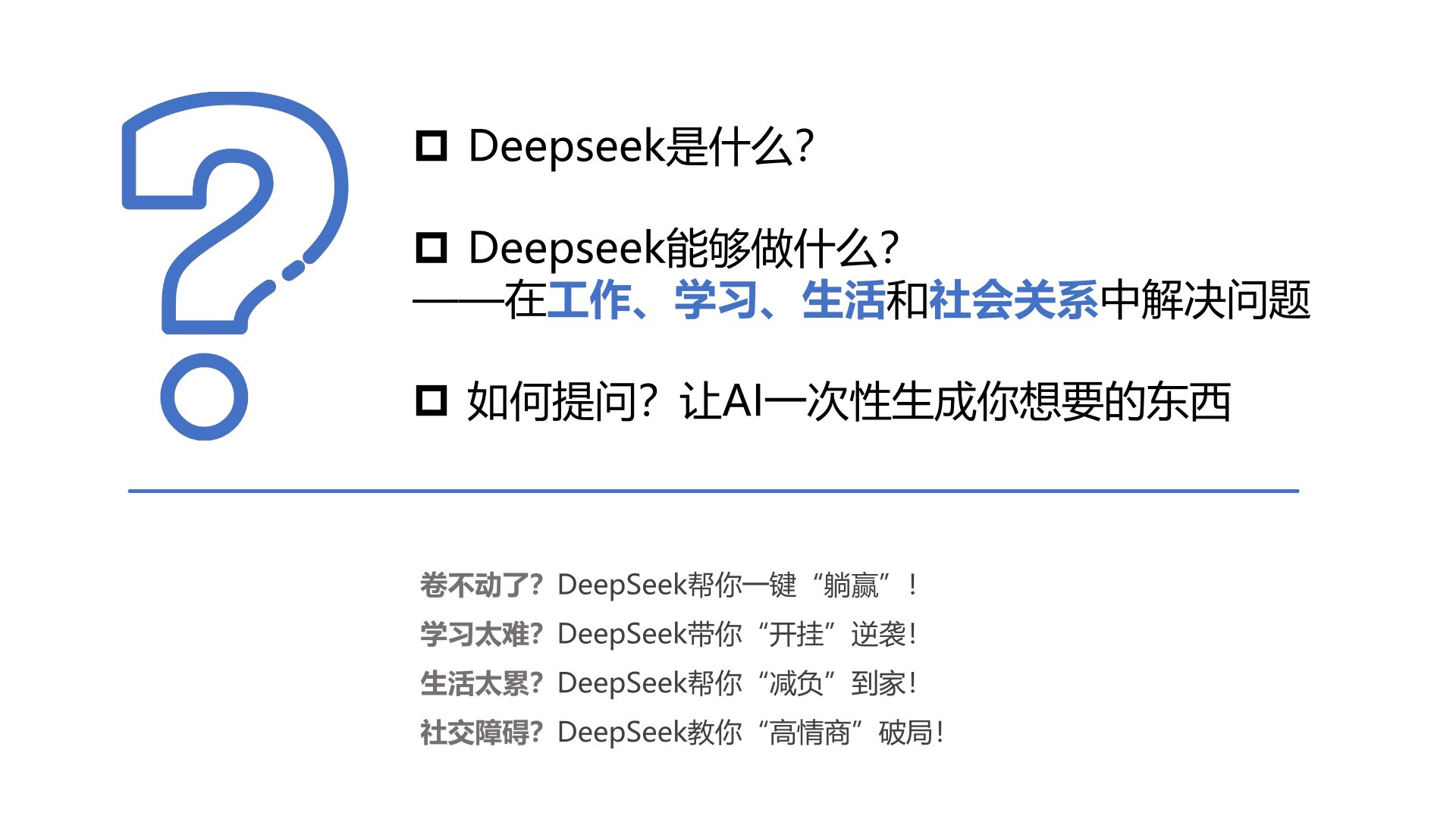
2. The Capability Map of DeepSeek
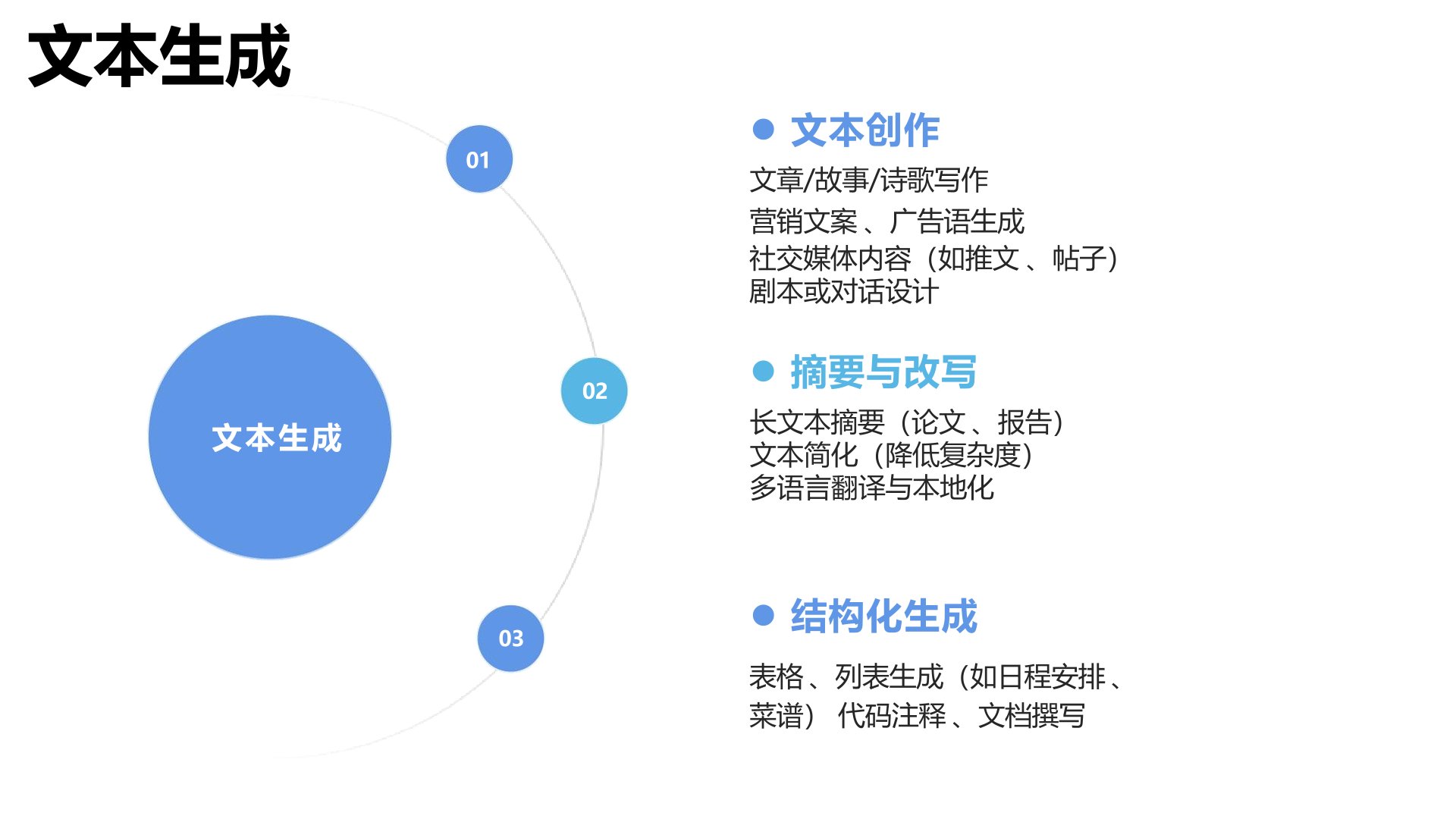
Text Creation: Including writing articles, stories, and poems; generating marketing copy; creating social media content; and designing scripts or dialogues.
Summarization and Rewriting: Provides long-text summaries, text simplification, multilingual translation and localization, and more.
Structured Generation: Generates tables, lists, code comments, documents, and more.
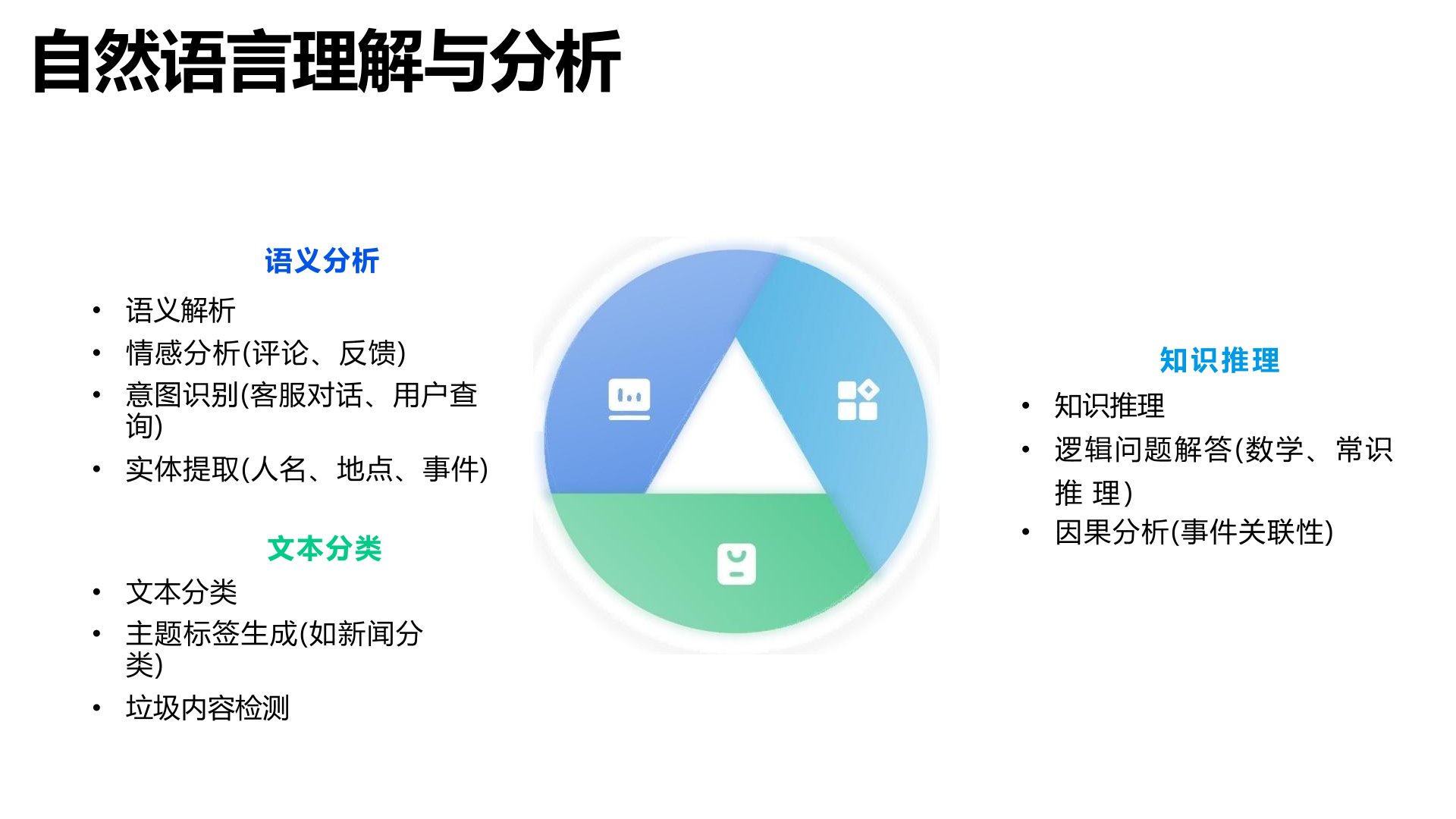
Semantic Analysis: Performs semantic parsing, sentiment analysis, intent recognition, entity extraction, knowledge reasoning, logical problem solving, causal analysis, natural language understanding and analysis, text classification, and more.
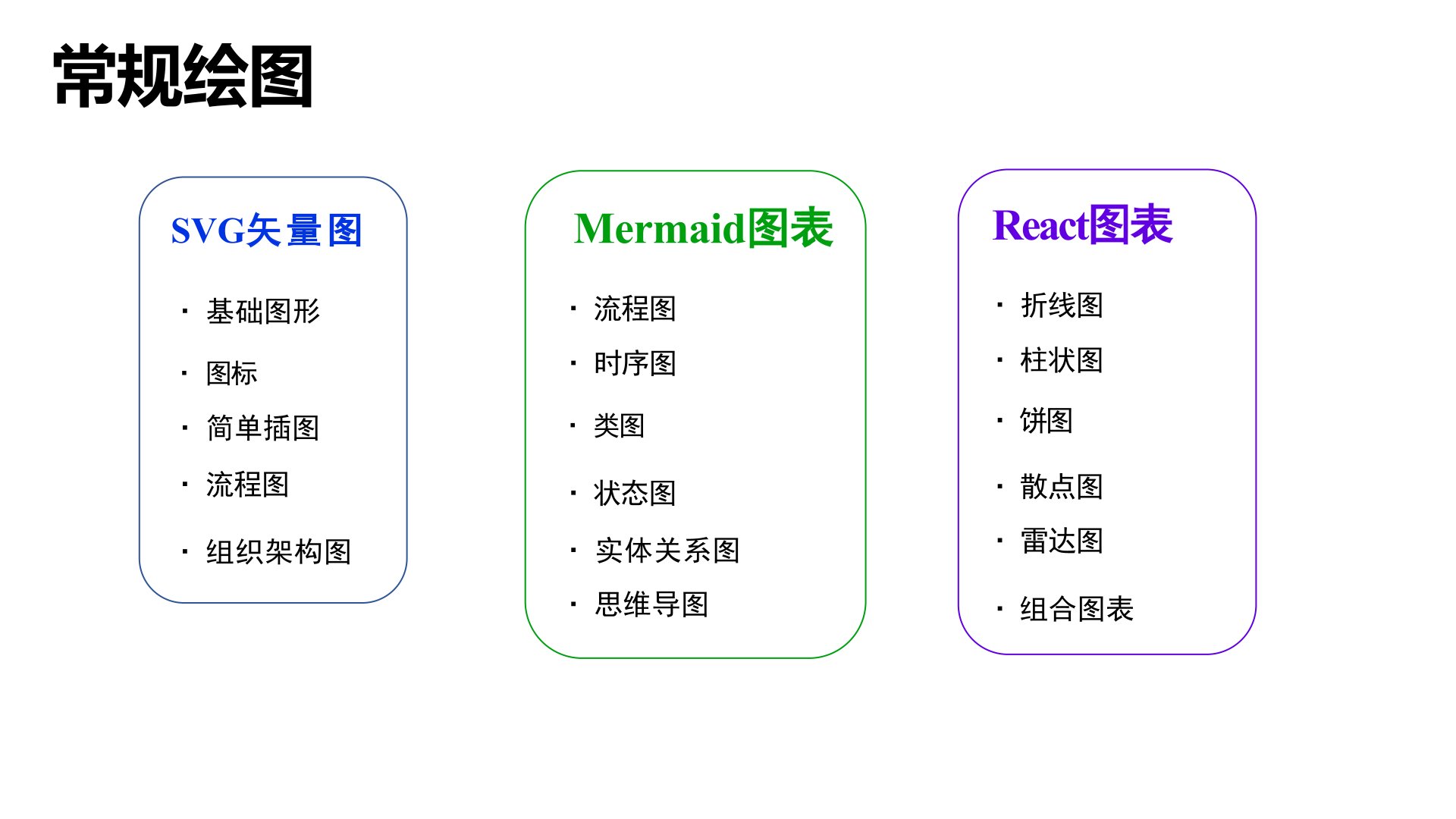
Mermaid Charts: Draws flowcharts, sequence diagrams, class diagrams, state diagrams, entity relationship diagrams, mind maps, and more.
React Charts: Generates line charts, bar charts, pie charts, scatter plots, radar charts, combo charts, and more.
SVG Vector Graphics: Creates basic shapes, icons, simple illustrations, flowcharts, organizational charts, and more.
3. How to Use DeepSeek to Solve Problems at Work
Scenario 1: Finishing a 10,000-word project proposal within 1 hour. Through steps such as generating a framework with AI, batch-filling modules, completing the soft content, and polishing plus disguising the format, the proposal can be quickly completed.
Scenario 2: New employees quickly getting up to speed on the company and the industry. DeepSeek can integrate industry reports, market analysis, and competitor information to help new employees quickly grasp industry developments.
Scenario 3: Daily customer communication and handling of feedback. DeepSeek can help respond quickly to customer issues, provide professional suggestions, reduce errors, and improve customer satisfaction.
Scenario 4: How to ask for time off when a project urgently requires your presence. By simulating conversations with AI, generating specific scripts, anticipating the leader's reaction, and preparing contingency plans, DeepSeek helps employees handle leave arrangements properly.
4. How to Use DeepSeek to Overcome Learning Difficulties
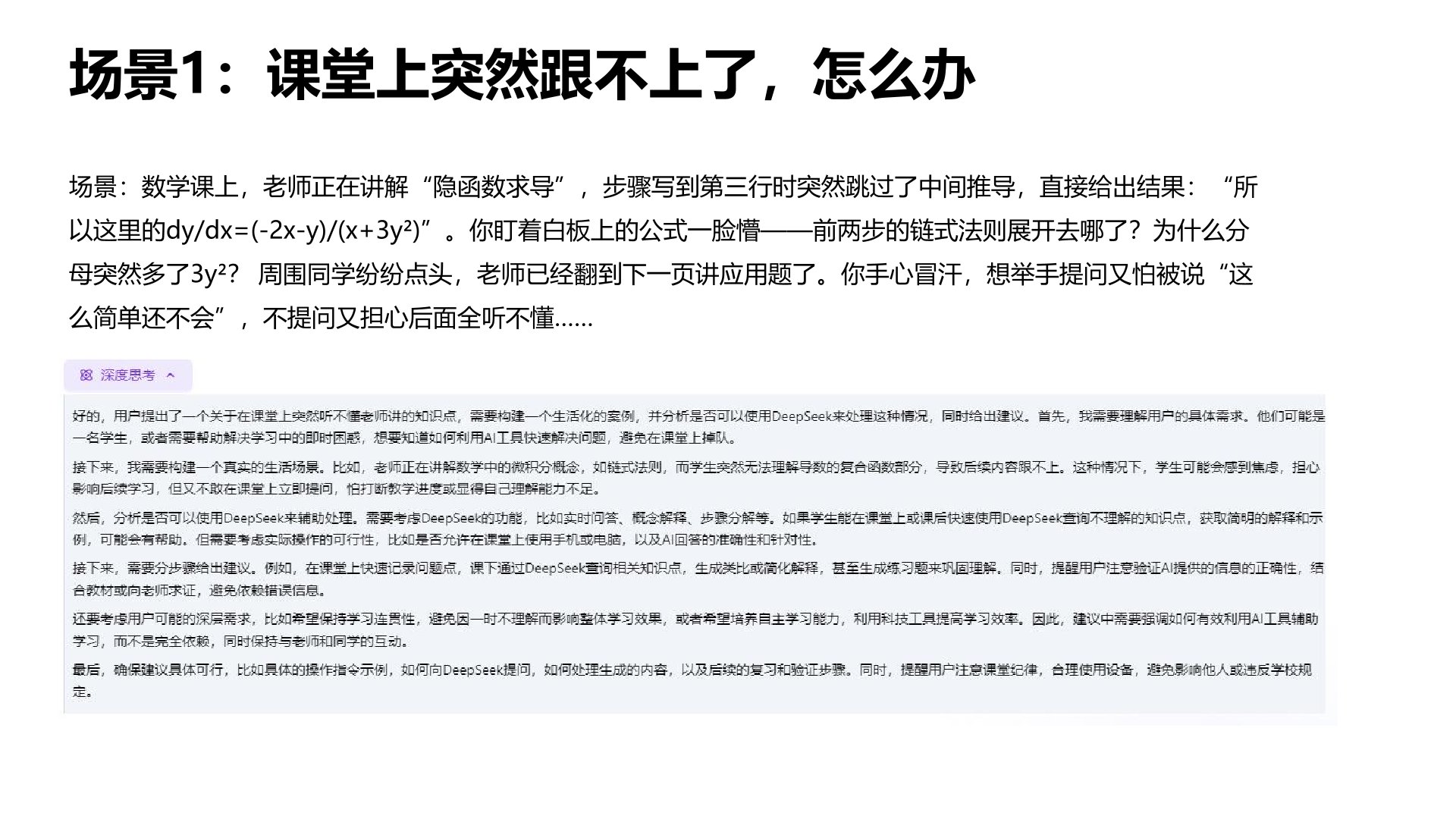
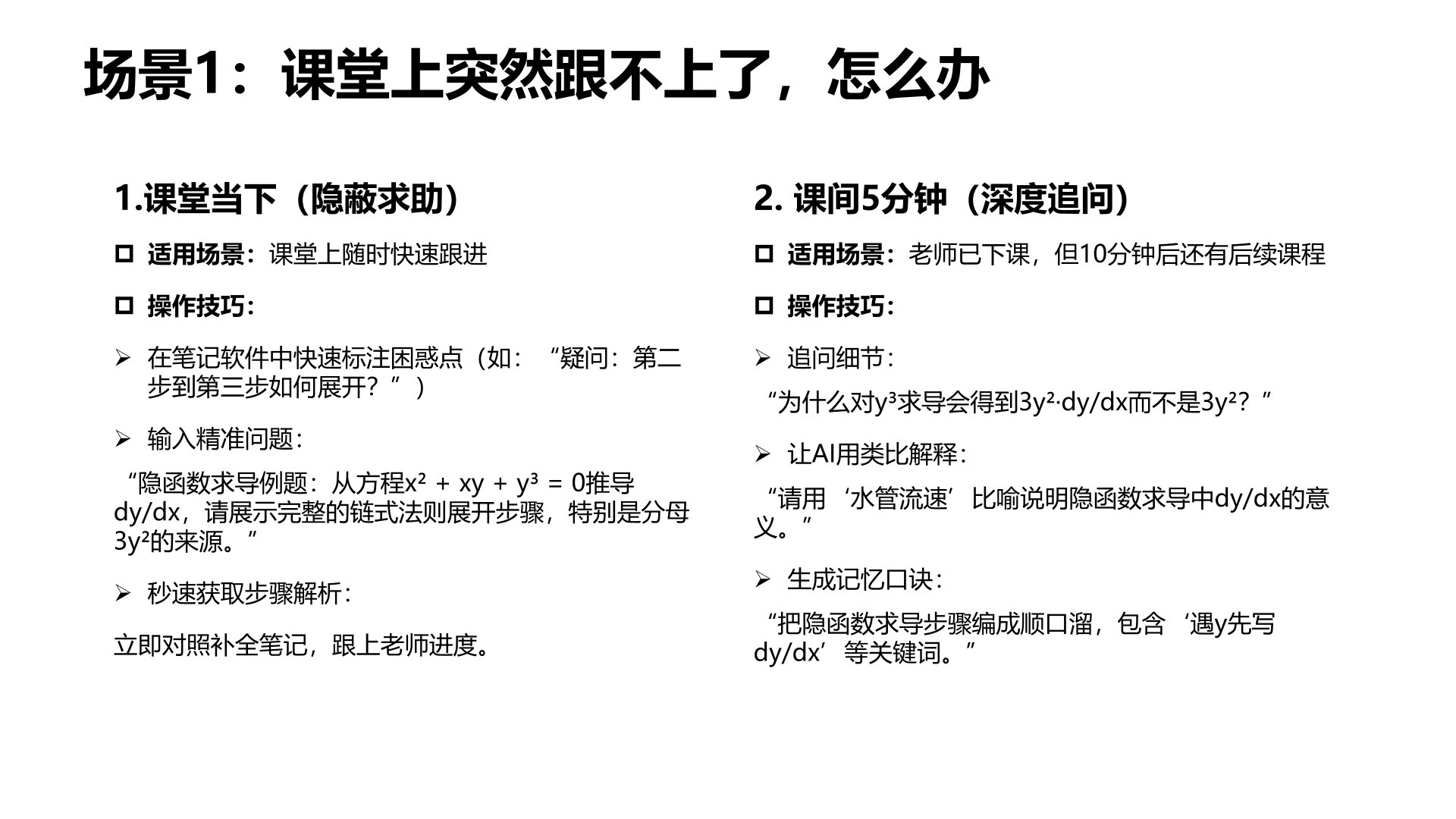
Scenario 1: Suddenly losing track in class—use DeepSeek to obtain precise solution steps and analogies, and generate mnemonic tips.
Scenario 2: Humanities students quickly getting started with programming. Use DeepSeek to load datasets, extract problems, and generate large numbers of questions with real answers for learning and practice.
5. How to Use DeepSeek to Handle Everyday Life Matters
Scenario 1: The morning battle for working moms (managing daily chores). Use DeepSeek to prioritize tasks, generate the optimal route, and connect with on-demand services, improving time efficiency and reducing stress.
Scenario 2: Decision support for balancing work and life. DeepSeek helps resolve time conflicts, ease work pressure and insomnia, develop health improvement plans, and keep an eye on parents' health.
Scenario 3: Emergency management and cross-domain coordination for unexpected events. DeepSeek provides emergency protocols such as resource heat maps, lifeline engineering, enterprise-level emergency response, and social collaboration, accelerating rescue response, reducing asset loss, and shortening the duration of crises.
How to use DeepSeek to handle social relationships
Scenario 1: Being pressured to get married during the New Year. Use DeepSeek to get conversational tips and proper handling strategies to maintain family harmony.
Scenario 2: Intergenerational conflicts between mother-in-law and daughter-in-law. DeepSeek offers approaches such as calming down, expressing feelings, listening to the other party's perspective, seeking common ground, and setting boundaries to ease tensions.
Scenario 3: Maintaining a good social relationship with your boss. DeepSeek suggests calming down, expressing feelings, listening to the other party's perspective, seeking common ground, and setting expectations to resolve differences.
Scenario 4: Inheritance conflicts in transnational, cross-cultural, and interfaith families. DeepSeek provides strategies such as calming down, expressing feelings, listening to the other party's perspective, seeking common ground, setting boundaries, and bringing in professional resources to properly handle estate distribution issues.
6. Differences in Prompt Strategy
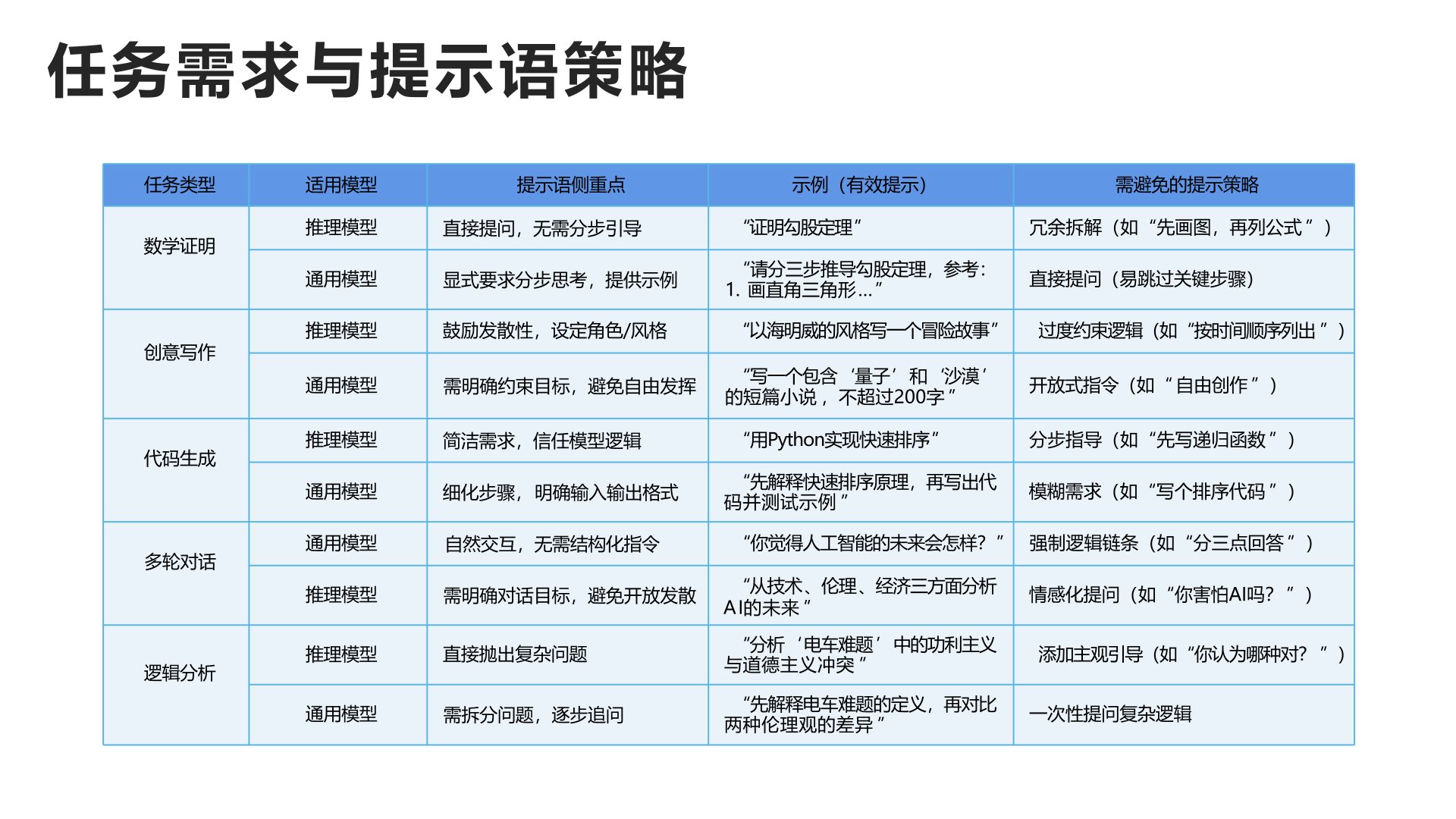
Reasoning models: Prompts can be more concise — you only need to clearly state the task goal and requirements, without step-by-step guidance.
General models: Require explicit guidance of the reasoning steps, relying on prompts to compensate for capability shortcomings.
7. How to Ask Questions? Get What You Want from AI in One Shot
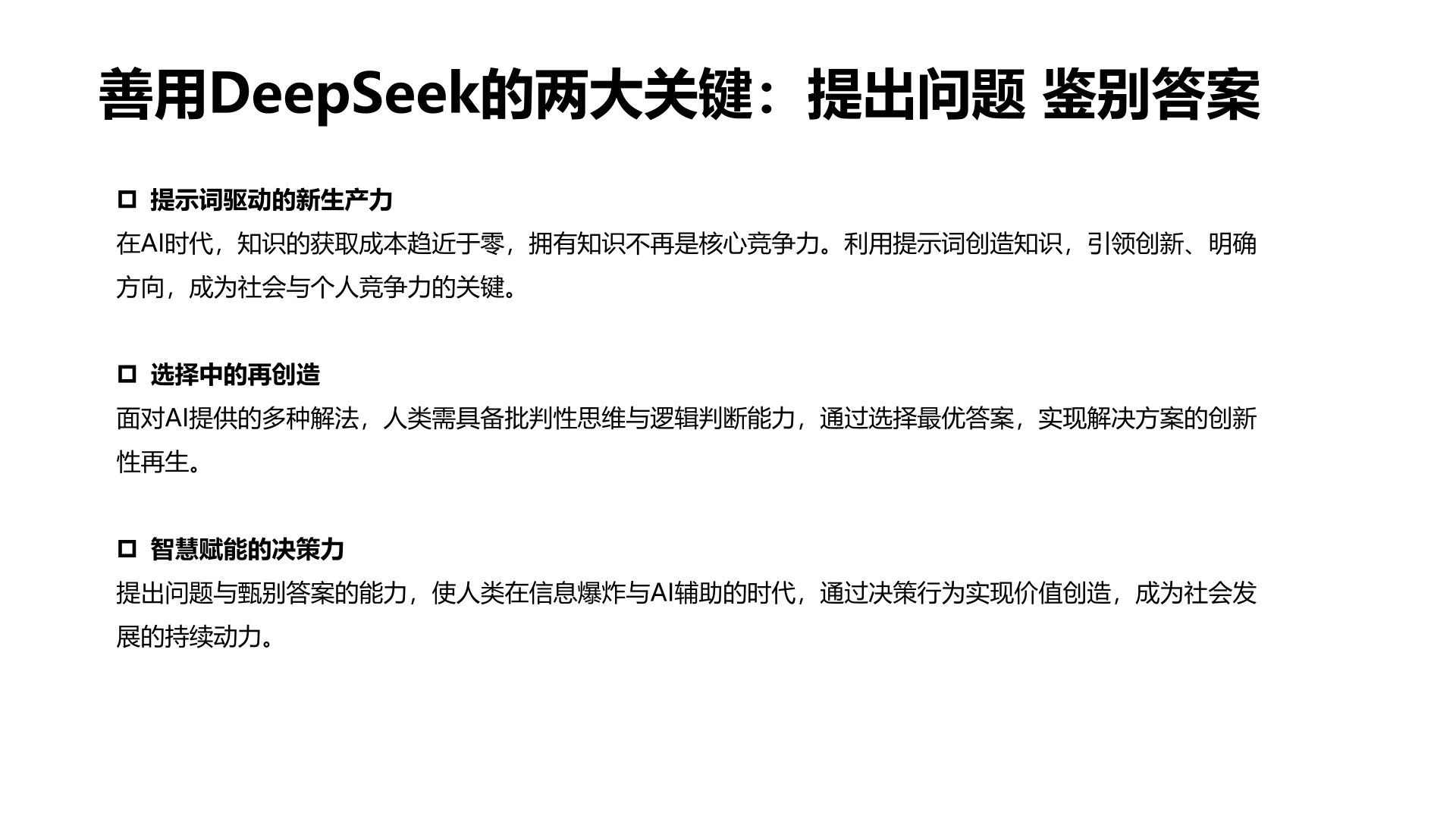
Learning to ask questions and select answers: The ability to ask questions and discern answers is key to using DeepSeek well.
AI generation cycle boundaries: Involves breaking through frameworks, integrating diverse perspectives, and relates to multiple fields such as artificial intelligence learning models, cognitive structures, cognitive frameworks, self-reference theory, logic paradoxes, Kantian epistemology, and complex systems theory. It manifests as agents easily hitting cognitive boundaries during multi-turn interactions, leading to fixed generated content and terminated information increments.
Exploring agent knowledge generation boundaries: By constructing measurement systems and analyzing conditions for innovation, explore the possibilities for agents to break through existing knowledge frameworks for creative knowledge generation.
Research on agent knowledge cycle boundaries: Investigate the "knowledge cycle boundary" phenomenon exhibited by agents during long conversations. Through experimental analysis of how question types and conversation rounds affect the similarity and innovativeness of generated content, establish methods for measuring when AI hits the knowledge cycle boundary.
Judging AI content generation boundaries: By calculating the similarity and repetition rate of generated text, using cosine similarity algorithms and n-gram methods for evaluation, and ultimately determining the agent's knowledge cycle boundary through weighted values — weights set referencing related research, emphasizing relevance over redundancy — provide quantitative basis for evaluating the quality of AI-generated text.
Combining adaptive feedback and progressive prompt chains: By adjusting the convergence of prompts and the number of dialogue rounds, drive agents to gradually transition from fixed patterns that rely on existing knowledge to innovative content generation, demonstrating the influence of prompt design and interaction frequency.
Post-generation knowledge verification: Explore through experimentation how agent-generated content performs in terms of knowledge accuracy, logical consistency, and content innovativeness. Analyze its adaptability across different contexts and task types, and propose standards and evaluation frameworks for measuring the quality of generated knowledge.
8. The Nature and Types of Prompts
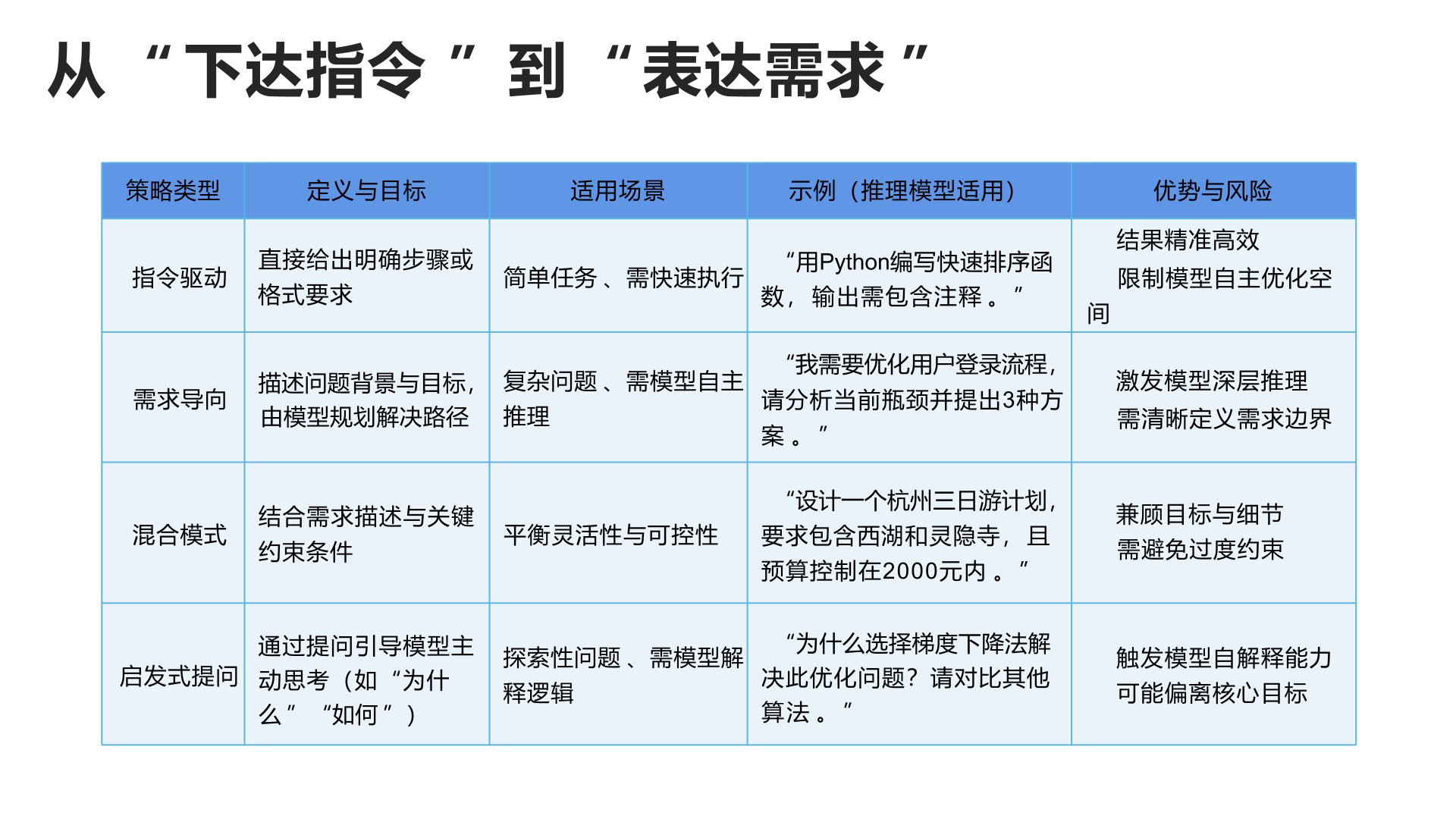
Essential characteristics of prompts: Including communication bridge, context provider, task definer, output shaper, AI capability guide, etc. — providing AI systems with instructions, context, and expectations, guiding AI to generate specific outputs or perform specific tasks.
Types of prompts: Including instruction-based, Q&A, role-playing, creative, analytical, multimodal, and other types. Different types are suited to different application scenarios and needs.
9. Capability Development System in the Human-Machine Symbiosis Era
AI thinking: Understand the capability boundaries and best application scenarios of different AIs, develop core concepts such as algorithmic thinking, data insight, boundary awareness, and collaboration consciousness. Master AI thinking patterns and establish a cognitive framework for human-machine collaboration.
Integration capability: Organically combine AI capabilities with human insight, developing skills such as cross-domain translation, creative recombination, resource orchestration, and knowledge fusion — merging human and machine strengths to create value greater than the sum of its parts.
Guiding capability: Accurately guide AI to complete tasks, involving skills such as prompt engineering, dialogue management, task decomposition, and quality control — leading the AI interaction process to ensure outputs meet expectations.
Judgment capability: Evaluate the accuracy and applicability of AI outputs, including skills such as authenticity discernment, value assessment, risk prediction, and contextual adaptation — maintain independent thinking and serve as the gatekeeper of AI outputs.









