
 Script Planner Assistant▸
 AI Apps
 AI News
Zhipu Qingyan vs Zhipu Qingliu: Key Differences
小编 ·

Zhipu Qingyan vs Zhipu Qingliu: Key Differences
Zhipu Qingyan and Zhipu Qingliu are two important products launched by Zhipu AI. They differ significantly in features and application scenarios.
Zhipu Qingyan
Zhipu Qingyan is a dialogue system based on a large model. It supports users in interacting with intelligent agents through natural language and can handle a variety of tasks, such as text generation and Q&A. At its core, Zhipu Qingyan offers powerful language understanding and generation capabilities, allowing users to create personalized intelligent agents to meet different needs.
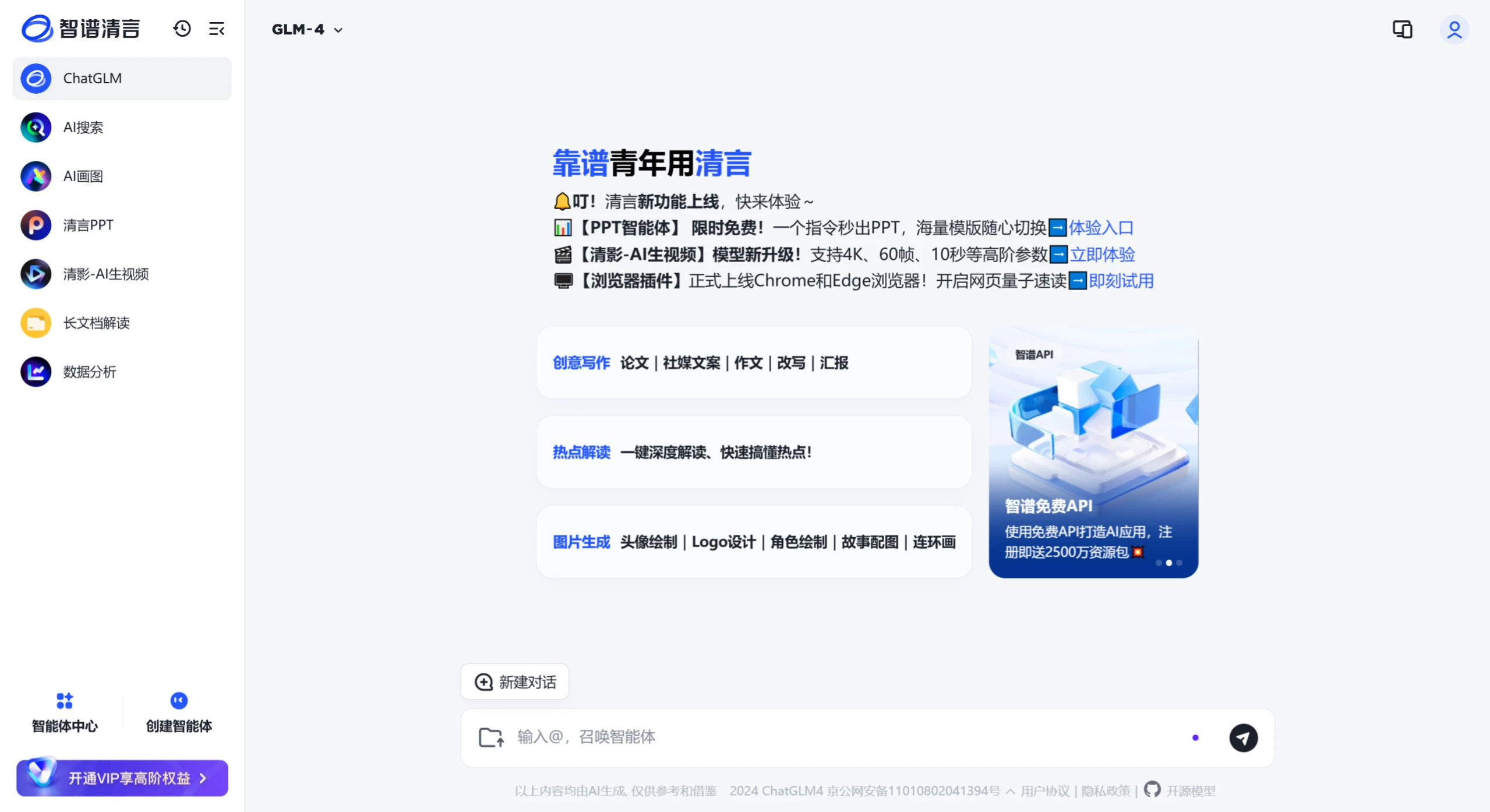
Main Features of Zhipu Qingyan:
General Q&A: Able to answer users' questions across a wide range of knowledge domains.
Multi-turn Dialogue: Excellent conversational ability, enabling natural and smooth multi-turn dialogues with users.
Creative Writing: Provides brainstorming inspiration, content frameworks, and high-quality copy.
Code Generation: Supports development and debugging in multiple programming languages.
Virtual Dialogue: Plays different roles based on user needs, enhancing interactivity.
Learning, Workplace, Programming, Education, Papers, Official Documents, Life: Provides targeted assistance and advice.
Application Scenarios of Zhipu Qingyan:
From idiom stories in education to project management in the workplace, from solving programming challenges to personal finance management advice, Zhipu Qingyan handles them all with ease.
Zhipu Qingliu
Zhipu Qingliu is an enterprise-level AI intelligent agent development platform launched by Zhipu AI. It is designed to help enterprises quickly build and deploy AI applications, with a focus on multi-agent collaboration. Through Qingliu, users can summon multiple agents within the same dialogue box to collaboratively handle complex tasks. Users simply use the "@" function to easily call agents with different capabilities, thereby improving work efficiency. This multi-agent collaboration model allows users to break down complex tasks and assign them to different agents, making the overall workflow more efficient and flexible.
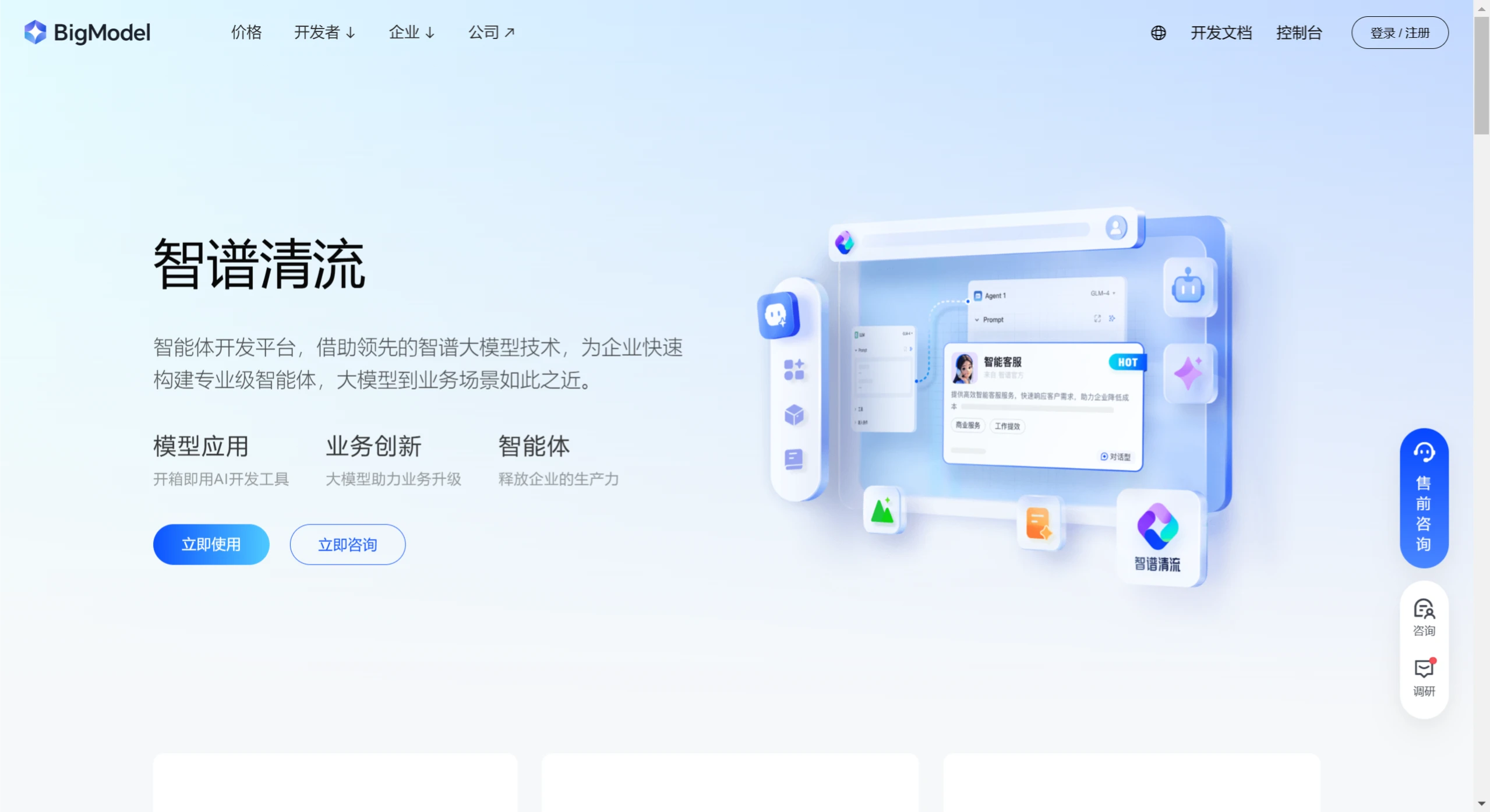
Core Features of Zhipu Qingliu:
Intelligent Agents (Agents): Supports basic and advanced mode Prompt configuration, integrates plugins, knowledge bases, and web search capabilities, and enables multi-agent collaboration.
Workflow: Simplifies business processes through visual orchestration and enables efficient collaboration among agents.
Knowledge Management: Provides unlimited storage space and powerful RAG retrieval augmentation to help enterprises efficiently manage and retrieve large volumes of documents.
Performance Tuning and Batch Evaluation: Evaluates and optimizes text models and multimodal models to improve the response accuracy and processing capabilities of agents.
Integration and Deployment: Supports three integration methods—API, SDK, and URL—for seamless connection with existing systems.
Application Scenarios of Zhipu Qingliu:
Customer Service and Support: Provides 7 * 24 automated customer service.
Business Process Automation: Automates complex business processes and reduces human error.
Knowledge Management and Retrieval: Optimizes the storage and retrieval of internal enterprise documents.
Data Analysis and Decision Support: Uses AI technology to extract valuable insights from large amounts of data.
Product Recommendation and Sales: Provides personalized product recommendations.
Zhipu Qingyan is primarily a dialogue model aimed at individual users. It offers diverse intelligent conversations and application scenarios, emphasizing personalized service and creative writing capabilities. Zhipu Qingliu, on the other hand, is a multi-agent collaboration system built on this model. It focuses on enterprise-level applications, providing core capabilities needed for enterprise intelligence upgrades such as agent building, workflow management, and knowledge management. The former emphasizes the interaction capabilities of a single agent, while the latter improves task processing efficiency through collaboration among multiple agents. Together, these two products provide users with more powerful tools to cope with increasingly complex work demands.









