
 Script Planner Assistant▸
 AI Apps
 AI News
GPT-5 Release: Launch Date, Features, Pricing & How It Compares to GPT-4
小编 ·

GPT-5 Release: Launch Date, Features, Pricing & How It Compares to GPT-4
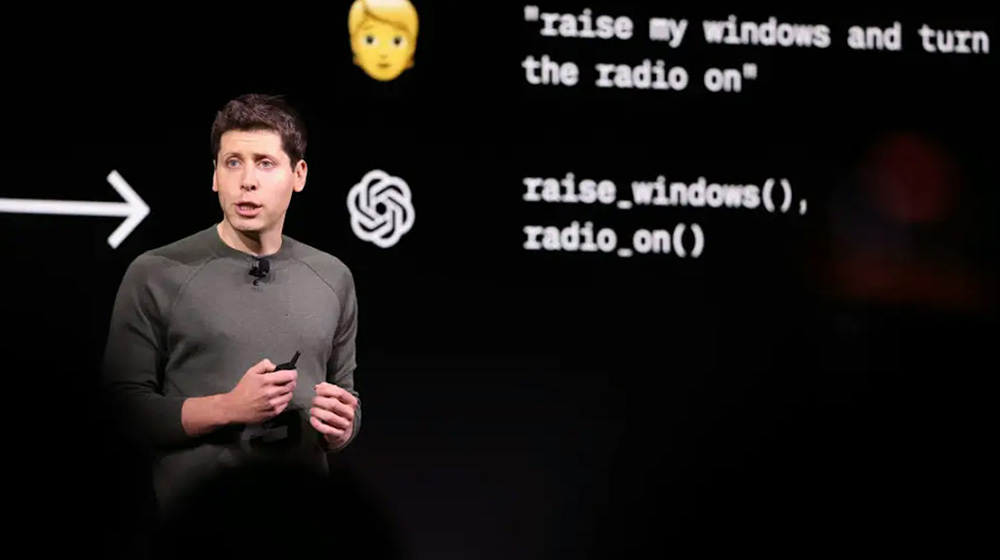
According to Business Insider citing sources familiar with the matter, Openai plans to launch the next version of its artificial intelligence tool ChatGPT — GPT-5 — in the middle of this year. An OpenAI customer who recently watched a GPT-5 demo said that GPT-5 is more refined than its predecessor GPT-4, with an enhanced foundation model, and users may experience smoother conversations in the future.
GPT-5-turbo is far ahead in 7 major areas: text generation quality, efficiency and performance, context understanding, multimodal capabilities, programming and code generation, safety and robustness, and personalization capabilities. GPT-5 can accept text or encoded visual input ("prompts"). Like GPT-4, GPT-5 will be a next-token prediction model (a word fragment), which means it will output its best estimate of the most likely next token in a sequence, enabling tasks such as completing sentences or writing code.
Compared to the previous GPT-4-turbo, GPT-5-turbo enhances 10 major capabilities:
Larger context window: Preview information shows that GPT-5 Turbo's context window is twice that of GPT-4 Turbo, reaching 256K, equivalent to about 200,000 words.
Efficiency and performance: GPT-5 will achieve major advancements in advanced reasoning capabilities, with performance improvements exceeding current expectations, optimizing computational efficiency while maintaining similar generation quality. This means it can respond to queries faster while maintaining high performance when handling large datasets and complex queries.
Improved context understanding: This version improves in understanding and maintaining conversational context, better tracking information and details across long conversations, thereby providing more coherent and accurate responses.
Better multimodal capabilities: GPT-5-turbo performs exceptionally well in processing and generating various types of content, including text, code, images, and combined generation with DALL·E.
Enhanced programming and code generation capabilities: This version shows significant improvements in understanding programming languages and generating code, more effectively assisting with programming-related tasks.
Improved safety and filtering capabilities: OpenAI has further enhanced the model's safety and filtering capabilities for unsaturated content in this version to reduce the risk of misuse.
More refined personalization and customization capabilities: GPT-4.5-turbo can better deliver personalized responses and interactions based on user needs and styles.
Refuting limitations of GPT models: As long as there are sufficient computational resources, artificial general intelligence (AGI) that surpasses human intelligence can be built, expressing full confidence that GPT models have no limitations.
Focused on building AGI: He and OpenAI's goal is to build "artificial general intelligence (AGI)," paying little attention to virtually anything other than the pursuit of building AGI, including fields such as blockchain and biotechnology.
Advancing innovation in global AI infrastructure: Actively promoting innovation in global AI infrastructure, once able to break through current computational capacity limitations and achieve AGI, the various challenges currently faced, including energy shortages, will all be resolved.
Challenges of growing data volume: As AI development accelerates, data volume growth may not keep pace, and new models capable of learning with less data may need to be developed in the future.
Differences between GPT-5 turbo and GPT-4:
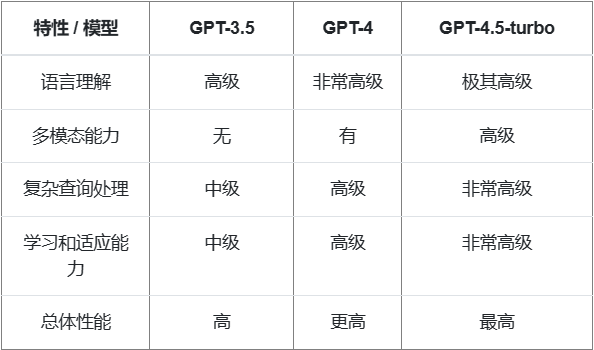
Language understanding: Compared to GPT-4, GPT-5 shows significant improvement, better understanding complex and subtle language differences.
Multimodal capabilities: GPT-4 introduced the ability to process images, while GPT-5-turbo has further enhancements in this area.
Complex query handling: With model upgrades, the ability to handle complex and abstract queries continues to improve.
Learning and adaptation capabilities: New generation models can learn faster from conversations and adapt to new information.
Overall performance: Each new version of GPT improves in performance, especially in handling more complex and diverse tasks.
This comparison provides a general overview, but specific performance may vary depending on different usage scenarios.
OpenAI is currently still conducting training work on GPT-5. Once training is complete, the model will first undergo internal safety testing, followed by red team testing by the team.









