
 Script Planner Assistant▸
 AI Apps
 AI News
Yuxi: A Knowledge Graph Q&A System Based on Agentic RAG
小编 ·

Yuxi: A Knowledge Graph Q&A System Based on Agentic RAG
What is Yuxi?
"Yuxi" is a knowledge graph question-answering system based on an agent-based RAG knowledge base. It supports a variety of large language models, such as Openai, major domestic platforms, and is also compatible with locally deployed vLLM and Ollama. The system can ingest knowledge base files in formats such as PDF, TXT, and MD, and uses Neo4j to construct a knowledge graph for accurate question answering. Configuration is simple—just set the API key—and you can quickly launch the service. It is suitable for multiple scenarios such as enterprise knowledge management, intelligent customer service, education, and research.
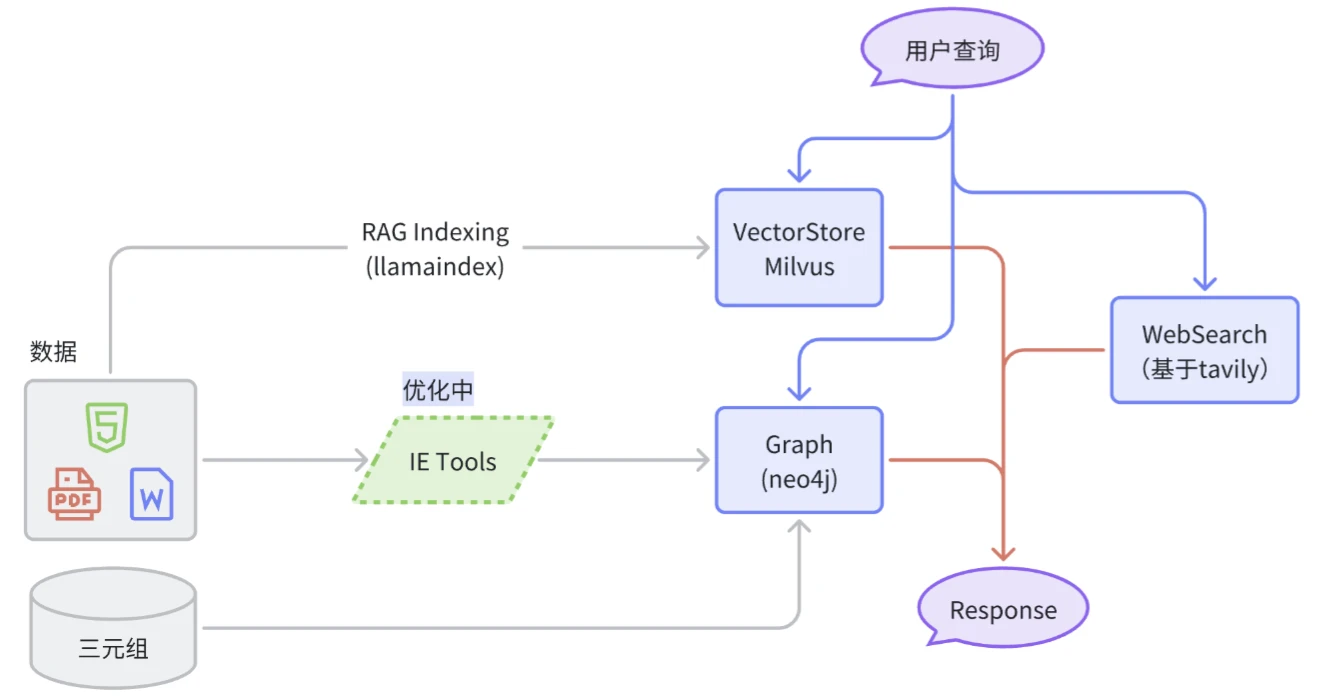
Core Features of Yuxi
1. Multi-model Support
OpenAI: such as GPT-4, GPT-3, etc.
Major domestic large model platforms: such as Zhipu Qingyan, Alibaba Cloud, etc.
Locally deployed models: such as vLLM, Ollama, etc. These models can be invoked via API services.
Users can choose different models based on their needs; simply configure the corresponding API_KEY to use them.
2. Flexible Knowledge Base
PDF
TXT
Markdown
Docx
Users can upload these files to the system, and the system will automatically convert the file contents into plain text. Then it uses a vector model to transform the text into vectors, which are stored in a vector database. This process enables efficient retrieval and utilization of the information in the knowledge base.
3. Knowledge Graph Integration
Knowledge graph Q&A: Users can ask questions in natural language, and the system will combine structured data from the knowledge graph to answer them.
Knowledge graph management: Users can upload knowledge graph files in JSONL format, and the system will automatically parse and store them in a Neo4j database.
Visual configuration: Users can manage and query the knowledge graph through a visual interface.
4. Agent Extensibility
"Yuxi" supports agent extensibility, allowing users to write their own agent code to implement more complex question-answering logic and task automation. This feature is still under development, but it has already shown strong potential.
5. Simple Configuration
Configuration in "Yuxi" is very simple—users only need to set the corresponding API_KEY in the src/.env file. The system also provides detailed configuration templates and documentation to help users get started quickly.
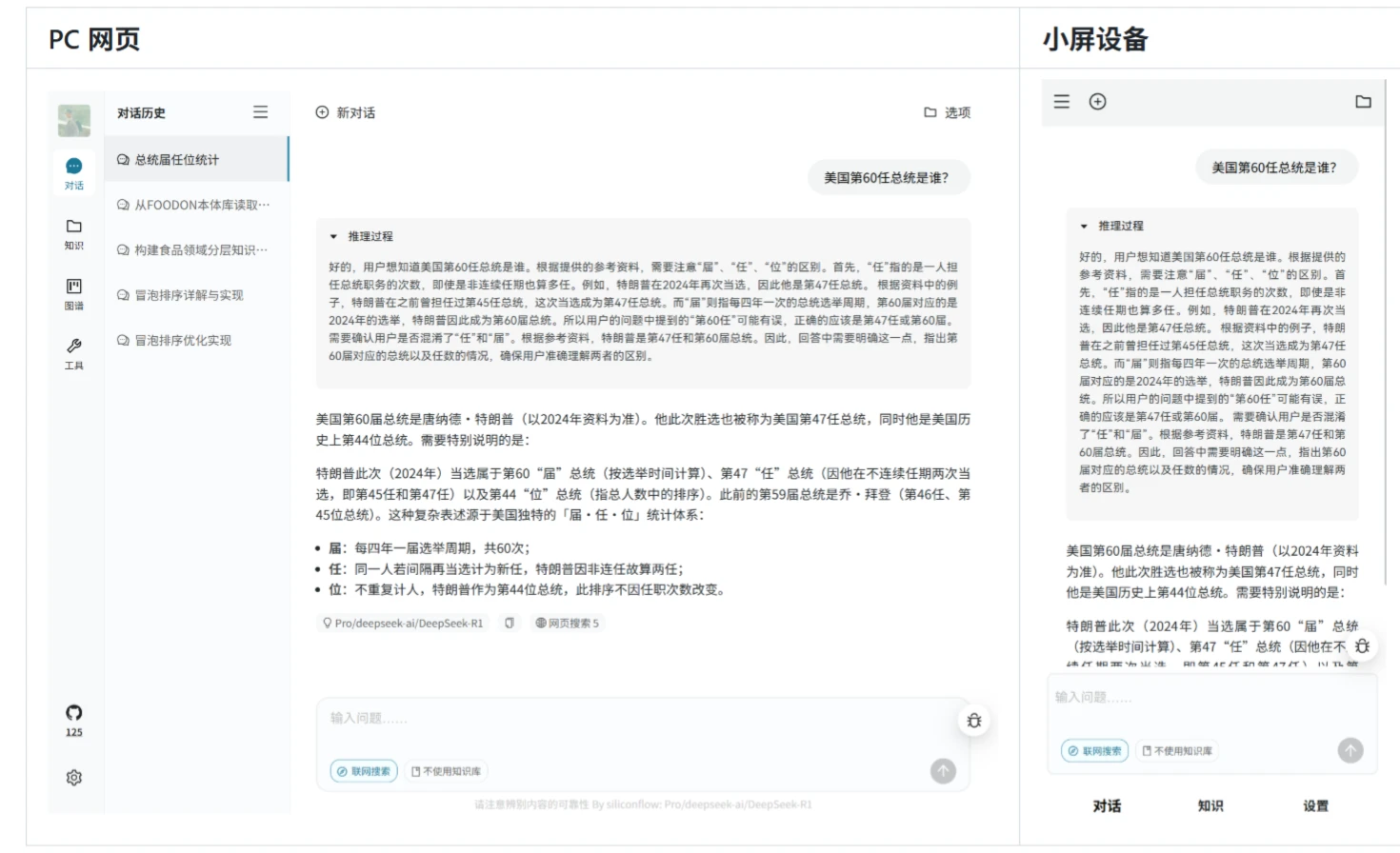
Yuxi Functional Modules
1. Q&A Features
Large model-based Q&A: Leverages the powerful generative capabilities of large language models to provide natural-language Q&A services.
Knowledge graph Q&A: Combines structured data from the knowledge graph to provide more accurate and specific answers.
Knowledge base Q&A: Based on uploaded knowledge base files, it uses vector retrieval and semantic matching to provide the most relevant answers to users' questions.
Web search Q&A: Combines web content to provide the latest information and answers.
2. Knowledge Management
Knowledge base management: Users can upload, update, and delete knowledge base files, and the system will automatically process and store them.
Knowledge graph management: Users can manage the knowledge graph through a visual interface, including adding, deleting, and modifying nodes and relationships.
3. Model Management
"Yuxi" supports management and configuration of multiple models. Users can choose different models based on their needs and manage them through configuration files. The system also supports the deployment and use of local models, offering flexible extensibility.
Use Cases for Yuxi
Enterprise knowledge management: "Yuxi" can serve as an internal knowledge management system for enterprises, helping employees quickly find and use internal knowledge resources. By uploading corporate documents and building knowledge graphs, employees can obtain the information they need more efficiently.
Intelligent customer service: "Yuxi" can serve as an intelligent customer service system, providing automated Q&A services. By combining a knowledge base and a knowledge graph, the system can deliver more accurate and personalized answers, improving customer satisfaction.
Education: "Yuxi" can serve as an educational tool, helping students and teachers quickly find and understand knowledge. By uploading teaching materials and building knowledge graphs, students can study and review more efficiently.
Research and development: "Yuxi" can serve as a research tool, helping researchers quickly find and analyze relevant literature. By uploading research papers and building knowledge graphs, researchers can carry out their work more efficiently.
GitHub Project:https://github.com/xerrors/Yuxi-Know









